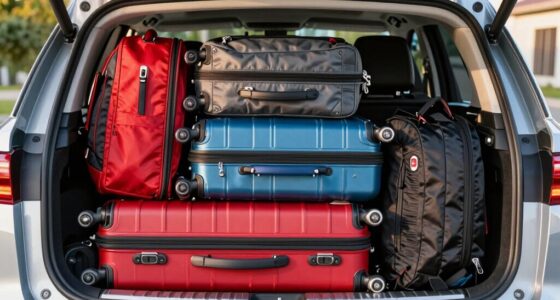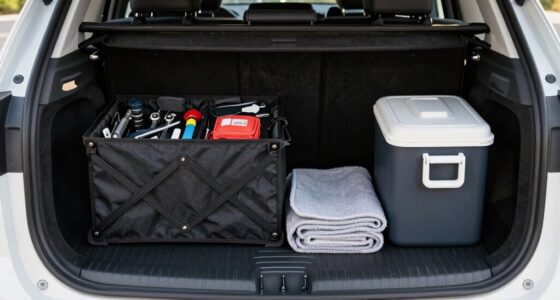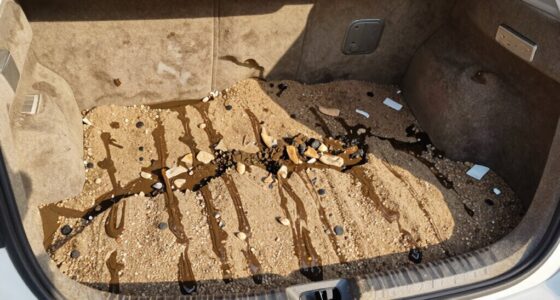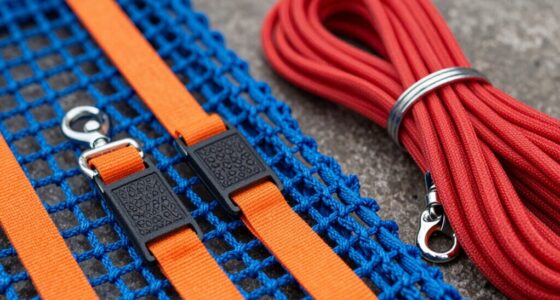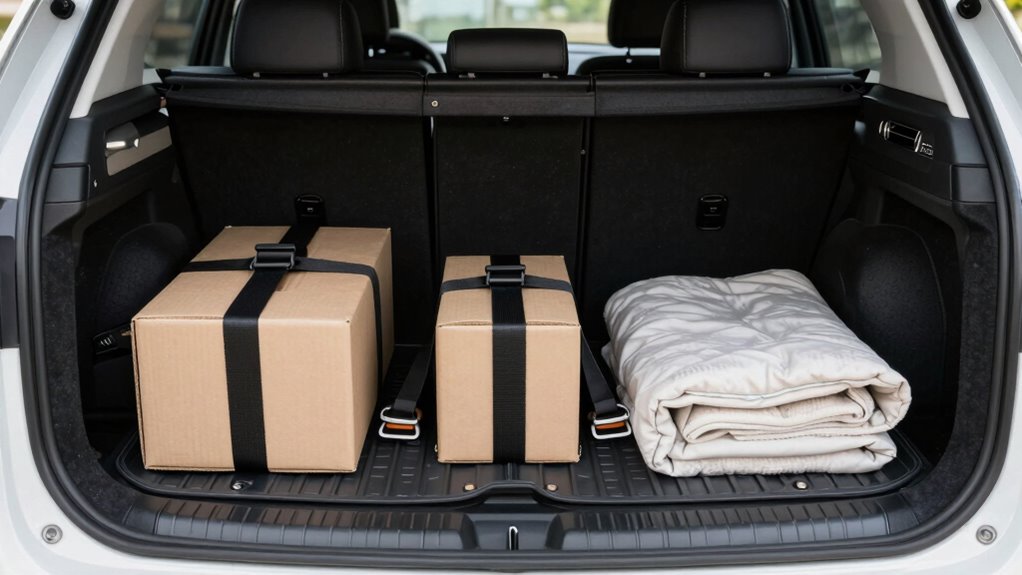

To stop cargo from sliding in your trunk, start by using non-slip mats or grips on the floor to create friction. Secure heavy and loose items with straps, bungee cords, or cargo nets, ensuring everything is tightly fastened. Distribute weight evenly and avoid overpacking. For extra stability, use household items like towels or foam as cushions. Checking and adjusting your setup before each trip keeps your cargo secure—keep exploring to learn more tips for safer travels.
Key Takeaways
- Use non-slip mats or liners to prevent cargo from sliding on trunk surfaces.
- Distribute weight evenly and secure heavy items with straps or bungee cords.
- Utilize cargo nets or tie-down straps to hold bulky or loose items firmly in place.
- Rearrange trunk contents regularly to ensure a snug fit and reduce shifting during transit.
- Check and tighten all fasteners before each trip to maintain secure cargo and prevent sliding.
Why Securing Cargo in Your Trunk Is Crucial for Safety
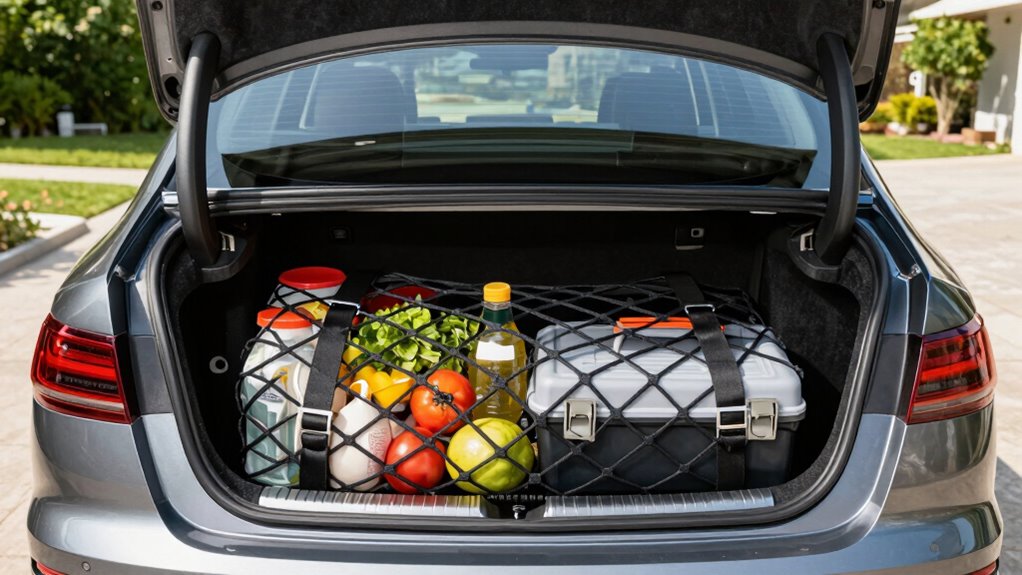
Securing cargo in your trunk is essential because loose items can become dangerous projectiles during sudden stops or collisions. The cargo weight you carry influences how much risk there is; heavier items pose a greater threat if not secured properly. Safety regulations set standards to prevent injuries and damage by requiring you to secure loads appropriately. Overloading your trunk or stacking items improperly can lead to shifting cargo, increasing the chance of accidents. By following proper securing techniques, you reduce the risk of items sliding or flying forward, protecting you and others on the road. Properly securing cargo safeguards everyone involved and helps you avoid costly fines or damages. Additionally, understanding how to properly secure loads can further reduce the risk of accidents and ensure compliance with safety standards. Incorporating advanced securing methods can also provide extra peace of mind during transit, especially when handling potentially hazardous items. Using environmentally friendly securing tools and materials can also contribute to a more sustainable approach to vehicle safety.
Implementing quality securing equipment ensures that your cargo remains stable even in challenging driving conditions.
What Types of Cargo Do You Usually Carry?

Most drivers carry a variety of cargo, from groceries and sports equipment to tools or luggage. Knowing your typical cargo type helps you plan for proper trunk organization and secure everything effectively. Heavy items like bags of soil or large tools require different securing methods than lightweight items such as boxes of snacks or clothing. Fragile cargo, like glassware or electronics, needs special attention to prevent damage during transit. Understanding what you usually carry allows you to choose the right securing tools, like straps or dividers, to keep everything stable. Proper trunk organization ensures that your cargo doesn’t shift unexpectedly, reducing the risk of accidents. Additionally, using performance-enhancing parts such as specialized straps can help improve cargo security and vehicle handling. Regularly assessing your cargo types can help you select the most suitable cargo securing methods, ensuring everything stays in place during your drive. Evaluating your cargo types also helps you understand the accuracy of securing tools, allowing you to select the most reliable equipment for your needs. Recognizing the importance of load distribution can further prevent uneven weight from affecting vehicle control. Incorporating imagination techniques into your planning process can also inspire innovative ways to secure and organize your cargo more efficiently. By evaluating your cargo type regularly, you can maintain a safer, more organized trunk that minimizes the chance of sliding or damage.
How to Choose the Right Tools and Accessories for Cargo Securing
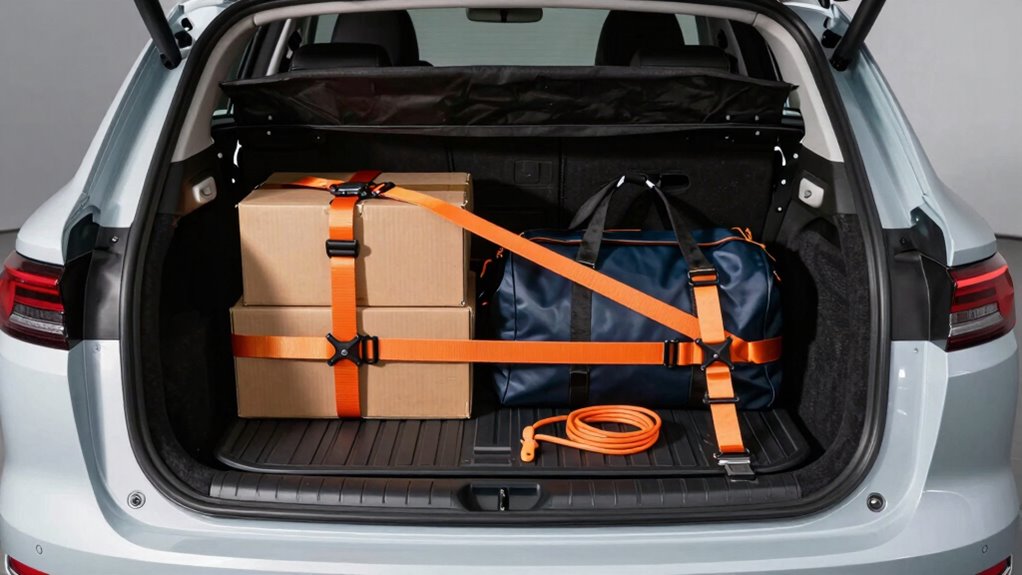
Choosing the right tools and accessories for cargo securing starts with understanding your specific needs and the type of items you’re transporting. Consider cargo accessories like straps, bungee cords, or tie-down anchors that suit your cargo size and weight. Look for securing techniques that match the shape and fragility of your items—adjustable straps work well for irregular shapes, while non-slip mats can prevent sliding. Prioritize durable, high-quality gear to guarantee safety and reliability. Think about your trunk’s layout and how different accessories can work together effectively. Selecting the appropriate tools helps you secure your cargo efficiently, reducing the risk of shifting or damage. Focus on versatility and ease of use to make securing cargo a quick, reliable process every time. Additionally, understanding must-see destinations and travel tips can help you plan better trips with secure and well-organized vehicle cargo. Being aware of ethical considerations in choosing cargo accessories can also ensure that your safety measures align with responsible practices. Evaluating cargo weight limits and manufacturer guidelines ensures that your securing methods remain within safe operational standards. Moreover, considering compatibility with your vehicle’s interior layout can optimize the effectiveness of your securing setup. Taking into account safety standards and regulations is essential for ensuring your cargo securing methods meet legal requirements and best practices.
How to Use Non-Slip Mats and Grips to Keep Items in Place
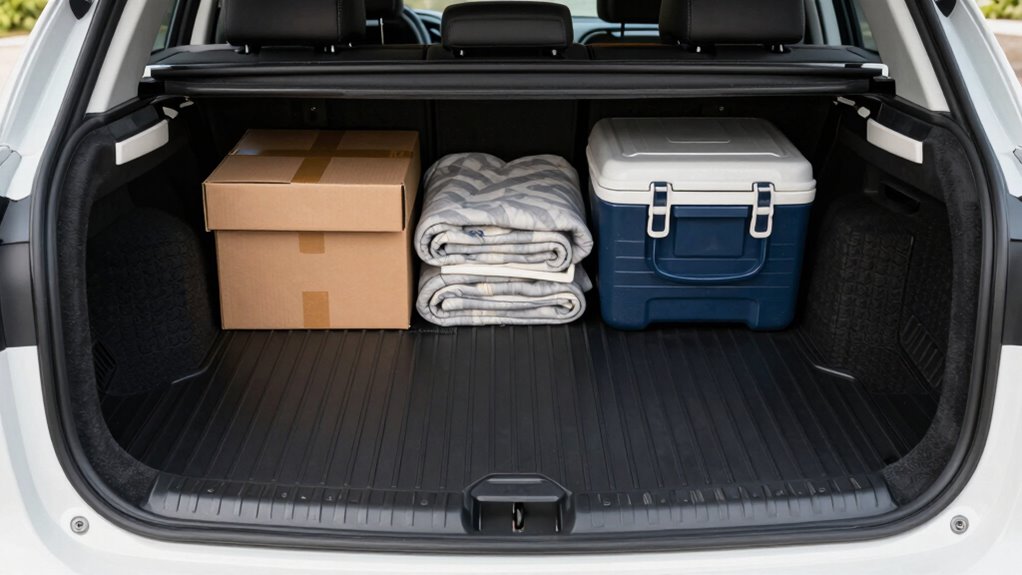
Non-slip mats and grips are effective tools to prevent your cargo from shifting during transit. Friction pads and grip tape increase contact with your items and the trunk surface, reducing movement. To maximize their effectiveness, guarantee the mats or grip tape cover enough area and press firmly to secure items. Proper placement is key—place heavier items on friction pads or grip tape to prevent slipping. You can also layer grip tape on the bottom of containers or crates for extra hold. Consider using non-slip mats with textured surfaces that grip items naturally. Remember, a well-placed grip tape or friction pad creates friction, making sliding harder. Additionally, understanding accessibility features can help you choose the safest and most effective securing methods for various cargo types. Incorporating home decor tips such as securing your vehicle’s cargo area can help prevent theft or tampering during transit. Ensuring your cargo is properly secured not only improves safety but also helps maintain your vehicle’s interior in good condition. Using interdisciplinary insights from fields like engineering and human factors can further enhance your cargo securing strategies.
Why Cargo Nets and Straps Make Heavy Items Safer and Easier to Handle
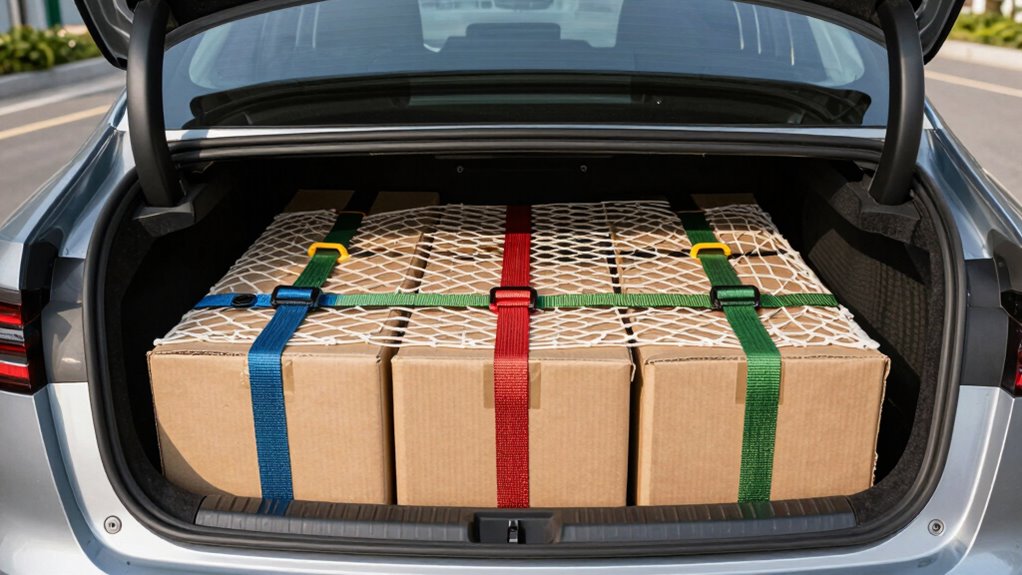
Cargo nets and straps are essential tools that considerably improve safety and ease when handling heavy or bulky items in your vehicle. They keep your cargo secure, reducing the risk of shifting or falling during transit. Imagine a sturdy cargo net stretched over your load, or straps tightly securing a bulky box — these tools prevent dangerous movement. With high strap durability, you trust that your straps won’t snap or loosen under pressure. Here’s a visual:
| Cargo Nets | Strap Durability | Secure Handling |
|---|---|---|
| Keep items in place | Resist wear and tear | Make loading easier |
| Prevent sliding | Withstand heavy weight | Reduce injury risk |
| Cover large areas | Last through rough conditions | Save time unloading |
Using these tools makes heavy items safer and handling more manageable. Properly securing your cargo also helps prevent accidents or damage during transportation, especially when considering battery inverter generator capacity for your vehicle’s power needs. Additionally, understanding cargo securing techniques can further enhance safety during transit. Regular inspection of your cargo securing equipment ensures ongoing effectiveness and safety. Incorporating proper tensioning methods can optimize the security of your load and prevent equipment failure.
Tips for Organizing Your Trunk to Prevent Cargo From Sliding
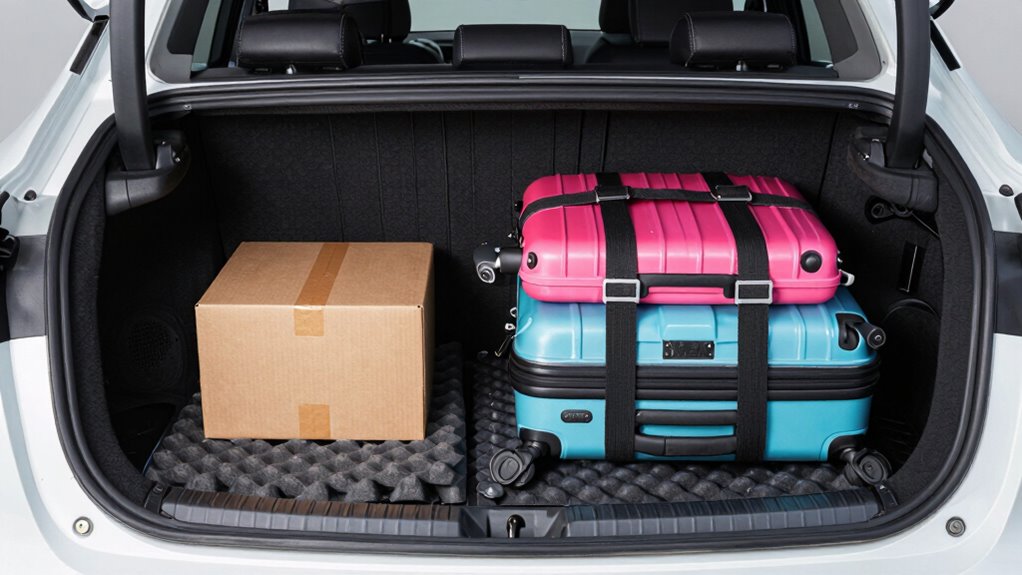
To keep your cargo from sliding, make sure to secure heavy items properly so they stay in place during transit. Using non-slip materials on the trunk floor can also help prevent movement and keep everything stable. Combining these strategies will make your trunk safer and more organized. For the best results, consider using quality gear designed specifically for cargo stabilization.
Secure Heavy Items Properly
Have you ever experienced heavy items shifting or sliding around in your trunk while driving? To prevent this, make sure you secure heavy items properly. Start by evenly distributing weight across your trunk to maintain balance and control. Use cargo labeling to identify fragile or heavy items, so you know how to handle them safely. Here are some tips:
- Place heavier items on the bottom and closer to the seatbacks for better weight distribution.
- Secure bulky objects with straps or bungee cords to prevent movement.
- Label cargo clearly to avoid mishandling and ensure proper placement.
Use Non-Slip Materials
Using non-slip materials is an effective way to keep your items stable and prevent them from sliding around during drives. These materials enhance friction, providing better grip between your cargo and the trunk surface. Placing rubber mats, grip pads, or textured liners creates friction enhancement, which considerably reduces movement. For added grip improvement, consider using silicone or rubber-based mats designed specifically for automotive use. These materials prevent items from shifting, especially during sharp turns or sudden stops. Non-slip liners are easy to cut and customize, fitting various trunk shapes. By incorporating these materials, you minimize the risk of damage to your belongings and ensure safer driving conditions. Regularly check and replace worn non-slip surfaces to maintain ideal grip and cargo stability.
DIY Hacks and Household Items That Help Secure Your Cargo
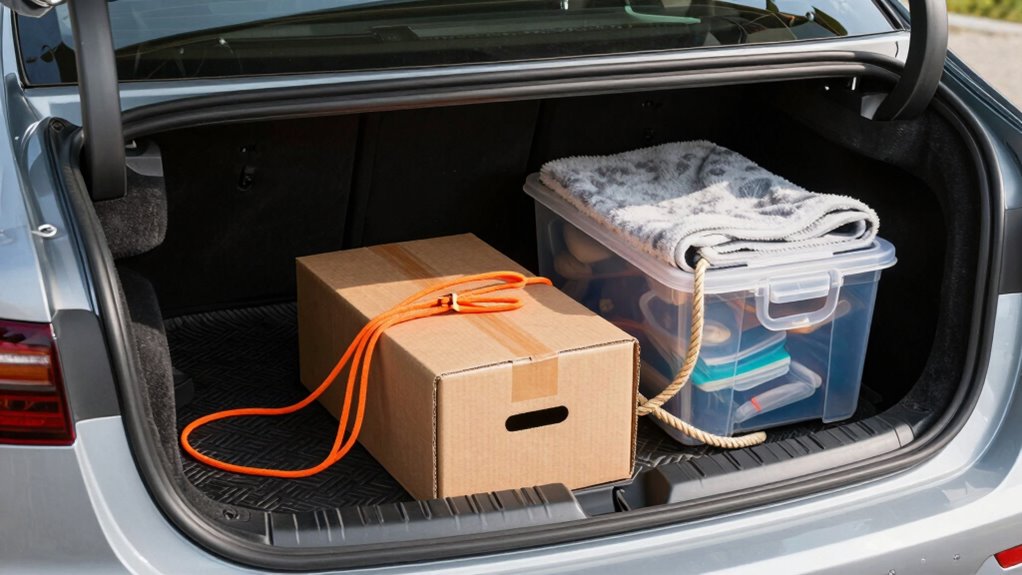
When it comes to keeping your cargo secure, household items and simple DIY hacks can make a big difference. You can repurpose items around your home to prevent shifting without spending much. For example, using foam padding or old towels can act as cushions, reducing movement during transit. Rearranging your trunk decoration to fit snugly helps keep items in place, while a quick car cleaning removes loose debris that could interfere with stability.
Some effective hacks include:
Effective cargo hacks include using household items like bungee cords, cardboard boxes, and wrapping fragile items for added security.
- Placing bungee cords or rubber bands around larger items
- Using empty cardboard boxes to compartmentalize
- Wrapping fragile items in clothing or blankets for extra grip
These small steps leverage household items to improve cargo security effortlessly and cost-effectively.
Common Mistakes That Cause Cargo to Shift: and How to Avoid Them
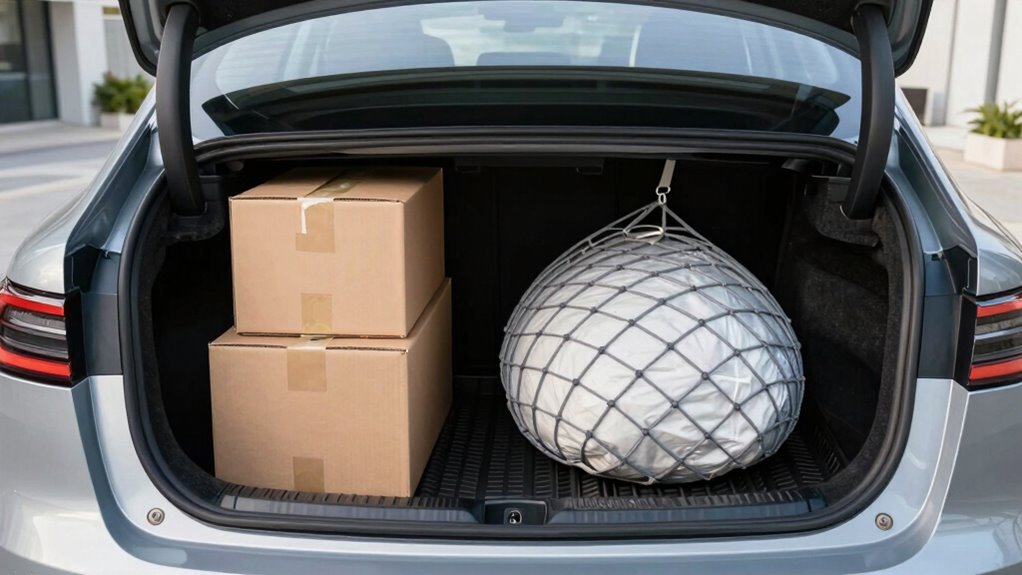
One common mistake is uneven load distribution, which can cause your cargo to shift while driving. Using insufficient securing devices or not tightening straps properly also increases the risk of movement. Overpacking your trunk leaves little room for adjustments and can make securing more difficult, so plan your load carefully.
Improper Load Distribution
Improper load distribution is a common mistake that can lead to cargo shifting unexpectedly during transit. When your weight isn’t evenly distributed, it can cause instability and compromise safety. To avoid this, focus on proper load balancing by placing heavier items on the floor and closer to the vehicle’s center. This helps maintain stability and prevents sudden shifts. Remember these key points:
- Distribute weight evenly across the trunk’s width and depth
- Keep the center of gravity low for better balance
- Avoid piling everything in one area, especially at the rear
Insufficient Securing Devices
Failing to use the right securing devices is a common mistake that leads to cargo shifting unexpectedly during transit. Without proper cargo straps and secure securing anchors, your load can move, causing damage or accidents. Reliable cargo straps are essential for tightening and holding items firmly in place. Securing anchors provide anchor points to attach straps and prevent slipping. If you skip these, even a small shift can become dangerous at high speeds. Always choose straps rated for your cargo weight and ensure they’re tightly fastened to secure points in your trunk. Properly using securing anchors allows you to create a stable hold, reducing the risk of movement. Investing in quality securing devices and correctly installing them keeps your cargo safe and your drive smooth.
Overpacking Cargo Space
Overpacking your cargo space might seem like a way to maximize storage, but it often leads to shifting loads and reduced safety. Overpacking hazards include increased cargo compression, which can damage fragile items and make securing loads more difficult. When you cram too much in, it creates unstable conditions that heighten the risk of cargo shifting during transit. To avoid this, keep these points in mind:
- Leave space for proper securing devices to grip cargo firmly
- Distribute weight evenly to prevent imbalance
- Use load anchors and barriers to contain shifting items
Overpacking not only hampers your ability to secure items properly but also increases the chances of accidents. Focus on organized, balanced packing to ensure safe, stable transport and minimize the risk of cargo slide-offs.
When to Upgrade to Professional Cargo Management Systems
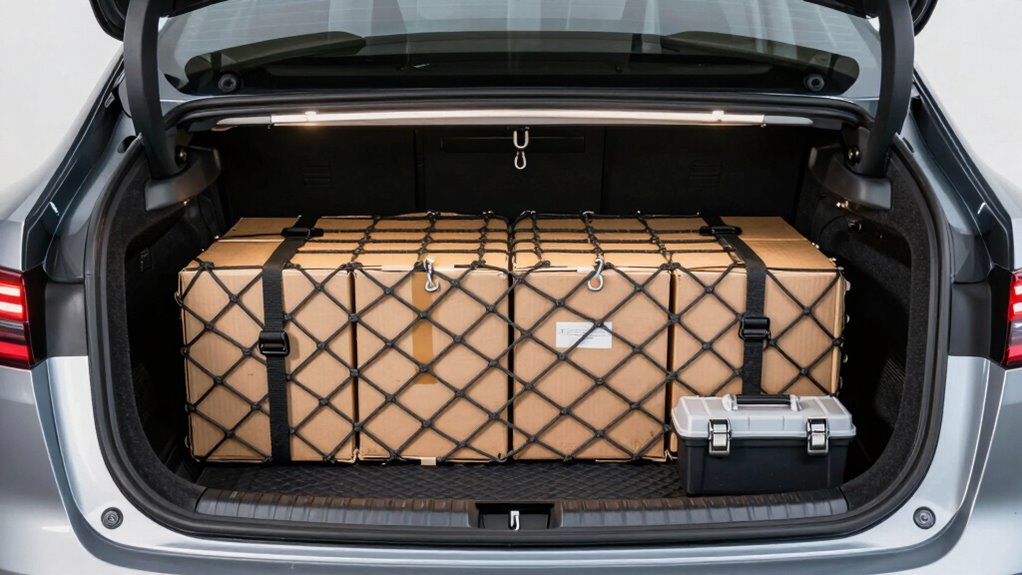
As your cargo needs grow or your current setup becomes less efficient, it’s a clear sign that upgrading to a professional cargo management system is time. When you notice frequent shifting, difficulty organizing, or limited trunk customization options, it’s a cue to contemplate an upgrade. A professional system enhances cargo tracking, ensuring items stay put and are easy to locate. These systems often include customizable compartments and securing devices tailored to your specific needs. To visualize, here’s a quick comparison:
| Feature | Basic Setup | Professional System | Benefits |
|---|---|---|---|
| Trunk customization | Limited | Fully adjustable | Fits your cargo perfectly |
| Cargo tracking | Manual, unreliable | Automated, real-time | Keeps track of all items |
| Security features | Basic hooks and straps | Lockable compartments | Better security for valuable items |
| Organization | Minimal | Modular, customizable | Easy to access and organize |
| Efficiency | Moderate | High | Saves time and effort |
Upgrading improves safety, organization, and overall cargo security.
How to Maintain Secure Cargo During Every Trip
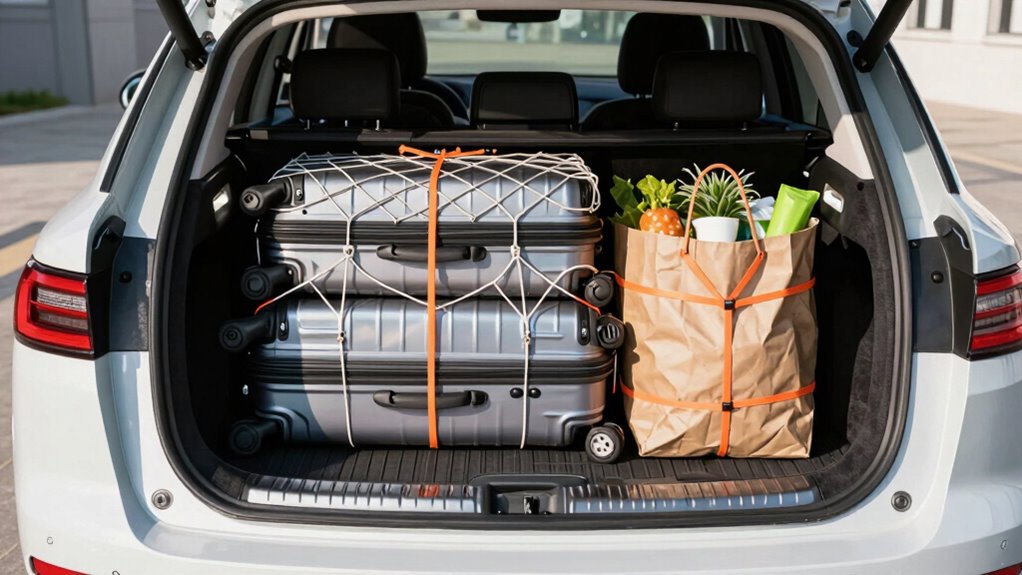
To keep your cargo secure during every trip, you need to actively engage in proper loading and fastening practices. Start by evenly distributing weight to prevent shifting, which can compromise trunk aesthetics and safety. Use reliable straps or bungee cords to secure loose items firmly. Regularly check your interior cleaning to remove debris that could cause items to slide or damage your trunk lining. Remember, a tidy trunk not only looks better but also reduces the risk of movement. Keep these principles in mind:
- Balance your load to maintain stability
- Use appropriate fastening tools for different items
- Maintain a clean trunk environment for better grip
Consistent attention guarantees your cargo stays put, your trunk stays neat, and your trips remain safe.
Frequently Asked Questions
Can Weather Conditions Affect Cargo Security Effectiveness?
Weather impact definitely affects cargo security effectiveness. Rain, snow, or icy conditions can make your cargo less resilient if it’s not properly secured, increasing the risk of sliding or falling. You should double-check your straps and barriers during bad weather to make certain they hold firm. By doing so, you’ll protect your cargo from shifting and keep it safe, regardless of the weather conditions you encounter on your trip.
How Often Should I Inspect My Cargo Securing Tools?
You should inspect your cargo securing tools before each trip and regularly during long journeys. Following an inspection schedule helps catch wear and tear early. During these checks, perform tool maintenance as needed, tightening straps, replacing frayed cords, and ensuring anchors are secure. This proactive approach keeps your cargo safe, prevents accidents, and guarantees your securing methods remain effective, regardless of weather conditions or road hazards.
Are There Legal Requirements for Securing Cargo in Vehicles?
Yes, there are legal requirements for securing cargo in vehicles, especially to prevent cargo theft and ensure safety. You must follow your state’s cargo weight limits and secure all items properly to avoid shifting or falling during transit. Failing to do so can lead to fines or accidents. Always check local regulations and use appropriate securing tools to keep your cargo stable and compliant with the law.
What Are the Signs That My Cargo Is Insecure?
You notice your cargo shifting or sliding during transit—it’s a clear sign it’s insecure. This could be due to poor load distribution or insufficient securing methods. Also, if you see loose items or hear unusual noises, it’s a warning. Keep in mind, unsecured cargo increases the risk of cargo theft and accidents. Always double-check that your load is tightly secured and evenly distributed to prevent these issues.
How Do I Secure Fragile or Oddly Shaped Items?
To secure fragile items and odd-shaped cargo, wrap them in bubble wrap or packing paper to cushion against impacts. Use non-slip mats or grip pads to prevent sliding. Place heavy or stable items at the bottom and lighter, fragile pieces on top. Fill empty spaces with soft blankets or foam to avoid shifting during transit. This guarantees your fragile items stay safe and your cargo remains secure throughout your drive.
Conclusion
So, there you have it—your foolproof guide to turning your trunk into Fort Knox. Because nothing screams “fun weekend” like discovering your groceries turned into airborne projectiles or your DIY hacks failed spectacularly. Follow these simple tips, invest in the right tools, and maybe—just maybe—you’ll avoid becoming the star of your own slapstick comedy. After all, secure cargo isn’t just safety; it’s your ticket to avoiding the chaos of a rogue SUV rolling into your back seat.