
TL;DR

Get home appliances delivered free with Prime
- Fast, free delivery on millions of items
- Prime Video, Amazon Music and more included
- Member-only deals all year
Hunker published a roundup of 16 ways to reuse concrete blocks in home and garden projects, including planters, furniture, decorative art, stairs and water features. The ideas range from simple arrangements to projects requiring a stable base, waterproofing, reinforcement or local permits; the article does not report a new product or construction standard.
Hunker has outlined 16 ways to reuse concrete blocks around the home and garden, from making planters and basic furniture to building stairs, privacy walls and water features. The roundup presents the blocks as durable, regularly shaped materials that can be repurposed, while noting that projects involving large structures, water or elevated surfaces need more careful planning.
The simpler suggestions use blocks as supports or decorative elements. The article describes stacking them beneath a wood or stone tabletop to make a side table or dining table, or arranging them as a TV stand or nightstand. Shelves can fit through openings or between layers, and paint, fabric or a solid top can change the appearance. For tables, Hunker cautions that the supports need to be aligned and stable; adhesive can help stop a top from sliding.
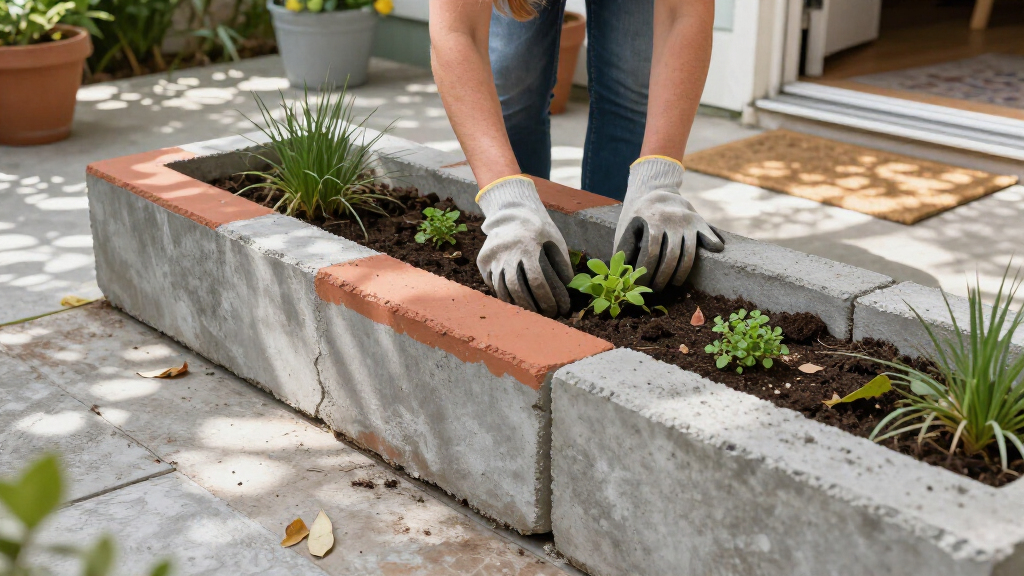
Garden ideas include using block openings as small planters, stacking blocks into a plant tower or wall, and adding mesh or landscape fabric so soil does not fall through. Blocks can also be painted as seasonal decorations, assembled into sculptural forms, or used as a surface for a mural. Other suggestions include constructing a privacy wall, with a base and mortar for a more permanent installation, and forming the base of a fountain or pond.
Some proposals require substantially more work than arranging blocks. Hunker says stairs intended for permanent outdoor use need a firmer base and gaps filled with sand or cement. Its pool idea calls for rebar reinforcement and waterproof coating, and it advises checking local rules for permits before starting. These are project concepts in a lifestyle roundup, not engineered plans or a substitute for site-specific construction guidance.
From Leftover Blocks to Useful Projects
The roundup is useful to homeowners and gardeners with surplus or reclaimed masonry because it shows how a material usually associated with construction can serve as furniture support, planting space or garden decor. Reusing existing blocks may reduce the need to buy new materials for some small projects, though the source gives no cost comparisons or measured environmental impact.
The distinction between low-risk decorative uses and structural or water-containing builds matters. A small planter and a stairway do not carry the same consequences if they shift or fail. Readers should treat the more demanding ideas as starting points, not ready-to-build specifications: stability, drainage, waterproofing and local requirements depend on the design and site.
Products Worth Considering

Philips Hue Festavia Outdoor Globe String Lights, 8 Bulbs, 22 ft

Hisense E6SR Series 55-Inch 4K UHD Hi-QLED Roku Smart TV

Blueair Blue Pure 211i Max Air Purifier for Large Rooms
As an affiliate, we earn on qualifying purchases.
A Material With Several Names
Concrete blocks have a regular shape and openings that can be used for storage, planting or inserting shelves. Hunker describes them as durable and relatively inexpensive, and says reclaimed blocks may be available or already on hand after another project. The article also notes that people may use the terms concrete block, cinder block and cement block interchangeably.
According to Hunker, many blocks called cinder blocks are actually concrete blocks, but differences can exist, so users should watch for damage. The source does not provide a technical guide to identifying block composition or condition. Its list spans basic decorative projects and more involved construction, including stairs, walls, pools and fountains, rather than presenting one uniform method for all blocks.
Project Conditions Still Matter
The source is a collection of project ideas, not a set of tested plans. It does not specify load limits, block grades, dimensions, foundations, drainage designs or instructions for assessing whether a particular block is damaged. Those details can affect whether a proposed table, stair, wall or water feature is safe and durable.
Hunker specifically flags the need for reinforcement and waterproofing for a block-based pool, and for checking local permit rules. It does not identify which jurisdictions require permits or provide engineering specifications. Readers considering permanent stairs, retaining or privacy structures, pools or fountains will need to determine the applicable requirements and appropriate construction methods for their property.
Plan Before Building
For a small decorative project, the next step is to inspect the blocks, choose a stable arrangement and decide how to contain soil or secure a tabletop. For larger or permanent builds, readers should check local codes and permit requirements before purchasing materials or beginning work. The source offers no announced follow-up, product launch or formal construction guidance; it remains a set of DIY inspiration and general cautions.
Any project that supports people, heavy objects or water calls for particular care. The article’s suggestions do not establish that a specific design will be safe on a given site, so plans should be reviewed against the intended loads, ground conditions and relevant local rules before construction.
Key Questions
What are some ways to use concrete blocks at home?
Hunker lists uses including planters, tables, TV stands, nightstands, stairs, privacy walls, art, fountains and pools, among other projects. The effort and safety needs vary by design.
Can concrete blocks be used as planters?
Yes. The article suggests planting in the block openings and placing mesh or landscape fabric at the bottom to keep soil and plants from falling through. Blocks can be used individually or stacked.
Can concrete blocks form a pool?
Hunker presents this as a possible but demanding project, requiring rebar reinforcement and waterproof coating. It also advises checking local permit rules. The roundup does not provide engineering plans or jurisdiction-specific requirements.
Are cinder blocks and concrete blocks interchangeable?
Hunker says many blocks referred to as cinder blocks are actually concrete blocks, but differences can exist. Check blocks for damage and confirm they are suitable for the intended project.
Source: rss