TL;DR

Get home appliances delivered free with Prime
- Fast, free delivery on millions of items
- Prime Video, Amazon Music and more included
- Member-only deals all year
TikTok user Birdie Wood demonstrated turning chindi rag rugs into a loose, colorful window covering by cutting the rugs into fabric strips and tying them to a curtain rod. The source report says Wood bought her rugs at Five Below for $5 each; the project’s final cost and performance as a light or privacy barrier are not reported.
TikTok user Birdie Wood has shown a do-it-yourself window covering made from chindi rag rugs, cutting the rugs into fabric strips and tying them over a curtain rod. Hunker reported that Wood found her rugs at Five Below for $5 each, presenting the project as a low-cost decorative alternative to curtains or blinds rather than a tested solution for light control or privacy.
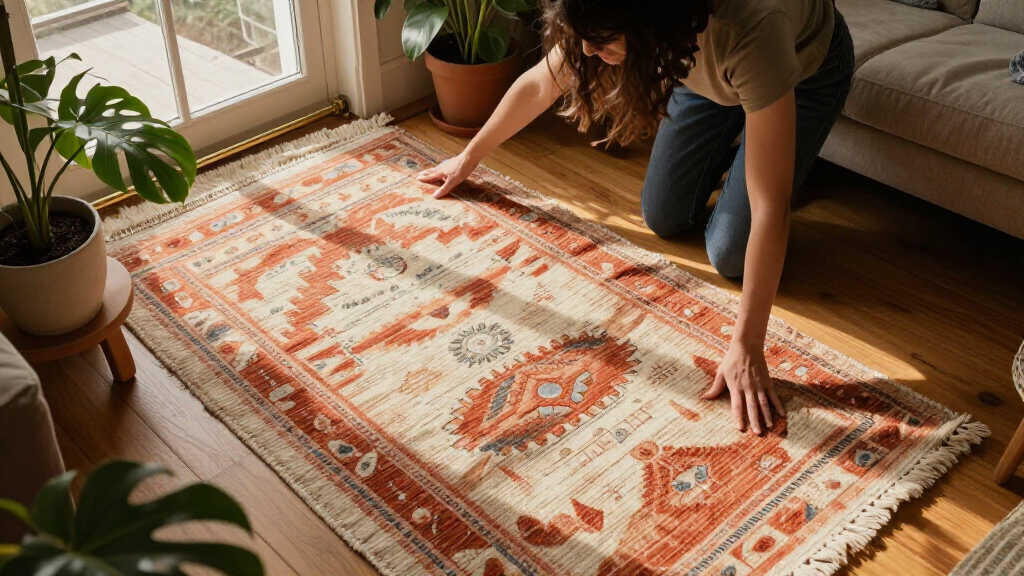
Chindi rugs are rag rugs made from strips of scrap fabric. In the method described by Hunker, the rug’s fabric is held in tight tubes by binding threads. Cutting those threads releases the strips, which can then be adjusted to the length needed for the window and attached to a rod. The article says one rug can cover a substantial area because the fabric is opened into wider strips, but it does not specify a finished window’s dimensions or how many rugs Wood used.
To hang the material, the strips can be looped over a curtain rod and pulled through, or tied in knots or bows. Hunker also describes options for changing the look: use shorter pieces for a valance, vary the lengths for a layered effect, or leave the rug’s top section intact as a header and attach it with curtain clips. These are suggestions in the report, not details confirmed as part of Wood’s own version.
The basic materials are a rug, a rod and sharp scissors. Other variations include securing the strips to a wide ribbon or fabric band so they move together, braiding strands, or adding beads. Hunker notes that the mixed colors and patterns revealed when the rug is unraveled may suit bohemian or maximalist rooms. It also lists a $10 Cotton Craft Chindi Rag Rug on Amazon as another low-cost option; prices can vary and the article does not provide a total project budget.
A Low-Cost Alternative for Decor
The idea offers renters and homeowners a way to make a colorful window treatment from a material sold as a floor covering, potentially at a lower upfront price than some ready-made curtains. Wood’s reported $5 rug price gives readers a specific example, while the ability to vary strip lengths and hanging methods allows the result to be adapted to different windows and room styles.
Its practical value is less certain. The source describes the project as a decorative covering, but gives no measurements or testing on privacy, glare, insulation or light blocking. The loose strips may let substantial light and visibility through. Readers who need dependable coverage should check the material in their own space rather than assume the DIY has the same function as conventional curtains or blinds.
Products Worth Considering

Philips Hue Bridge Pro Smart Lighting Hub

Dyson Cyclone V10 Origin Cordless Vacuum

eufy Security SoloCam S340 3K Dual-Lens Solar Security Camera
As an affiliate, we earn on qualifying purchases.
How the Rug Becomes a Curtain
Hunker’s report frames the project as one of several ways to reuse rugs in home decor. The key material is a chindi rug, whose fabric strips are twisted or sewn together in the finished floor covering. Releasing the binding exposes the separate colors and patterns, which become the visible feature of the window treatment.
The report gives a simple sequence: cut the binding threads, prepare strips to the desired length, then loop or tie them onto a rod. It also suggests a copper pipe as an alternative hanging bar and describes options for keeping the strips connected at the top. The source does not say whether Wood used these alternatives; they are presented as ways other makers could customize the project.
““Other than the rug, you’ll just need a curtain rod and a sharp pair of scissors.””
— Hunker’s report
Coverage and Durability Are Untested
The source does not provide the window size, number of rugs used, total cost, or time Wood spent on the project. It also does not report how well the covering blocks outside views, sunlight or drafts, or how the fabric performs after prolonged hanging. Those practical results should not be inferred from the demonstration.
Hunker does not specify the rug’s exact fiber content, how the cut edges behave, or whether the strips require additional finishing. The report also gives no installation details for the rod or guidance on weight limits. Anyone adapting the idea will need to check that the rod and its fittings can safely support the fabric and suit the window.
Check the Fit Before Cutting
Anyone considering the project can first measure the window and decide whether the aim is a full-length decorative treatment, a shorter valance or a mix of strip lengths. Hunker’s instructions imply that cutting is a central, irreversible step, so it is sensible to estimate the needed length and coverage before separating the rug. The creator’s demonstration provides a visual starting point, but the source gives no follow-up on how the covering held up in use.
Readers looking for actual privacy or light control should test the finished material at the window and compare it with their needs. The next confirmed development, if any, would be further details from Wood or Hunker about the project’s dimensions, cost and day-to-day performance; the source report does not announce an update or planned test.
Key Questions
What is a chindi rug?
A chindi rug is a rag rug made from strips of scrap fabric. In this project, cutting the binding threads frees those strips so they can be hung individually.
How much did Birdie Wood’s rugs cost?
Hunker reported that Wood found her rugs at Five Below for $5 each. The article does not state the total cost of her finished window covering.
Does the rug covering provide privacy or block sunlight?
The report does not test or quantify privacy or light control. Because the strips hang loosely, readers should check the coverage at their own window rather than treat it as equivalent to curtains or blinds.
What supplies are needed for the basic project?
The basic materials listed are a chindi rug, curtain rod and sharp scissors. Hunker says the fabric strips must be freed from their bindings, cut or adjusted to length, and tied or looped onto the rod.
Source: hunker.com