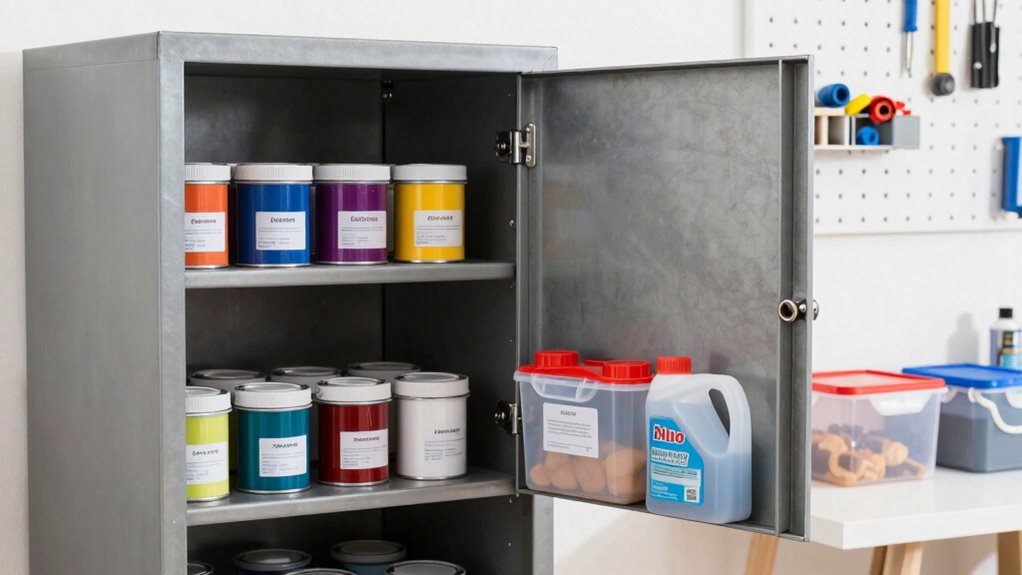

To store paint, solvents, and aerosols safely at home, keep them in sealed, durable containers, properly labeled and organized in a cool, dry, ventilated spot away from heat, flames, or children. Use cabinets or high shelves, and handle containers carefully to prevent spills. Maintain stable environmental conditions and dispose of old chemicals responsibly. Following these steps will help you avoid accidents and hazards. If you’d like more tips, you’ll find helpful details as you go on.
Key Takeaways
- Store paints, solvents, and aerosols in cool, dry, well-ventilated areas away from heat, flames, and direct sunlight.
- Use durable, properly labeled, and tightly sealed containers suitable for chemical storage.
- Keep chemicals out of reach of children by using locked cabinets or high, inaccessible shelves.
- Handle and transport containers carefully, ensuring lids are secure to prevent spills and leaks.
- Dispose of chemicals responsibly through community hazardous waste programs, avoiding drains or ground disposal.

VEVOR Flammable Cabinet, 18" x 18" x 35", Yellow
- Construction Material: Double-walled cold-rolled steel
- Fire-Resistant Design: Reduces fire risk with air space
- Durability: Galvanized steel resists rust and dents
As an affiliate, we earn on qualifying purchases.
As an affiliate, we earn on qualifying purchases.
Understand the Risks of Storing Paint, Solvents, and Aerosols at Home
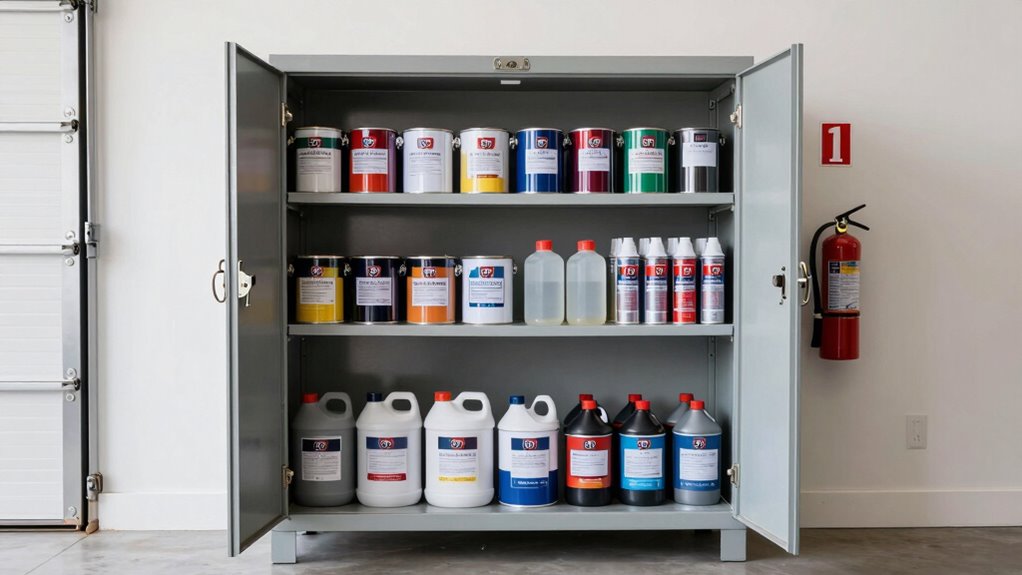
Storing paint, solvents, and aerosols improperly can pose serious safety risks in your home. These substances are highly flammable and can ignite easily, leading to dangerous fire hazards. Additionally, they contain chemicals that can react unexpectedly if mixed or exposed to heat, causing harmful chemical reactions. If stored near open flames, heat sources, or in poorly ventilated areas, the risk of fire and toxic fumes increases considerably. Spills or leaks can also create slip hazards or release volatile chemicals into your living space. Understanding these dangers helps you recognize why proper storage is vital. Keeping these items away from heat, flames, and out of reach of children minimizes the chance of accidents and ensures a safer environment for everyone in your home. Proper storage techniques can further reduce these risks and help maintain a safe household. Being aware of chemical reactions between different substances can prevent dangerous incidents. Knowing how to safely handle and store these materials can prevent many accidents before they happen.

Hacaroa 3 Pack Plastic Storage Jug for Non-Flammable Liquid, 1 Gallon/4L HDPE Motor Oil Container with White Lid&Ergonomic Handle, Black Empty Bottle for Bleach, Detergent, Lubricant, Not for Fuel Use
- Safety Notice: Not for flammable liquids or fuel
- Pack Contents: Includes 3 one-gallon HDPE jugs
- Dimensions: 6.5"L x 4.2"W x 11"H
As an affiliate, we earn on qualifying purchases.
As an affiliate, we earn on qualifying purchases.
Choose the Best Storage Containers for Paint and Chemicals
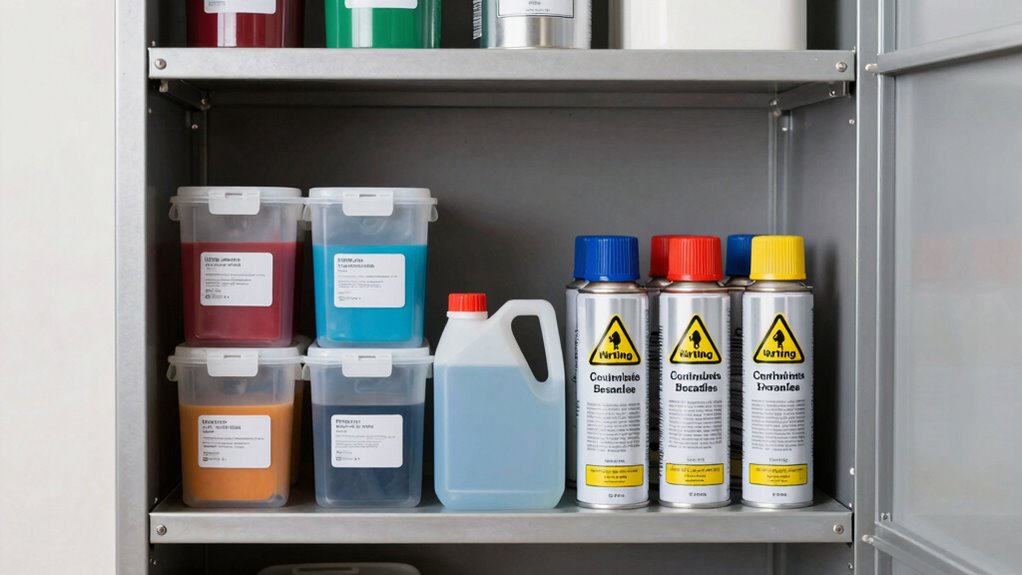
Choosing the right storage containers for paint and chemicals is vital to guarantee safety and prevent accidents. You need containers with high durability to withstand frequent use and prevent leaks. Look for options made from sturdy materials that won’t crack, rust, or degrade over time. Material compatibility is essential; select containers specifically designed for the substances you’re storing—plastic for water-based paints, metal or compatible plastics for solvents, and aerosols in approved aerosol cans. Make certain lids seal tightly to prevent spills and fumes. Avoid using containers not intended for chemical storage, as they can break down or react with contents, creating hazards. Properly labeled, durable, and compatible containers help keep your storage safe and your home protected from potential accidents. Additionally, understanding chemical compatibility can prevent reactions that might compromise container integrity or safety. Incorporating appropriate storage techniques further enhances safety by minimizing exposure and accidental spills.

Hazardous Flammable Storage Safety Cabinet 18"x18"x18" Fire Proof Safe
- Dimensions: 18"x18"x18" compact size
- Construction: All-welded double-walled steel
- Fire Resistance: Insulated for enhanced fire protection
As an affiliate, we earn on qualifying purchases.
As an affiliate, we earn on qualifying purchases.
Find the Safest Places in Your Home to Store Hazardous Items
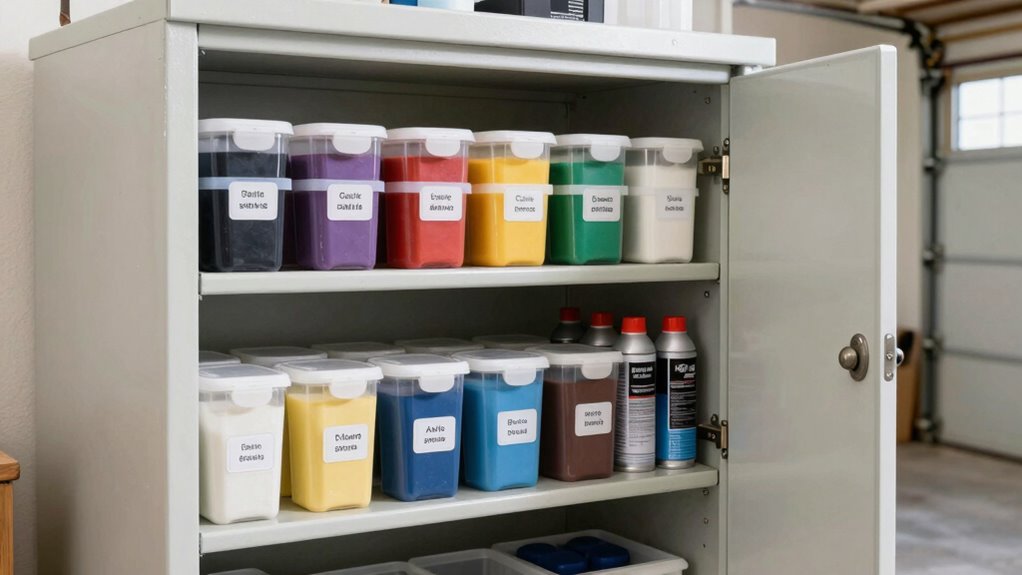
To minimize the risk of accidents, it’s essential to select the safest places in your home for storing hazardous items like paints, solvents, and aerosols. Choose a cool, dry, well-ventilated area away from heat sources and direct sunlight. Good home ventilation helps prevent the buildup of fumes, reducing health risks. Always store these items in a locked cabinet or a high, out-of-reach spot to implement effective childproofing measures. Avoid storing them near food, drinks, or in bathrooms where humidity can cause deterioration. Keep containers tightly sealed and clearly labeled. Regularly check for leaks or damage. By carefully selecting storage locations and ensuring proper ventilation and childproofing, you can considerably reduce potential hazards in your home. Additionally, smart pool automation systems can enhance safety by monitoring environmental conditions and alerting you to potential issues. Proper hazardous material storage practices are crucial for maintaining a safe home environment.

OSHA Flammable Liquid Safety Cabinet 40 Gallon, 23 x18.1×35 in, Lockable Metal Chemical Storage for Solvents/Paint/Fuel, Spill Containment Sump, Adjustable Shelf, Venting & Grounding, Steel, Garage
- Capacity: 40-gallon flammable liquid storage
- Spill Containment: Leak-resistant spill sump included
- Security: Lockable metal door for safety
As an affiliate, we earn on qualifying purchases.
As an affiliate, we earn on qualifying purchases.
Label and Organize Your Storage Space for Easy Access and Safety
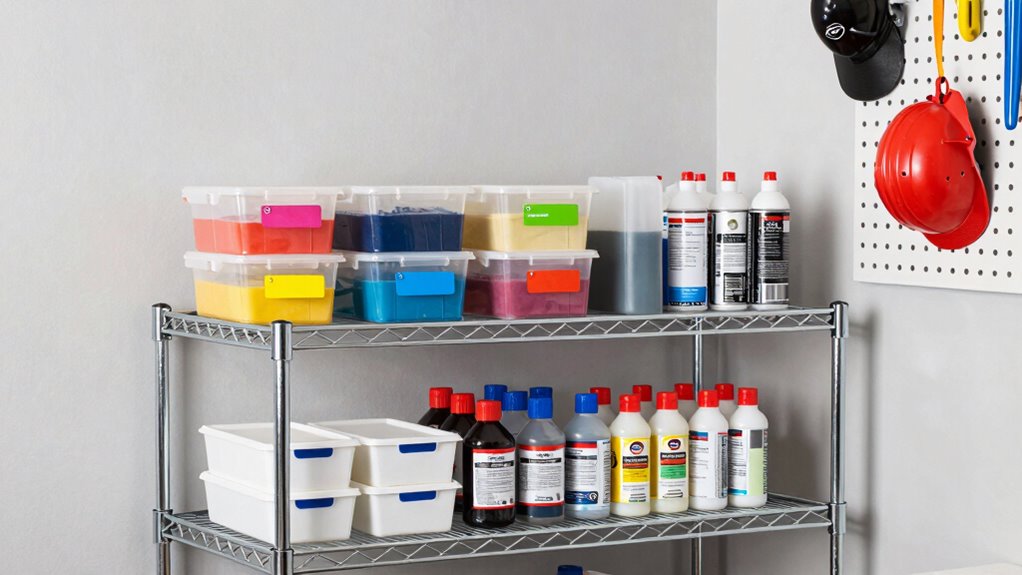
To keep your storage safe and efficient, use a clear labeling system for every container and shelf. Establish designated zones for paints, solvents, and aerosols to prevent mix-ups and accidental access. Organized spaces make it easier to find what you need quickly and guarantee safety at all times. Regularly testing your storage setup can help identify potential hazards and improve organization. Incorporating proper ventilation into your storage area can also reduce the buildup of fumes and enhance overall safety.
Clear Labeling System
Implementing a clear labeling system is essential for organizing your storage space efficiently and ensuring safety. Proper labels help you quickly identify contents, prevent accidental mixing, and enhance safety precautions. Use color matching to categorize different substances, such as red for flammable aerosols or blue for solvents. Clearly label containers with details like contents, date of purchase, and any safety warnings. For paint mixing, include specific labels to distinguish between colors and types to avoid costly mistakes. Keep labels legible and weather-resistant. Consistency is key—use uniform labeling styles to streamline your storage. This way, you can easily locate what you need, reduce hazards, and maintain an organized, safe environment for your paints, solvents, and aerosols.
Designated Storage Zones
Creating designated storage zones is essential for keeping your workspace organized and safe. You should assign specific areas for paints, solvents, and aerosols, making it easier to find what you need quickly. Use color coordination to differentiate between hazardous and non-hazardous materials—bright colors for dangerous items help remind you to handle them carefully. Implement ventilation strategies within each zone to prevent fumes from accumulating, such as installing exhaust fans or keeping windows open. Keep flammable products away from heat sources and clearly mark each zone with labels for added safety. Organizing by function and hazard level ensures you can access supplies efficiently and reduces the risk of accidents. Properly designed zones promote safety, streamline your workflow, and help maintain a secure storage environment.
Handle and Move Paint and Solvents Safely
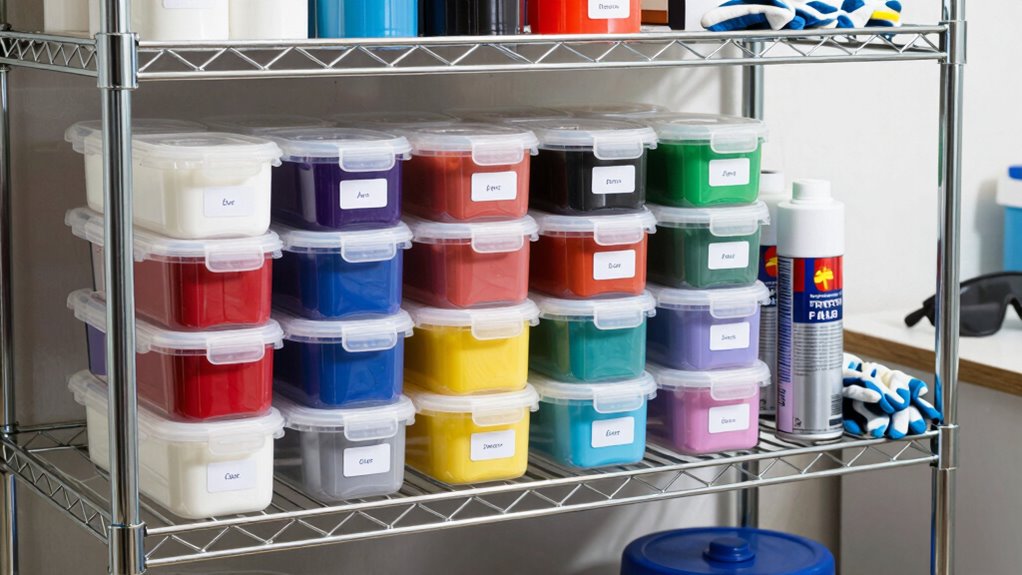
When handling paint and solvents, always use proper containers to prevent leaks or spills. Wear protective gear like gloves and goggles to keep yourself safe from splashes, and store the containers upright to avoid accidents. Following these simple steps helps guarantee you move and handle these materials safely. Additionally, DIY safety tips include keeping tools organized and away from children to minimize hazards.
Use Proper Containers
Using the right containers is essential for safely handling and moving paint, solvents, and aerosols. Choose containers that are clearly labeled, leak-proof, and made of materials compatible with the substances. When doing color matching or paint mixing, use containers that prevent contamination and preserve quality. Proper containers help prevent spills and accidental exposure, reducing fire and health risks. Always guarantee lids are tightly secured before transport. Use smaller containers for mixing to avoid unnecessary waste and spills. Keep containers upright and avoid overfilling. Store paints and solvents in containers designed for chemical storage to maintain safety and product integrity. Proper containers make handling safer and help maintain the consistency of your paint projects.
- Use clearly labeled, leak-proof containers
- Select chemical-compatible materials
- Secure lids tightly during transport
- Opt for smaller containers for mixing
Wear Protective Gear
Have you ever considered how much safety is improved simply by wearing the right protective gear? When handling paint, solvents, or aerosols, protective gear is essential. Safety gloves protect your skin from harmful chemicals and prevent accidental spills from causing irritation or burns. They also improve your grip, reducing the risk of dropping containers. Besides gloves, consider wearing goggles to shield your eyes from splashes and fumes. A long-sleeved shirt and pants help minimize skin exposure. Always check that your protective gear fits properly and is in good condition. Taking these precautions guarantees you handle and move hazardous materials safely, minimizing health risks and preventing accidents. Proper protective gear is a simple, effective way to keep yourself safe during paint and solvent tasks. Incorporating knowledge about water safety can further enhance your precautions when working with liquid substances, especially since many solvents and paints involve hazardous materials that require careful handling. Additionally, understanding piercing aftercare can remind you to avoid irritants that could complicate safety procedures when working around chemicals. Being aware of chemical exposure risks can help you stay vigilant and better prepared to protect yourself in hazardous environments. Wearing appropriate personal protective equipment is also crucial in maintaining a safe workspace and preventing long-term health issues.
Store Upright Safely
Ever wondered why storing paint and solvents upright is so important? Keeping them this way prevents leaks, spills, and accidental exposure, guaranteeing safety and maintaining their quality. When you store paint upright, you help preserve the paint color and avoid drying out or contamination. It also makes it easier to handle and transport containers safely. Proper storage practices can extend the lifespan of your paints and solvents, ensuring they remain effective when needed. Be mindful of storage duration—long-term storage can cause deterioration if not stored properly. Always secure containers tightly and keep them in a cool, dry place. Moving paint and solvents upright minimizes the risk of accidents and makes sure they stay in prime condition for future use. Proper storage helps you avoid costly messes and ensures your workspace remains safe and organized. Using gap-sealing products can further enhance safety by preventing leaks and spills during storage.
Keep Storage Conditions Ideal With Proper Temperature and Humidity
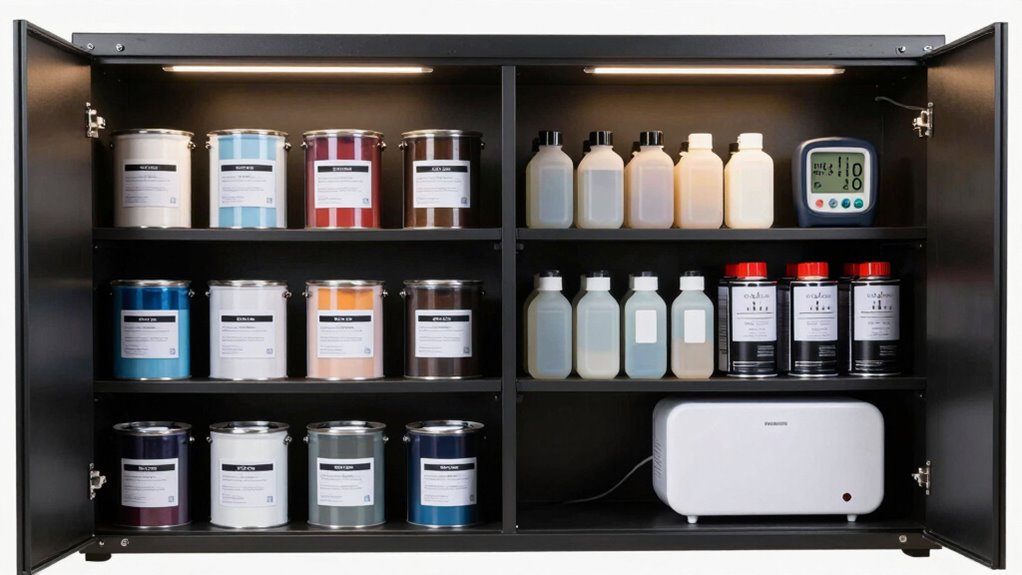
Did you know that maintaining the right temperature and humidity levels is essential for safe storage of paint, solvents, and aerosols? Proper temperature regulation prevents these materials from degrading or becoming hazardous. Keep your storage area between 50°F and 77°F to avoid freezing or overheating. Humidity control is equally important; high moisture levels can cause containers to corrode or leak. Aim for a dry, well-ventilated space, ideally with humidity below 70%. Avoid extreme fluctuations, as they can compromise the integrity of your containers. Regularly check the environment to guarantee consistent conditions. Ensuring proper storage safety practices can help you prevent accidents and ensure compliance with safety regulations. Additionally, understanding microplastics in dust can inform you about potential indoor air quality issues that may arise from improper storage environments. By managing temperature and humidity, you reduce risks of leaks, spills, and potential health hazards, keeping your storage safe and your supplies in ideal condition.
Prevent Spills and Leaks in Your Storage Area
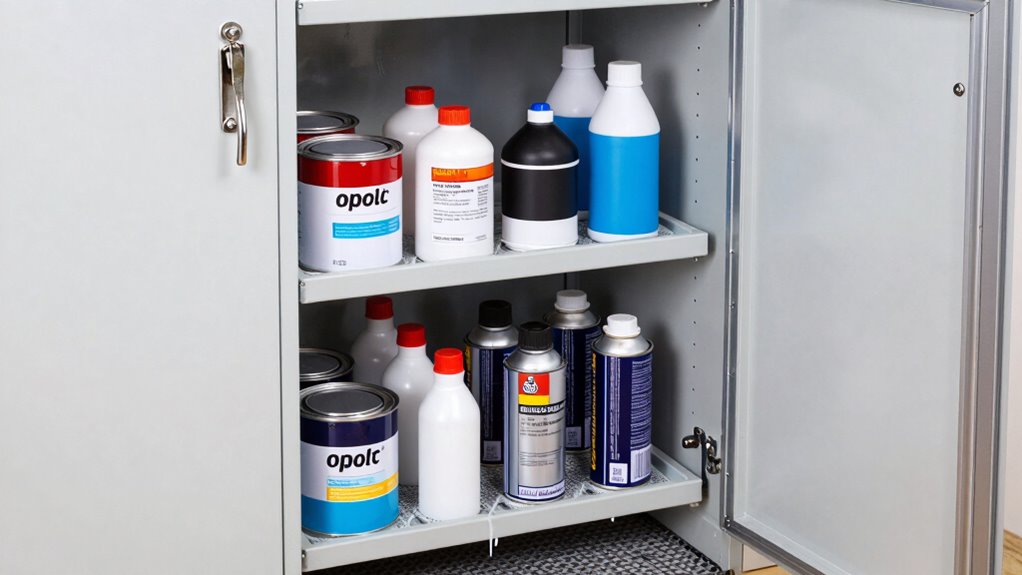
To prevent spills and leaks in your storage area, it’s essential to prioritize proper container handling and organization. Regular storage container maintenance helps guarantee lids are secure and containers are intact. Implement spill prevention techniques like placing containers on stable shelves and avoiding overstacking. Use secondary containment trays to catch leaks or drips, and keep frequently used items easily accessible to reduce accidental knocks. Label containers clearly to prevent mishandling, and check for signs of deterioration regularly. These measures minimize risks and keep your storage safe. Remember, proper organization and upkeep are key to preventing costly accidents and ensuring your paint, solvents, and aerosols stay secure. Staying informed about regional flavor profiles and storage insights can further enhance safety practices. Stay vigilant with your storage container maintenance to keep leaks at bay.
Dispose of Old or Unused Paint and Chemicals Responsibly
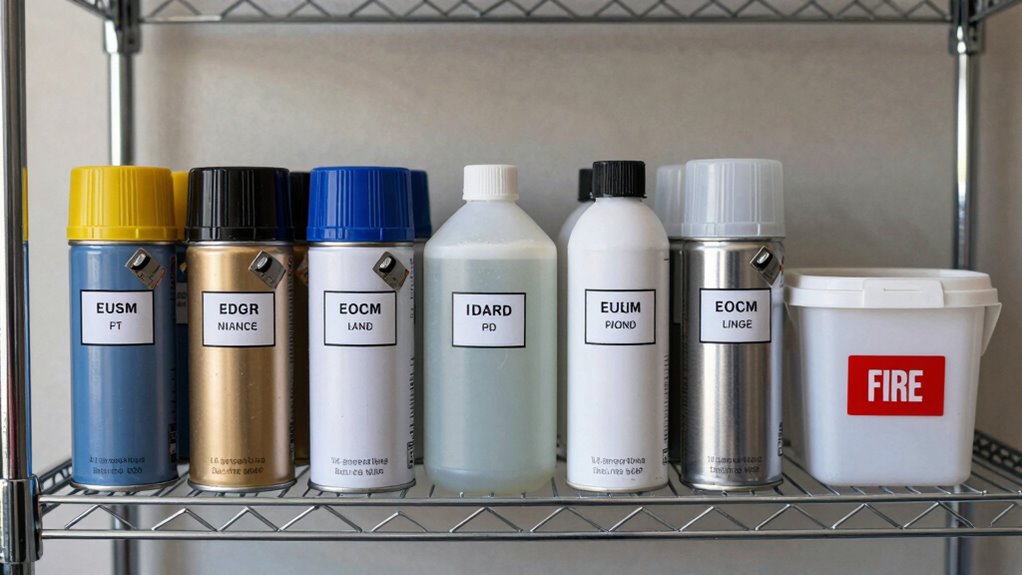
Proper disposal of old or unused paint and chemicals is essential to prevent environmental contamination and health hazards. You should never pour paints, solvents, or aerosols down the drain or onto the ground, as this can harm water sources and soil. Instead, explore recycling options available in your community, such as hazardous waste collection events or designated drop-off sites. Many areas offer programs to safely dispose of or recycle leftover paint and chemicals, reducing their environmental impact. If recycling isn’t an option, follow local regulations for disposal, ensuring you keep chemicals in their original containers with labels intact. By disposing of these substances responsibly, you protect your environment and contribute to a safer, healthier community. Smart locks and office gear can also help secure storage areas for these hazardous materials. Additionally, understanding regional cultural activities can guide you to community events that promote environmental awareness and safe disposal practices.
Frequently Asked Questions
How Often Should I Inspect My Stored Paint and Chemicals for Safety?
You should inspect your stored paint and chemicals at least once every three to six months. During inspections, check for leaks, damaged containers, and proper labeling. Confirm chemical compatibility by verifying storage container labels and avoiding mixing incompatible substances. Regular inspections help prevent accidents or deterioration, keeping your storage safe. If you notice issues, address them immediately by properly disposing of or repairing the chemicals and containers.
Are There Specific Fire Safety Measures for Storage Areas?
Did you know fires caused by improperly stored chemicals account for over 10% of home fires? To stay safe, make certain your storage area has proper ventilation requirements to prevent buildup of fumes. Use fire-resistant containers to minimize fire risk, and keep the area clear of heat sources or sparks. Regularly check that ventilation is unobstructed and containers are sealed tightly to prevent accidents.
Can I Store Different Chemicals Together Safely?
You shouldn’t store different chemicals together unless they’re chemically compatible. Always check the chemical compatibility before mixing or storing them nearby. Use storage container labels to identify each substance clearly and make certain they’re stored in appropriate, clearly labeled containers. Keep incompatible chemicals apart to prevent reactions, leaks, or accidents. Proper organization and understanding of chemical properties help keep your storage safe and reduce the risk of hazards.
What Signs Indicate My Paint or Solvents Are Expired or Unsafe?
You’ll know your paint or solvents are unsafe if they develop a strange smell, change in color, or become thick and clumpy. If you notice a chemical spill or see separation, discard them. Proper ventilation is essential, so avoid inhaling fumes. Expired products can release harmful vapors, increasing risk. Always check labels and storage dates, and when in doubt, safely dispose of questionable materials to protect yourself and your environment.
How Do I Prevent Accidental Ingestion or Misuse of Stored Chemicals?
To prevent accidental ingestion or misuse, you should implement childproofing measures like locking cabinets and securing containers out of reach. Always use proper labeling to clearly identify chemicals and their hazards, ensuring everyone knows what’s inside. Store paints, solvents, and aerosols in high, locked cabinets, and never leave them unattended. Educate your household about the dangers, and regularly check that safety measures remain in place.
Conclusion
Now that you know how to store your paints, solvents, and aerosols safely, imagine the peace of mind you’ll have knowing your home is protected. With the right containers, proper labeling, and careful handling, you’re creating a safer environment. But the real question is: are you prepared to take these simple steps today? Your next project could depend on it—so don’t wait. The safety of your home is just a decision away.