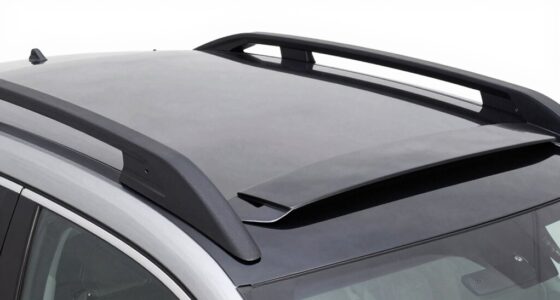

Your car’s trunk load limit is the maximum weight it can safely carry without risking damage or unsafe handling. Check your owner’s manual or look for detailed labels inside the driver’s door that show the Gross Vehicle Weight Rating (GVWR) and payload capacity. Overloading can cause handling issues, increased tire wear, and legal penalties. Staying within these limits helps your vehicle last longer and keeps you safe — learn more about how to manage your load effectively.
Key Takeaways
- Check the vehicle’s GVWR and payload capacity in the owner’s manual or load capacity label inside the driver’s door.
- Measure individual items’ weight and sum them to ensure total load stays within the car’s specified limits.
- Distribute weight evenly, placing heavier items low and centrally to maintain stability and safety.
- Secure cargo with straps or nets to prevent shifting and ensure consistent handling.
- Avoid overloading, which can impair vehicle handling, cause damage, and lead to legal penalties.
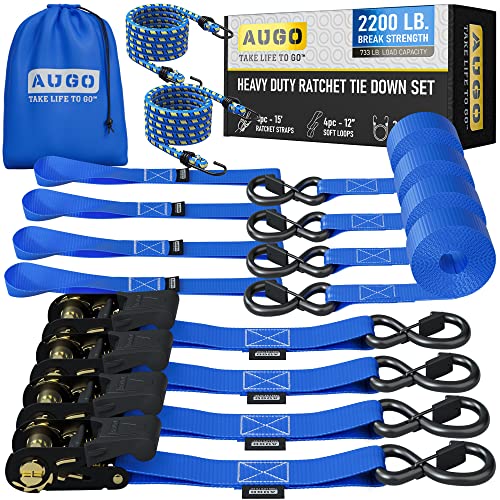
AUGO Ratchet Straps Heavy Duty 4 Pack -15 FT – 2200 LB Break Strength – with Safety Lock S Hooks – Cargo Straps for Moving, Appliances, Motorcycle – Soft Loop Tie Down Straps
TIE DOWN ANYTHING WITH CONFIDENCE | Pack of [4] 15 Ft Ratchet Strap Tie Downs Provides Durable, Dependable…
As an affiliate, we earn on qualifying purchases.
As an affiliate, we earn on qualifying purchases.
Why Your Car’s Trunk Load Limit Matters

Your car’s trunk load limit is essential because exceeding it can compromise safety and vehicle performance. Knowing your trunk capacity helps you avoid cargo restrictions that could lead to dangerous situations on the road. Overloading your trunk can affect your car’s handling, braking, and stability, making every drive less safe. Plus, it strains your suspension and tires, increasing wear and tear. Properly managing your load ensures your vehicle operates efficiently and reduces the risk of damage or accidents. Always check your owner’s manual for the maximum weight your trunk can hold. Respecting these limits not only keeps you safe but also prolongs your car’s lifespan. Incorporating vehicle safety tips and other safety measures into your vehicle care can promote a more sustainable and mindful driving experience. Staying within your trunk’s load limit is a straightforward way to maintain peak performance and avoid costly repairs. Additionally, understanding the trunk load limits specific to your vehicle model can help prevent inadvertent overloading. Being aware of the electric bike market and its increasing popularity can help you choose appropriate cargo solutions for your vehicle.

Trailer Tongue Weight Scale 2000 lbs Capacity – RV Hitch Load Gauge with Waterproof Storage Case – Portable Towing Safety Tool Accessories Kit for Trucks, Travel Trailers, Campers, Cargo & Boat
Accurate Weight Measurement: Introducing our Trailer Tongue Weight Scale,a reliable tool for safe towing practices.With 2000 LBS Capacity,…
As an affiliate, we earn on qualifying purchases.
As an affiliate, we earn on qualifying purchases.
How to Find Your Vehicle’s Load Limits and What They Mean

To find your vehicle’s load limits, start by checking the owner’s manual or the manufacturer’s specifications. These documents provide the key numbers you need to understand your car’s maximum weight capacity. Interpreting load capacity labels on your vehicle will help you avoid overloading and keep your drives safe. Additionally, understanding safety ratings and ease of use for car seat and stroller combinations can ensure you select the safest options for transporting your family. Being aware of the appropriate cargo management tools can also assist in distributing weight evenly and preventing accidents. Knowing your vehicle’s load capacity can help you plan your trips more efficiently and prevent potential damage to your car. Moreover, understanding the impact of contrast ratio on image quality can aid in choosing the right projector for your home cinema needs. Recognizing family photo mishaps can prepare you to handle unexpected situations during outings, ensuring a smoother experience.
Understanding Vehicle Specifications
Understanding vehicle specifications is essential for safely determining how much weight your vehicle can carry. To do this, you need to know where to find key details on your vehicle. These include the maximum payload capacity, gross vehicle weight rating (GVWR), tire pressure, and recommended maintenance checks. A further consideration is ensuring your vehicle’s filter sizing/flow is appropriate for any added load, to maintain optimal performance. Imagine: 1. Checking the sticker inside your driver’s door for the payload limit. 2. Reading the owner’s manual for GVWR details. 3. Inspecting your tires to ensure proper tire pressure for safe load handling. 4. Regular vehicle maintenance to keep everything in excellent condition. Additionally, understanding sound vibrations can help you maintain equipment effectiveness, especially when handling added loads or performing maintenance. Knowing these specs helps prevent overloading, which can compromise safety and tire longevity. Staying aware of your vehicle’s load capacity and maintaining proper tire pressure are vital for safe driving and vehicle longevity.
Interpreting Load Capacity Labels
Locating and interpreting load capacity labels on your vehicle helps you understand its weight limits and stay within safe boundaries. These labels, usually found on the driver’s door frame or inside the glove compartment, specify the maximum payload your car can handle. Pay close attention to the gross vehicle weight rating (GVWR) and the gross axle weight rating (GAWR). Knowing these figures helps you guarantee cargo security and prevent overloading. Proper load stabilization is essential; distributing weight evenly and securing items prevents shifting that could compromise handling. Always adhere to these limits to avoid damaging your vehicle or risking accidents. Additionally, understanding AI discoveries in healthcare and technology underscores the importance of responsible vehicle use and safety. By understanding and following the load capacity labels, you keep your vehicle safe and maintain prime performance while carrying cargo. Recognizing the evolution of vehicle safety standards further emphasizes the need to respect weight limits and secure loads properly. Understanding load capacity labels is a crucial part of responsible vehicle use that ensures safety and longevity. Additionally, being aware of your vehicle’s load limits can help you prevent costly repairs and extend its lifespan.

DRIVE – Car Trunk Organizer – Collapsible, Multi-Compartment Automotive SUV Car Organizer for Storage w/Adjustable Straps – Truck & Car Accessories for Women and Men – Black
COLLAPSIBLE – Car organization is now easy to come by with the Drive Auto car trunk organizer. It…
As an affiliate, we earn on qualifying purchases.
As an affiliate, we earn on qualifying purchases.
Curb Weight, Payload, and Gross Vehicle Weight Explained

When you’re evaluating a vehicle’s capacity, it’s essential to grasp the differences between curb weight, payload, and gross vehicle weight. Curb weight is your vehicle’s own mass without cargo or passengers. Payload refers to the additional cargo capacity, including passengers and items in the trunk. To ensure safety and efficiency, it’s important to understand maximum payload capacity so you don’t overload your vehicle. Knowing your vehicle’s weight limits can prevent accidents and mechanical issues. Gross vehicle weight (GVW) combines curb weight and payload, showing the maximum total weight your vehicle can handle safely. Visualize it like this:
- Your car’s vehicle mass, ready to hit the road.
- Cargo capacity, including luggage, groceries, or gear.
- Passengers seated comfortably inside.
- The total weight, which shouldn’t exceed the GVW for safe driving. Additionally, being aware of vehicle performance metrics can help dealerships or manufacturers optimize their vehicle data and customer experience. Understanding these terms helps you stay within safe limits, ensuring your vehicle handles properly and keeps you safe on the road. Furthermore, knowing how to render lard can be a helpful skill for self-sufficiency during long trips or emergencies.

Pallet Rack Capacity Labels 3×4 Inch Caution MAX Load/Shelf LBS Warning Stickers – 25 Pcs/Pack Industrial Strength Sticker for Warehouse Safety
25 pcs Pallet rack capacity labels for forklift drivers in warehouses. 3×4 Inch industrial strength stickers fitting most…
As an affiliate, we earn on qualifying purchases.
As an affiliate, we earn on qualifying purchases.
Signs You’re Overloading Your Trunk and Why It’s Dangerous

Have you noticed your car handling differently or making strange noises? Overloading your trunk can cause visible signs, especially if you neglect seasonal adjustments that affect weight distribution. You might feel your vehicle sway more than usual or notice a rougher ride. Changes in braking or steering responsiveness are warning signs, indicating your cargo security isn’t ideal. Excess weight often leads to uneven tire wear and can trigger warning lights on your dashboard. If you’re consistently overloading, it could compromise safety, increasing the risk of accidents. Always check your vehicle’s load limits and adjust for seasonal conditions, like snow or rain, which can affect traction. Proper cargo security is essential to prevent shifting loads that could destabilize your car or cause damage. Additionally, understanding upfitting fundamentals can sometimes influence how confidently you handle your vehicle and manage your load.
Measuring and Calculating Your Trunk Load Accurately

To make certain you’re not overloading your trunk, accurate measurement and calculation are key. Properly assessing your cargo ensures cargo security and optimal load management. Here’s how to do it:
- Gather a reliable scale—use it to weigh individual items or your entire trunk load.
- Organize your items—stack boxes and bags neatly to visualize space and avoid hidden weight pockets.
- Calculate total weight—add up all item weights to ensure they don’t exceed your vehicle’s limit.
- Check your car’s manual—verify the maximum load capacity and adjust your cargo for load optimization.
This process helps prevent overloading, maintains vehicle balance, and keeps your cargo secure during every trip.
Evenly Distribute Weight to Keep Your Car Safe

To keep your car safe, make sure to balance heavy items evenly across your trunk. Use proper packing techniques to prevent shifting and uneven weight distribution. When you organize your load well, you’ll maintain better control and avoid potential accidents.
Balance Heavy Items
Balancing heavy items in your trunk is essential for maintaining your vehicle’s stability and safety. Proper cargo organization ensures the weight is evenly distributed, preventing uneven wear and handling issues. To effectively balance your load, consider these tips:
- Place the heaviest items on the floor, close to the rear seats or center of the trunk.
- Distribute weight evenly side to side to avoid shifting during turns.
- Use straps or nets to secure cargo, preventing movement while driving.
- Avoid stacking heavy objects high; keep them low and stable for better weight distribution.
Use Proper Packing Techniques
Using proper packing techniques helps guarantee your vehicle remains stable and safe during the trip. To improve cargo security, evenly distribute weight across the trunk, placing heavier items low and toward the center. This prevents shifting and maintains balance, reducing the risk of accidents. Packing efficiency involves organizing items so they’re secure and accessible, minimizing unnecessary movement. Use straps or bungee cords to keep belongings in place and prevent them from sliding around. Avoid overloading one side or corner, which can cause uneven weight distribution. Keep the load compact and tight, ensuring nothing obstructs your view or blocks crucial vehicle functions. Proper packing techniques not only protect your cargo but also enhance overall driving safety, helping you arrive at your destination without surprises or hazards.
Legal Limits and Penalties for Overloading Your Vehicle

Overloading your vehicle beyond the legal weight limits can lead to serious consequences. Authorities enforce strict rules to guarantee road safety and protect vehicle insurance policies. When caught, you face:
- Fines that increase with the severity of the overload
- Points on your driver’s license leading to higher insurance premiums
- Vehicle impoundment or suspension of your driving privileges
- Increased risk of accidents due to compromised vehicle handling and braking
Overloading not only risks hefty penalties but also endangers lives and can void your vehicle insurance coverage in case of an accident. Staying within legal limits helps maintain road safety and keeps your costs predictable. Always respect weight limits to avoid unnecessary legal and financial trouble.
Best Practices for Packing Your Car Safely and Efficiently
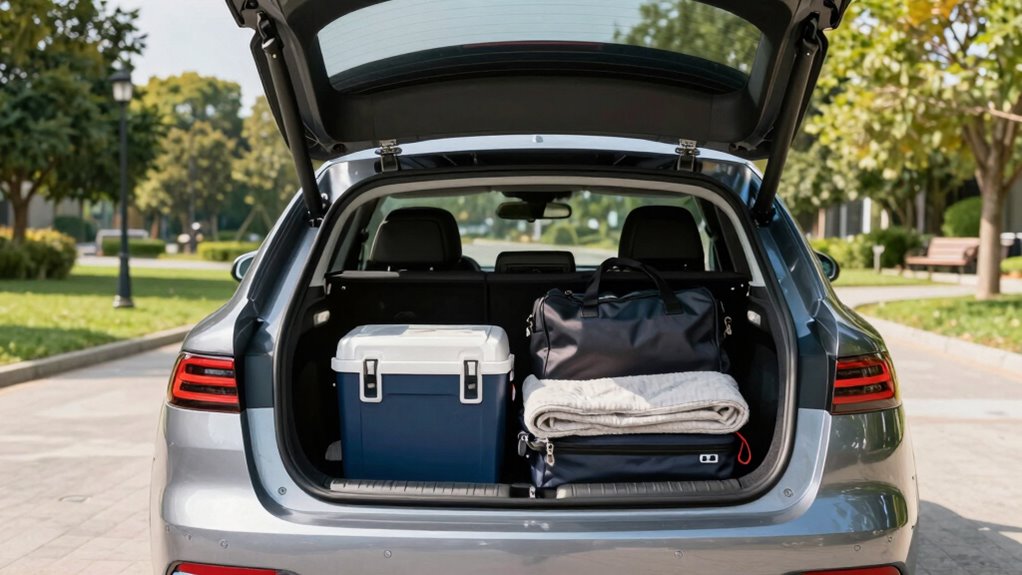
To pack your car safely and efficiently, start by organizing your items into categories and prioritizing essentials. This helps improve packing efficiency and ensures you don’t overload your vehicle. Use proper cargo security techniques, like securing loose items with straps or nets, to prevent shifting during transit. Distribute weight evenly across the trunk and backseat to maintain vehicle balance and control. Place heavier items on the bottom and towards the center to reduce the risk of damage or imbalance. Keep frequently used items easily accessible, and avoid overpacking to prevent exceeding load limits. Efficient packing not only protects your cargo but also enhances safety by keeping the vehicle stable. Following these best practices will help you travel confidently, knowing your load is secure and within safe limits.
Common Loading Mistakes to Avoid

Even with careful packing, mistakes can still happen that compromise safety and vehicle performance. Overloading hazards and weight miscalculations are common errors that can lead to accidents or damage. To avoid these pitfalls, watch out for:
- Placing heavy items at the trunk’s bottom, risking imbalance.
- Ignoring the vehicle’s load limit, risking overloading hazards.
- Forgetting to distribute weight evenly across the trunk.
- Underestimating the weight of packed items, leading to miscalculations.
These mistakes can cause poor handling, increased wear, or brake failure. Always double-check your load against your car’s maximum capacity. Properly balancing weight and avoiding overloading hazards ensures safety and prolongs your vehicle’s lifespan.
How Respecting Load Limits Can Help Your Car Last Longer
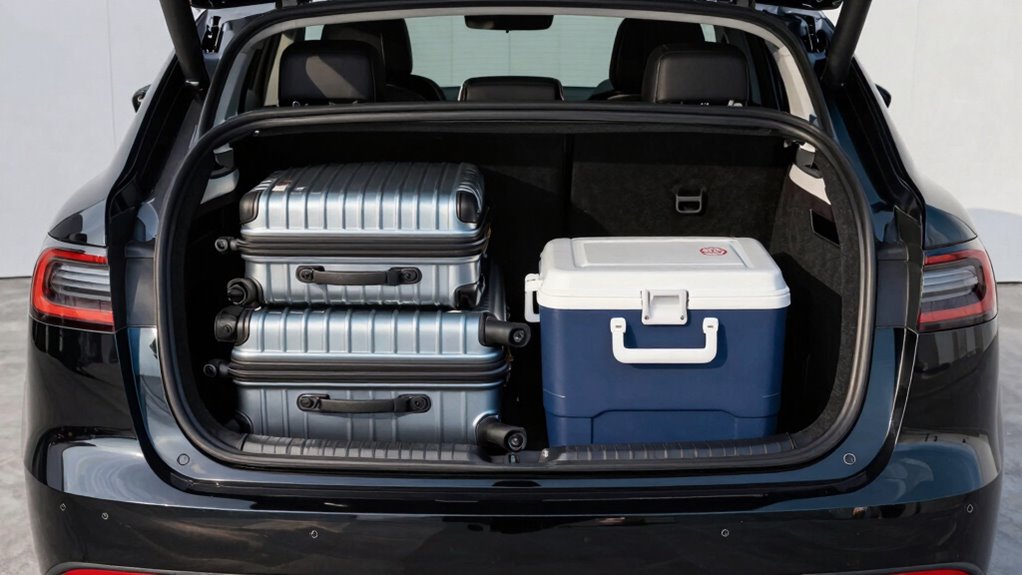
Respecting your car’s load limits is essential for maintaining its overall health and longevity. Overloading strains the suspension, brakes, and tires, leading to faster wear and potential repairs. Proper cargo security prevents shifting items that could damage the interior or cause accidents. By keeping your trunk organized, you distribute weight evenly, reducing stress on specific components. When you stay within load limits, your vehicle’s engine works efficiently, saving fuel and reducing engine wear. Additionally, avoiding excess weight minimizes the risk of damage to the chassis and suspension parts, extending your car’s lifespan. Practicing good trunk organization and adhering to load limits not only keeps your car running smoothly but also saves you money on repairs and replacements over time.
Frequently Asked Questions
How Do Weather Conditions Affect Trunk Load Limits?
Weather conditions can greatly influence your trunk load limits by affecting safety and road conditions. Wet, icy, or snowy weather decreases traction and increases stopping distances, meaning you should carry less in your trunk to maintain safety. Heavy rain or snow can also shift or damage your cargo, so it’s wise to adjust your load accordingly. Always prioritize weather safety and adapt your trunk load to guarantee ideal road safety during adverse conditions.
Can Adding Roof Racks Change My Vehicle’s Load Capacity?
Adding a roof rack can increase your vehicle’s cargo capacity, but it doesn’t change the overall load limits. Think of your car as a ship; while a roof rack adds extra space like sails catching wind, it still must stay within the vessel’s safe limits. Always check your vehicle’s maximum load capacity and confirm your cargo, including items on the roof rack, remains within safe boundaries to avoid damage.
Do Trailer Hitch Weights Impact Trunk Load Limits?
Trailer hitch weights can impact your trunk load limits because the trailer weight and hitch capacity influence how much you can safely carry. When you tow, the trailer’s weight shifts some load from your trunk, but exceeding hitch capacity or trailer weight limits can strain your vehicle’s suspension and compromise safety. Always check your hitch capacity and trailer weight to make certain you stay within safe limits, protecting both your vehicle and cargo.
How Does Passenger Weight Influence Trunk Load Capacity?
Think of your car as a delicate balance scale, where passenger weight distribution directly affects trunk load capacity. When you add heavier passengers, it’s like shifting the scale’s fulcrum, reducing space for cargo. To verify cargo safety considerations, evenly distribute weight and account for passenger load. This way, you prevent overloading, maintain vehicle stability, and protect your car’s structural integrity, keeping your journey smooth and safe.
Are There Different Load Limits for City vs. Highway Driving?
Yes, load limits can differ between city and highway driving due to factors like cargo organization and weight distribution. On highways, your car faces higher speeds and longer distances, requiring you to evenly distribute weight to maintain stability and safety. In the city, frequent stops and turns demand careful cargo organization to prevent overloads. Always check your vehicle’s load limits and adjust cargo placement accordingly for safe, efficient driving.
Conclusion
By understanding your car’s load limits, you keep yourself safe, protect your vehicle, and guarantee smooth drives. You measure accurately, pack wisely, and avoid overloading. You respect the weight restrictions, follow the guidelines, and maintain your car’s longevity. You stay alert, drive responsibly, and enjoy worry-free trips. Because knowing your trunk’s limits isn’t just about compliance—it’s about safety, efficiency, and peace of mind. Keep these principles in mind, and your vehicle will serve you well for miles to come.