
TL;DR

Get home appliances delivered free with Prime
- Fast, free delivery on millions of items
- Prime Video, Amazon Music and more included
- Member-only deals all year
A homeowner made a risky color choice in a small hallway, which initially caused concern but ultimately transformed the space. The decision highlights how bold design can address spatial limitations.
A homeowner’s daring decision to paint their tiny hallway a bold, unconventional color has unexpectedly transformed the space, turning a design mistake into a stylish solution. The change, which initially raised concern, is now seen as a creative fix that could inspire others facing similar small-space challenges.
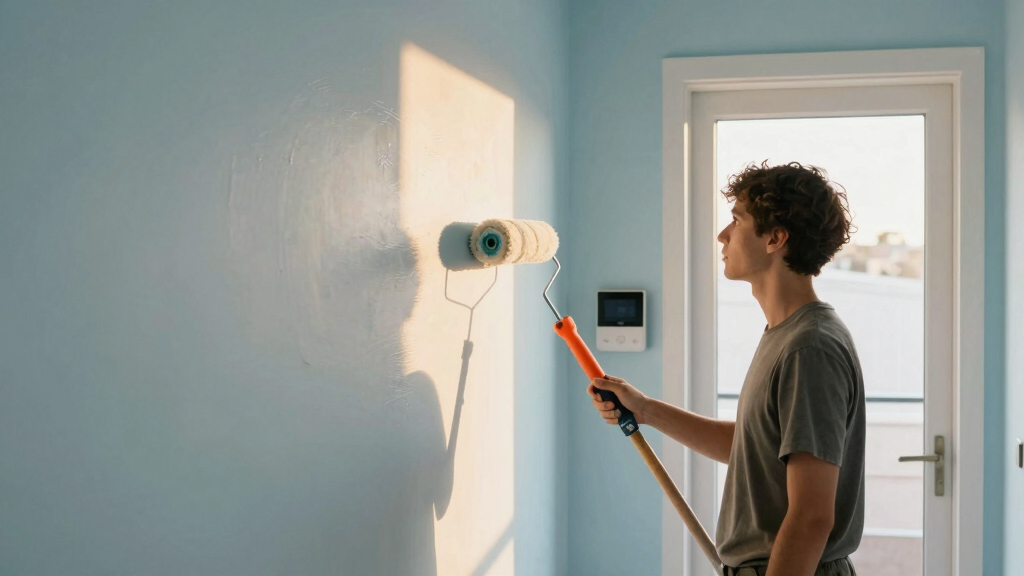
The homeowner, who wished to remain anonymous, initially chose a light, neutral color for their tiny hallway but later decided to switch to a vibrant, dark hue after feeling the space looked dull. The new color, a deep navy blue, was considered risky because dark shades tend to make small areas feel more cramped. However, after applying the paint, the homeowner reports that the hallway appears more spacious and visually striking.
Sources confirm that the project was completed over a weekend, with the homeowner opting for a high-gloss finish to enhance the boldness of the color. The change was made after a consultation with a local interior designer, who suggested that dark colors can create an illusion of depth and height in small spaces.
The homeowner shared that, despite initial doubts, the new color has received positive feedback from visitors and has significantly improved the hallway’s aesthetic and perceived size. This experiment demonstrates how unconventional color choices can sometimes turn design mistakes into successful solutions.
Why Bold Colors in Small Spaces Can Be Game-Changers
This story highlights how daring design choices, such as using dark or bold colors in small areas, can challenge traditional decorating rules. It underscores that, with proper execution, unconventional choices can enhance spatial perception and aesthetic appeal. For homeowners and interior designers, it suggests that taking risks with color can sometimes lead to unexpectedly positive results, especially in limited spaces.
Products Worth Considering

Blueair Blue Pure 211i Max Air Purifier

Dyson Ball Animal 3 Extra Upright Vacuum

Dyson Ball Animal 2 Plus Corded Vacuum
As an affiliate, we earn on qualifying purchases.
Small Spaces and Color Psychology: Common Practices and New Approaches
Traditionally, light and neutral colors are recommended for small rooms to maximize brightness and openness. However, recent trends show that dark and bold hues are increasingly used to create depth and sophistication, even in tiny areas. This shift is supported by interior design experts who note that color choice can significantly influence spatial perception.
The homeowner’s decision reflects a broader movement toward personalized, expressive decorating, where conventional rules are challenged. The initial mistake was choosing a color that was too light, which made the hallway appear dull, prompting the switch to a darker shade. This aligns with recent studies suggesting that contrasting tones can create focal points and visual interest in small spaces.
“Dark colors, when used thoughtfully, can add depth and make small spaces feel larger, contrary to common assumptions.”
— Interior designer Sarah Lee
Long-term Effects and Broader Applicability of Bold Colors in Small Spaces
It remains unclear whether this color choice will maintain its positive impact over time or if similar results can be achieved by others. The homeowner’s experience is anecdotal, and more research is needed to determine the general effectiveness of bold dark hues in small hallways across different styles and lighting conditions.
Potential for Replication and Future Design Experiments
Designers and homeowners may experiment with bold colors in small spaces, inspired by this example. Future projects could include testing different shades and finishes to evaluate long-term durability and aesthetic appeal. Experts suggest that personalized approaches, considering lighting and furniture, will be key to replicating this success.
Key Questions
Can dark colors make small hallways look larger?
Yes, when used strategically, dark colors can create depth and the illusion of more space, especially with proper lighting and high-gloss finishes.
Is it risky to paint a small space a bold color?
While it can be considered risky, this example shows that bold colors can pay off when combined with thoughtful design choices. Consulting a professional can help mitigate potential issues.
What other color strategies work well in tiny hallways?
Light neutrals, reflective finishes, and contrasting accents are traditional options, but recent trends favor bold hues for a more personalized look.
How long does it take to repaint a small hallway?
Typically, a weekend is sufficient for preparation, painting, and drying, depending on the size and complexity of the space.
Should I consider professional help for bold color choices?
Yes, especially for high-contrast or dark shades, as experts can advise on finishes, lighting, and application techniques to achieve optimal results.
Source: rss