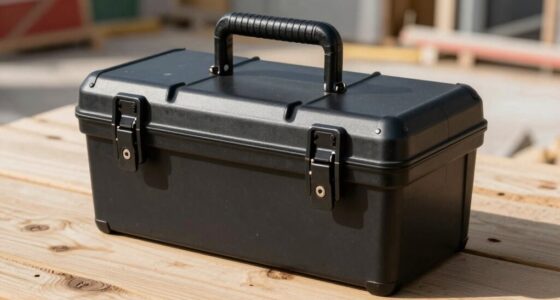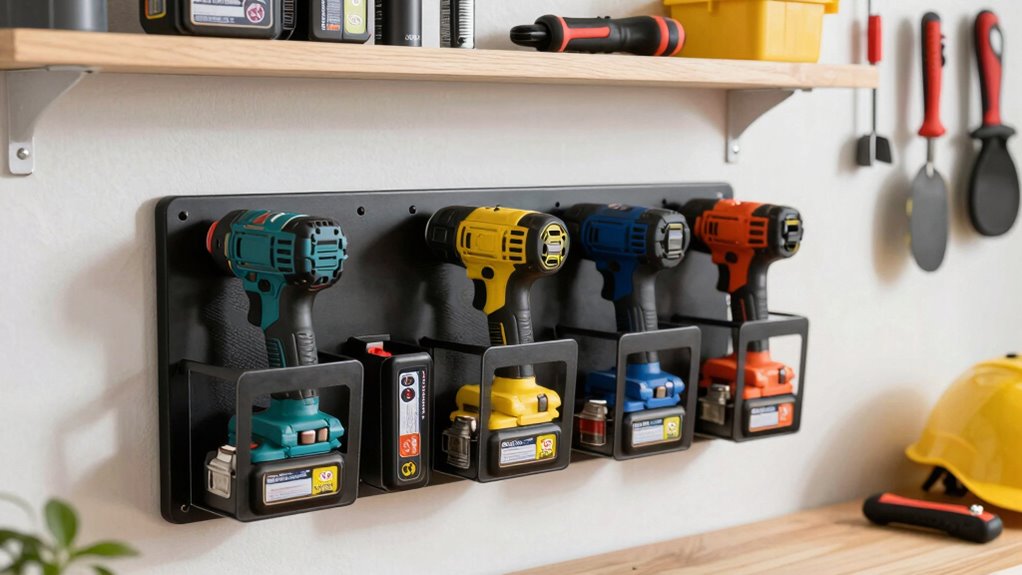

To keep your power tool batteries safe in your workshop, store them in cool, dry, fire-resistant containers away from flammable materials. Handle damaged batteries with gloves and dispose of them properly at hazardous waste facilities. Label batteries clearly and keep them upright, separated from metal objects. Regularly inspect for swelling or corrosion, and fully charge batteries before long-term storage. For more expert safety tips, continue exploring the best practices to protect yourself and your workspace.
Key Takeaways
- Store batteries in cool, dry, fire-resistant containers away from flammable materials.
- Label batteries with type and charge status to ensure proper handling and safety.
- Keep batteries upright and separate metallic objects to prevent short circuits.
- Fully charge batteries before storage and perform periodic maintenance to prolong lifespan.
- Regularly inspect for swelling, corrosion, or leaks; handle damaged batteries with protective gear.

Zeee Fireproof Explosionproof Large Capacity Battery Storage Guard Pouch for Lipo Charge & Storage (8.46 x 6.5 x 5.71 in)
🔥【Zeee LiPo Battery Bag Material】- 100% inner fireproof fabric, interlayer non-woven fabric with flame retardant effect, and PVC…
As an affiliate, we earn on qualifying purchases.
As an affiliate, we earn on qualifying purchases.
Why Improper Battery Storage Can Be Dangerous
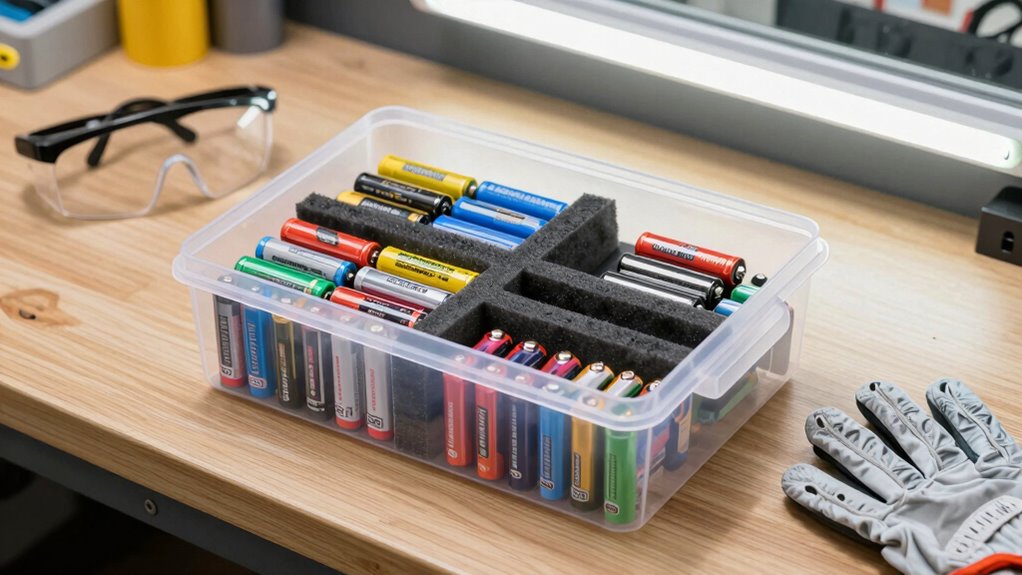
Improperly storing power tool batteries can lead to dangerous situations, even if you don’t realize it right away. When batteries aren’t kept in proper conditions, they can develop battery corrosion, which weakens their internal structure and increases the risk of leaks. Corroded batteries can cause electrical shorts, sparking fire hazards that threaten your safety and your workshop. Leaving batteries loose or in humid environments accelerates deterioration, making them more prone to overheating or catching fire. Additionally, damaged or corroded batteries may swell or leak harmful chemicals, creating further hazards. To prevent these dangers, always store batteries in a cool, dry place, and keep them in designated containers away from metal objects. Proper storage guarantees the risk of fire hazards and ensures your safety. Proper storage practices are essential for maintaining battery safety and preventing accidents. Properly managing battery disposal also reduces environmental risks and potential safety issues. Ensuring proper storage conditions can significantly extend the lifespan of your batteries and minimize potential hazards, especially considering the effects of battery corrosion on internal components.

BLACK+DECKER 20V MAX Power Tool Combo Kit, 4-Tool Cordless Power Tool Set with 2 Batteries and Charger (BD4KITCDCRL)
Drill/Driver features a 3/8" chuck, 0-650 rpm ideal for consumer DIY projects, 11 position clutch to prevent stripping…
As an affiliate, we earn on qualifying purchases.
As an affiliate, we earn on qualifying purchases.
How to Safely Handle and Dispose of Damaged Batteries

When you notice a power tool battery is damaged, it’s essential to handle it carefully to prevent further hazards. Wear gloves and eye protection before touching the battery, and avoid puncturing or crushing it. Place the damaged battery in a non-conductive, fireproof container to reduce risk. Never dispose of damaged batteries in regular trash; instead, follow proper battery recycling procedures. Contact your local recycling facility or hazardous waste collection site for guidance. Proper disposal prevents leaks, fires, and environmental contamination, supporting hazard prevention. Keep damaged batteries away from heat sources and flammable materials. Handling them with care minimizes the chance of sparks or leaks. Proper handling and storage methods are crucial to ensure safe disposal and prevent accidents. Additionally, staying informed about battery safety regulations can help you comply with legal standards and protect the environment. Being aware of hazardous material classifications can further enhance your safety measures when dealing with damaged batteries. Recognizing the signs of battery failure can also help you identify potential risks before accidents occur. Proper training on emergency response procedures can further mitigate the impact of battery-related incidents.

Panther-Guard Industrial-Grade Disposable Gloves, Latex and Powder-Free, Black Nitrile/Vinyl Blend, Smooth Finish, 100 Ambidextrous Gloves, Large
Industrial Grade – Non-sterile disposable gloves trusted by professionals for a variety of uses. The glove materials are…
As an affiliate, we earn on qualifying purchases.
As an affiliate, we earn on qualifying purchases.
Easy Safety Tips for Organizing Power Tool Batteries

Organizing your power tool batteries safely is essential to prevent accidents and prolong their lifespan. Start by clearly labeling each battery with its type and charge status to avoid confusion. Use battery labeling to identify which batteries need charging or replacement, reducing the risk of overcharging or using incompatible batteries. Follow proper charging guidelines—always charge batteries in designated areas and avoid leaving them unattended during charging. Store batteries in a cool, dry place away from flammable materials, and keep them upright to prevent leaks. Regularly check the labels and condition of your batteries to confirm they’re safe and ready for use. Additionally, understanding the importance of battery maintenance can help ensure optimal performance and safety. Proper organization minimizes hazards, extends battery life, and keeps your workshop efficient and safe. Being aware of AI cybersecurity threats can also help protect your workshop’s digital tools and data from cyber risks. Maintaining awareness of battery safety practices is crucial for preventing potential hazards and ensuring a secure workspace. Incorporating proper storage techniques can further enhance safety and battery longevity. Considering large number conversions can be helpful when managing inventory or parts lists in your workshop.

Battery Terminal Cleaner Tool Kit, 2-Pack Battery Post Wire Brush with Metal Case and 10 Anti-Corrosion Fiber Washers (5 Red & 5 Green) for Car, Truck, RV and Marine Batteries
【Effortlessly removes corrosion】The dual-ended battery post cleaning brush, made of stainless steel casing and with steel wire bristles,…
As an affiliate, we earn on qualifying purchases.
As an affiliate, we earn on qualifying purchases.
The Best Places and Containers for Battery Storage
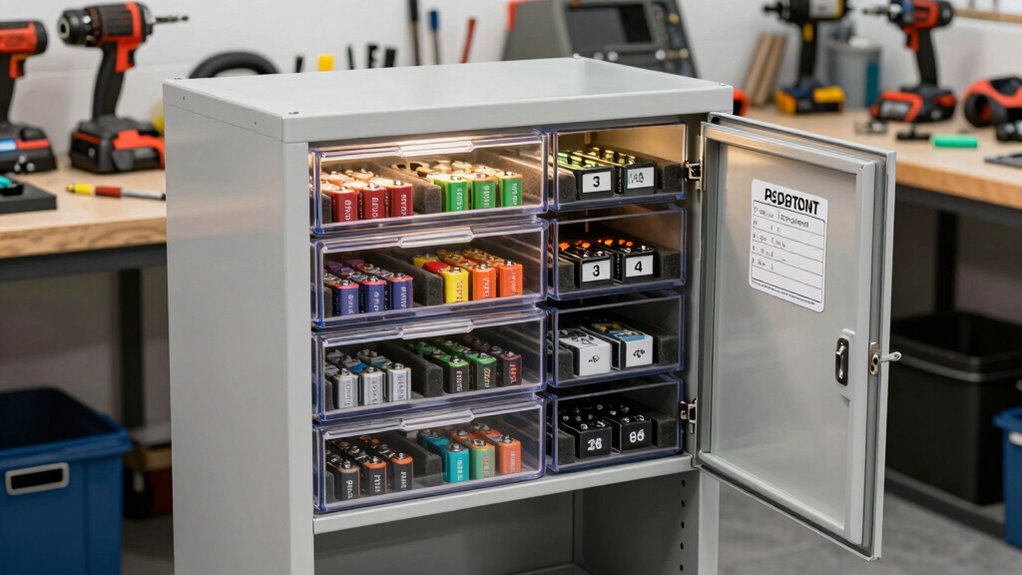
Choosing the right places and containers for your power tool batteries can make a significant difference in maintaining safety and prolonging their lifespan. Store batteries in a cool, dry location away from heat sources and direct sunlight. A dedicated battery compartment within your workshop ensures they stay organized and protected from accidental damage. Use appropriate storage containers, such as fire-resistant or plastic bin with a secure lid, to prevent accidental contact with conductive materials. Avoid storing batteries loose or in cluttered areas, which can lead to short circuits or damage. Keep batteries upright to prevent leaks, and ensure they’re separated from other metallic objects. Properly selected storage places and containers help minimize risks and keep your batteries in ideal condition for safe use. Proper storage practices can also help prevent accidental activation or damage during handling. Additionally, understanding battery chemistry safety can further reduce the risk of hazards in your workshop. Ensuring proper storage temperature is crucial, as extreme heat or cold can degrade battery performance and safety. Maintaining awareness of zodiac traits and personalities can also promote more careful handling and storage habits.
Tips for Long-Term Storage and Battery Maintenance
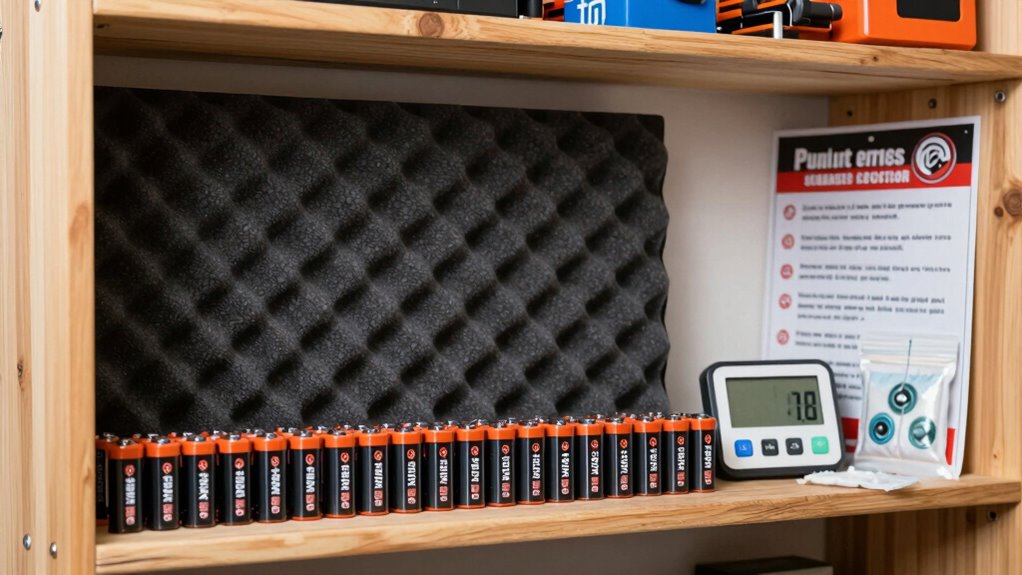
Proper long-term storage and regular maintenance are essential to keep your power tool batteries in ideal condition. To prevent battery corrosion, store batteries in a cool, dry place and avoid exposure to moisture, which can cause rust and damage. Before storing, fully charge the batteries and then use a few charging cycles periodically to maintain their capacity. Avoid leaving batteries at full charge or completely drained for extended periods, as both can reduce their lifespan. Check for signs of corrosion or swelling regularly, and clean terminals if needed. When not in use for months, remove batteries from tools to prevent accidental discharge. Proper storage practices ensure your batteries stay reliable and safe, prolonging their usability and performance over time. Additionally, understanding how battery chemistry affects longevity can help you choose the right batteries for long-term use. Maintaining a consistent charging routine can also significantly extend battery life by minimizing stress on the cells. Moreover, monitoring temperature during storage can prevent damage caused by extreme heat or cold, further safeguarding battery health. Being mindful of the storage environment can also minimize risks related to humidity and temperature fluctuations.
Frequently Asked Questions
Can Temperature Fluctuations Affect Battery Safety in Home Workshops?
Yes, temperature fluctuations can affect battery safety in your home workshop. Sudden changes in temperature can compromise temperature stability, increasing the risk of overheating or freezing. To protect your batteries, use thermal insulation to maintain consistent temperatures and prevent thermal stress. Keeping batteries in a controlled environment helps guarantee safety, prolongs their lifespan, and reduces the risk of accidents caused by extreme heat or cold.
Are There Specific Storage Guidelines for Lithium-Ion Versus Nimh Batteries?
Think of batteries as different characters in a story—you must treat them uniquely. Lithium-ion batteries require storage in cool, fire-resistant containers, away from metal objects, with clear labeling practices to prevent mishaps. NIMH batteries are more forgiving but still need proper storage in dry, ventilated containers. Always follow manufacturer guidelines, keep batteries separate, and guarantee your storage methods match their specific needs to ensure safety and longevity.
How Do I Identify if a Stored Battery Is Still Safe to Use?
You can identify if a stored battery is safe to use by inspecting it for battery corrosion or leaks. If you notice corrosion, discoloration, or swelling, it’s best to dispose of it. Perform a voltage test with a multimeter; if the voltage is markedly below the rated voltage, the battery may be unsafe. Always handle batteries carefully and follow safety guidelines to prevent accidents.
What Are the Signs of Internal Battery Damage Not Visible Externally?
If your battery has internal damage, you might notice swelling or bulging, which indicates gas buildup inside. Electrolyte leakage around the terminals or vents also signals internal issues. You won’t see these signs externally on the battery’s surface, but if you feel any abnormal swelling or notice leaks, stop using the battery immediately. Always handle damaged batteries with care, and dispose of them properly to prevent safety hazards.
Are There Legal Regulations for Storing Large Quantities of Power Tool Batteries?
You should know that regulations for storing large quantities of power tool batteries vary by location, but generally, strict rules exist. Authorities often require you to use approved storage containers to prevent hazards like leaks or fires. Proper battery disposal is essential, and storing batteries in designated containers helps comply with legal standards. Check local laws, as non-compliance can lead to fines or safety issues. Always follow recommended storage and disposal practices.
Conclusion
Think of your power tool batteries as tiny sparks waiting to ignite chaos if mishandled. By following safety rules, storing them properly, and caring for them like delicate seeds, you prevent accidents and keep your workshop shining safely. Remember, a well-organized battery corner is the garden where your tools thrive, not a wildfire waiting to happen. Stay vigilant, and your workshop will remain a safe, productive haven for all your projects.