
TL;DR

Get home appliances delivered free with Prime
- Fast, free delivery on millions of items
- Prime Video, Amazon Music and more included
- Member-only deals all year
A hole near the end of many rulers is primarily a hanging point for storage, especially for longer rulers. Family Handyman reports that students also used ruler holes to tie on cloths for wiping slate boards; holes on some modern rulers serve other specific purposes.
The hole near the end of many rulers is mainly there to make the tool easy to hang and store, according to a Family Handyman report. The opening can also have historical or task-specific uses, but it does not affect the ruler’s measuring accuracy.
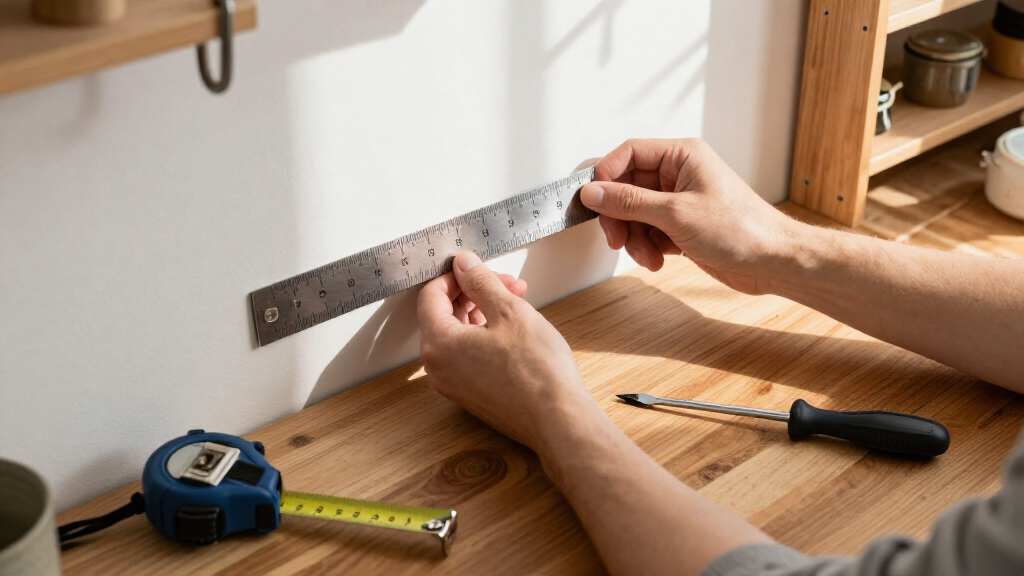
A hole lets a ruler hang from a hook, nail or pegboard rather than sit in a drawer or on a work surface. The report says this can be particularly useful for long metal rulers, which may not fit conveniently inside a toolbox.
The opening has also been linked to classroom use before paper notebooks became common. Students wrote on reusable slate boards, then wiped them clean with a damp cloth. According to the report, some tied a cloth to a ruler with string threaded through its hole, keeping the cleaning cloth close at hand.
Holes on other rulers can serve different purposes. Some school rulers have three openings positioned to fit the rings of a three-ring binder. Certain specialty rulers can use openings to hold a pin while a pencil traces a circle, or to help mark fabric and guide craft work. Those functions depend on the ruler’s design; an ordinary end hole should not be assumed to have them.
A Small Feature With Practical Uses
For most people, the explanation is straightforward: the hole gives a ruler a simple storage option. Hanging a longer ruler can keep it accessible and prevent it from getting buried among other tools. In a school setting, a binder-compatible ruler can be stored alongside notebooks and other supplies.
The distinction matters when choosing or using a ruler. A hole may support a particular task, but its presence does not make a basic ruler more precise. The report says rulers with and without holes can measure just as accurately. For circles, crafts or stitching, users should check whether the ruler is specifically designed for that purpose instead of relying on an opening that may only be for hanging.
Products Worth Considering

LEVOIT Vital Pet Smart Air Purifier

Bose SoundLink Plus Portable Bluetooth Speaker, Black

Philips Hue Festavia 130-Foot Indoor/Outdoor Smart String Lights, 500 Mini Color-Changing LEDs
As an affiliate, we earn on qualifying purchases.
From Slate Cloths to Storage Hooks
The report traces one older use to classrooms where students practiced writing on slate boards that could be wiped and reused. A cloth tied to a ruler offered a convenient way to clean the slate. The supplied material also cites a University of Wisconsin–Madison object-history page about slate, alongside ruler product information from STAEDTLER, Kapro and Westcott.
As paper notebooks replaced slate boards in schools, the slate-cleaning use became less relevant, while the hole remained useful for hanging. Modern ruler designs vary: some have no holes, some have one near an end, and some include multiple openings or shaped slots for specific school, drafting or craft tasks. The maker’s design and intended use determine what those features do.
“The hole at the end of a ruler is mainly there for storage.”
— Family Handyman report
The Purpose Depends on the Design
The supplied material does not establish when ruler holes first appeared, how widely students used them to carry slate-cleaning cloths, or whether that historical practice explains every ruler design. The slate-cloth account is presented as a past use, not as the reason for every hole made today.
It is also not possible to identify the purpose of an individual ruler from its hole alone. The report describes several designs, including binder holes and craft openings, but says manufacturers’ intended uses vary. A ruler’s product information or visible layout may clarify whether its holes are for hanging, drawing, marking or another task.
Check the Ruler’s Intended Use
There is no new product change or announced follow-up in the supplied report. For everyday use, the practical next step is to hang a ruler with a suitable end hole if that makes storage easier. For specialty tasks, users can consult the ruler’s packaging or manufacturer information to confirm what its openings are designed to do.
Anyone selecting a ruler for measuring can focus on its scale, length and construction: the presence of a hole alone does not indicate greater accuracy. If a task requires precise circles or craft markings, use a ruler or tool intended for that job and follow its instructions.
Key Questions
What is the hole at the end of a ruler for?
For many rulers, it is mainly a hanging point for storage on a hook, nail or pegboard.
Were ruler holes used with slate boards?
Family Handyman reports that some students tied a damp cleaning cloth to their rulers through the hole so they could wipe reusable slate boards.
Can a ruler hole help draw a circle?
Some specialty rulers have openings that can hold a pin while a pencil traces a circle. The report cautions that this is not a feature of every ruler; for exact measurements, it says a compass is a better choice.
Do holes make a ruler more accurate?
No. The report says a ruler with holes can measure just as accurately as one without them. Accuracy depends on the ruler’s scale and condition, not simply on whether it has an opening.
Source: familyhandyman.com