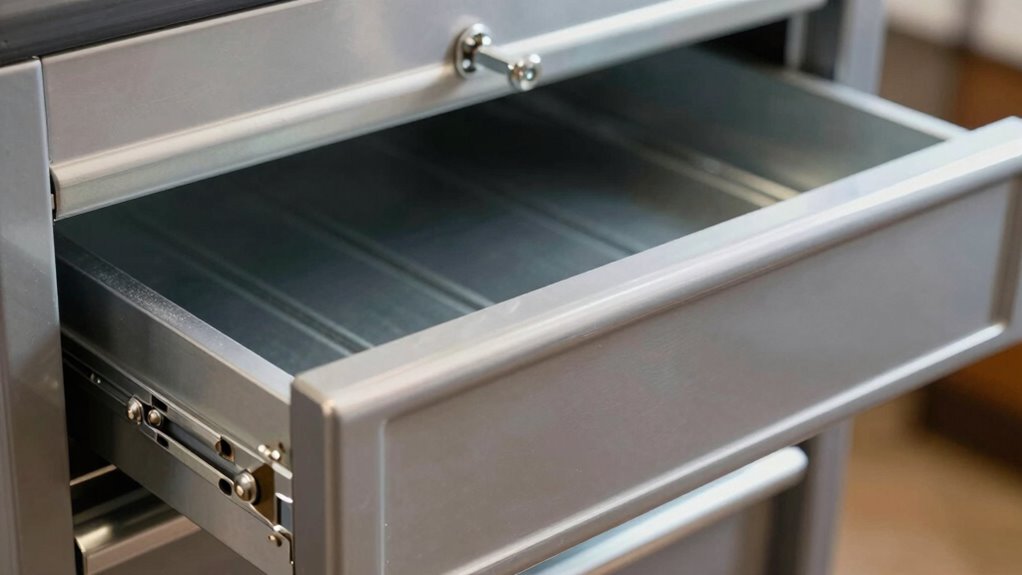

To keep your tool chest drawer slides smooth for years, regularly clean and inspect them for debris, dirt, or damage. Use a suitable lubricant like silicone spray or graphite powder, applying sparingly to prevent build-up. Keep the slides aligned and avoid overloading the drawers. Routine maintenance is key to reducing wear and preventing sticking or jamming. For detailed tips on maintaining and troubleshooting your slides, explore the full guide to guarantee long-lasting performance.
Key Takeaways
- Regularly clean drawer slides to remove dirt, debris, and old lubricant, ensuring smooth movement.
- Apply appropriate, sparingly used lubricants like silicone spray or graphite powder for optimal performance.
- Inspect for signs of wear, misalignment, or damage, and address issues promptly to prevent further deterioration.
- Keep the tool chest in a dust-free environment to minimize debris buildup on slides.
- Perform routine maintenance, including cleaning, lubrication, and proper reassembly, to extend slide lifespan.
drawer slide lubricant silicone spray
As an affiliate, we earn on qualifying purchases.
As an affiliate, we earn on qualifying purchases.
How Do Drawer Slides Wear Out Over Time?
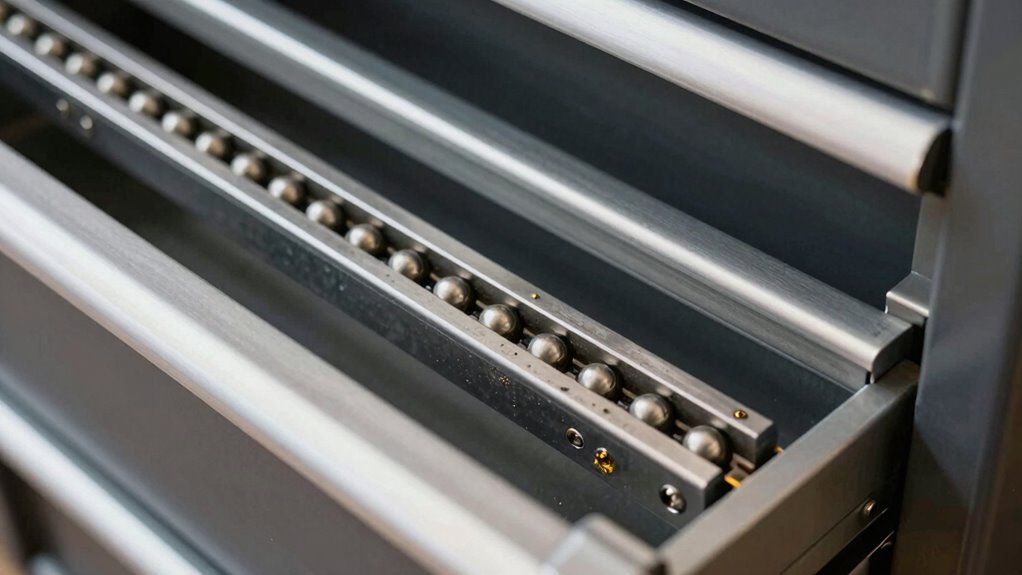
Over time, drawer slides naturally wear out from frequent use and the constant movement they endure. The drawer material, typically metal or plastic, influences how well they hold up. Metal slides tend to last longer, especially if they’re high-quality, but plastic ones may wear faster under heavy use. The weight capacity also plays a vital role; exceeding it causes stress that accelerates wear and can lead to bending or warping. As you open and close your tool chest drawers, friction gradually wears down the slide surfaces, and small particles like dust and debris can accumulate, further increasing friction. Over time, this leads to looser movement and reduced smoothness. Regular maintenance and choosing slides with appropriate material and weight capacity help extend their lifespan.
As an affiliate, we earn on qualifying purchases.
Signs Your Drawer Slides Are Sticky or Jamming
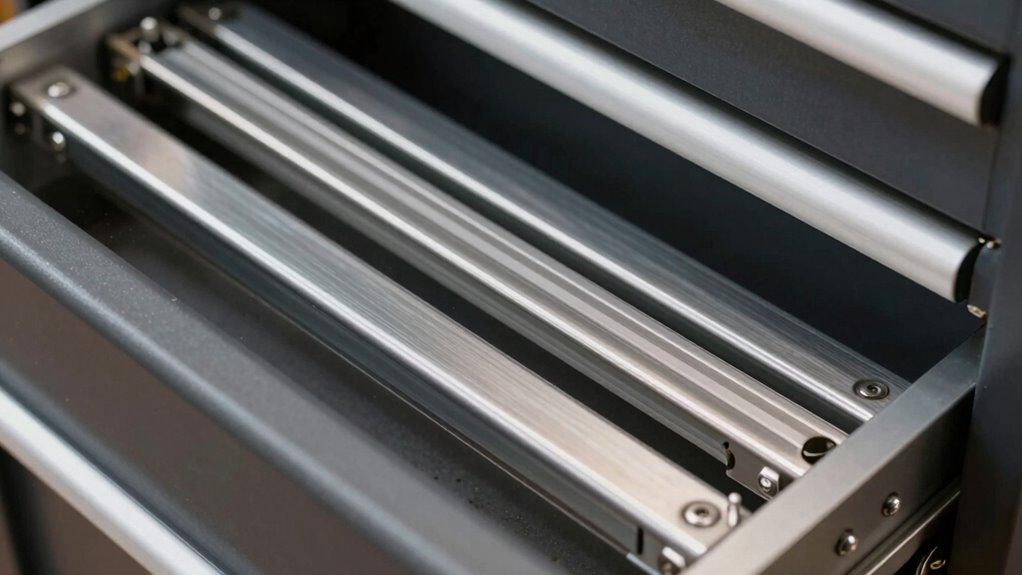
If your tool chest drawers start to stick or jam when you try to open or close them, it’s a clear sign that something isn’t right with the slides. You may notice uneven movement or difficulty in fully opening or closing the drawers. Poor drawer slide alignment can cause these issues, leading to increased friction and jamming. Corrosion prevention is also key—if you see rust or grime buildup, it’s likely contributing to the sticking. These problems can wear down the slides faster, making them prone to jamming or becoming sticky. Addressing signs early helps maintain smooth operation and prolongs the life of your drawer slides. Regular inspection for alignment issues and corrosion is essential to keep your tool chest functioning smoothly over time. Additionally, applying proper lubrication can reduce friction and prevent sticking, especially when combined with suitable maintenance practices. Keeping the slides clean and dry also helps prevent corrosion buildup, ensuring the hardware remains in good condition for years to come. Using quality lubricants designed specifically for metal hardware can significantly extend the lifespan of your slides.
As an affiliate, we earn on qualifying purchases.
How to Clean Your Drawer Slides for Better Movement
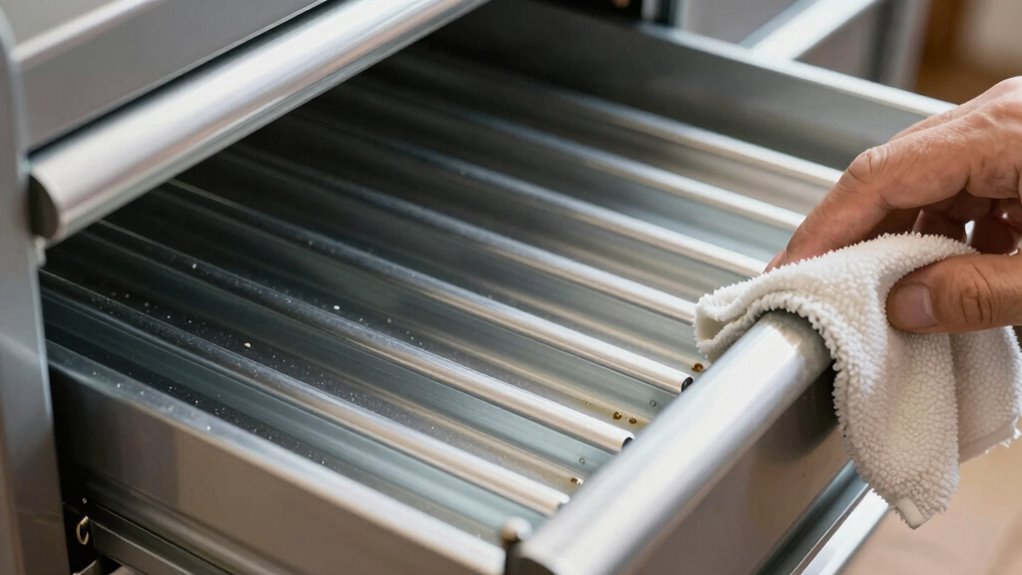
To clean your drawer slides effectively, start by removing the drawer completely. Next, apply a proper lubricant to guarantee smooth movement, then wipe away any dirt or old grease. Proper soundproofing techniques can also help reduce noise and prevent dust buildup in your furniture. Incorporating regular maintenance can help preserve the longevity of your drawer slides and ensure they function smoothly over time. Additionally, keeping your furniture in a dust-free environment can minimize debris accumulation and improve overall performance. Finally, reassemble the drawer and test its movement for better performance.
Remove Drawer First
Before you start cleaning the drawer slides, it’s important to remove the drawer from the tool chest. Removing drawers allows you to access the entire slide mechanism, making cleaning and maintenance easier. Carefully pull the drawer out, supporting its weight to prevent damage. As you remove drawers, it’s a good chance to reassess your tool storage organization, ensuring everything stays in its designated spot. Keep in mind that some slides might have clips or screws holding them in place, so take your time and handle parts gently. Once the drawer is out, you’ll have clear access to the slides, allowing you to thoroughly clean and inspect for any issues. Proper removal not only makes cleaning easier but also helps maintain the overall functionality of your tool chest. Additionally, performing regular vetted maintenance on your tool storage can improve the durability and performance of your entire setup. Understanding cryptid mysteries and other folklore can also add a fun distraction during tedious tasks like cleaning. Remember that cable failures are a common issue in many types of equipment, so keeping everything clean and well-maintained is essential for longevity.
Apply Proper Lubricant
Applying the right lubricant is essential for ensuring smooth movement of your drawer slides. The key is choosing suitable lubricant types—silicone spray, graphite powder, or lithium grease—based on your needs. Use proper application techniques: spray or apply sparingly, avoiding excess. Too much lubricant can attract dirt and cause sticking. Before applying, clean the slides thoroughly to remove old grease and debris. Proper cleaning helps prevent buildup that can hinder slide performance. Additionally, understanding the different regional flavors and their characteristics can help you select the right type of lubricant for specific environments or conditions. Recognizing environmental factors such as humidity or dust can influence the best lubricant choice for durability and maintenance. Here’s a quick guide:
| Lubricant Types | Application Techniques | Benefits |
|---|---|---|
| Silicone spray | Light spray evenly | Waterproof, long-lasting |
| Graphite powder | Dust into slides | Non-staining, reduces friction |
| Lithium grease | Small amount, spread | Heavy-duty, durable |
Wipe and Reassemble
Have you ever noticed your drawer sticking or not gliding smoothly? To improve movement, start by wiping down the drawer slides thoroughly, removing dust, dirt, and old lubricant. Use a clean cloth or a soft brush to clear debris from all moving parts. Once clean, carefully disassemble the slides if possible, keeping track of how everything fits together. This step is essential for better tool organization and drawer customization, ensuring your drawers open effortlessly. After cleaning, reassemble the slides, making sure all components are aligned properly. Applying fresh lubricant during reassembly helps maintain smooth operation. Regular maintenance like this prevents sticking and keeps your tool chest in top shape, making it easier to access your tools quickly and efficiently. For added protection, consider safety tips to prevent accidents during maintenance. Additionally, understanding the importance of testing accuracy can help you monitor the effectiveness of your cleaning and lubrication efforts over time. Performing routine maintenance regularly can extend the lifespan of your drawer slides and keep them functioning smoothly for years to come. Incorporating proper lubrication techniques can further enhance the longevity and performance of your slides.
high capacity drawer slides for tool chest
As an affiliate, we earn on qualifying purchases.
As an affiliate, we earn on qualifying purchases.
Lubricating Drawer Slides: Tips and Tricks
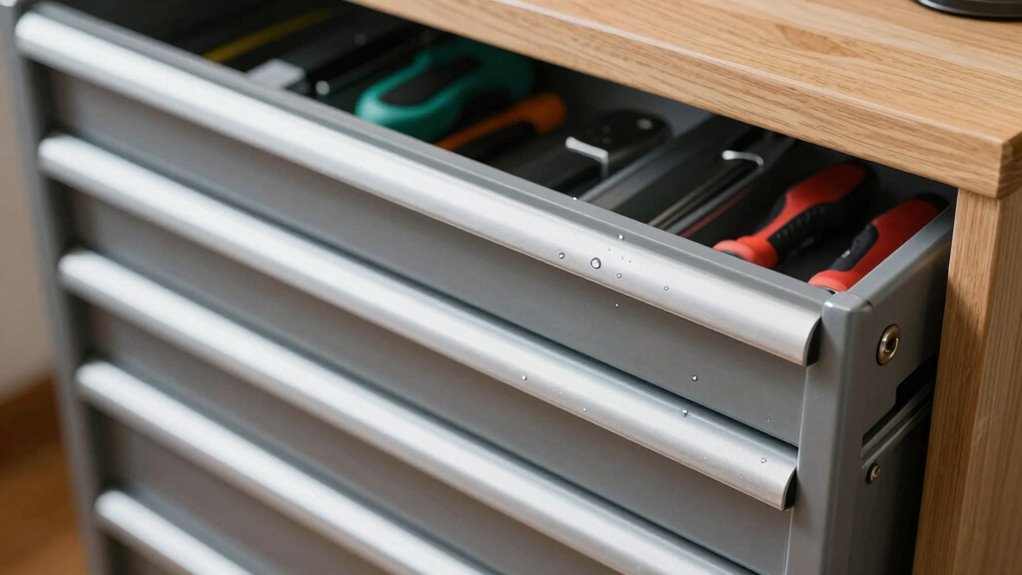
Lubricating your drawer slides is essential for ensuring smooth operation and prolonging their lifespan. Proper lubrication reduces friction caused by different drawer slide materials and makes opening and closing effortless. When applying lubricant, focus on areas where the slides contact the cabinet and each other. Use a small brush or cloth to evenly distribute the lubricant, avoiding excess buildup. For ergonomic handling, choose a lubricant suited for your drawer slide materials—metal or plastic. Additionally, selecting appropriate storage solutions can help protect your drawer slides from dust and debris that may hinder their movement. Regular maintenance can also prevent wear and tear, extending the overall life of your drawer system. Understanding how to maintain indoor air quality can also help reduce dust and microplastics that may settle on your slides, further ensuring smooth operation. Incorporating auditory feedback techniques from speech therapy can help in recognizing when your drawer slides are functioning smoothly or need additional lubrication, making maintenance more intuitive. Being aware of cleaning practices can also contribute to keeping your slides free of grime and buildup that impair movement.
What’s the Best Lubricant for Your Tool Chest?
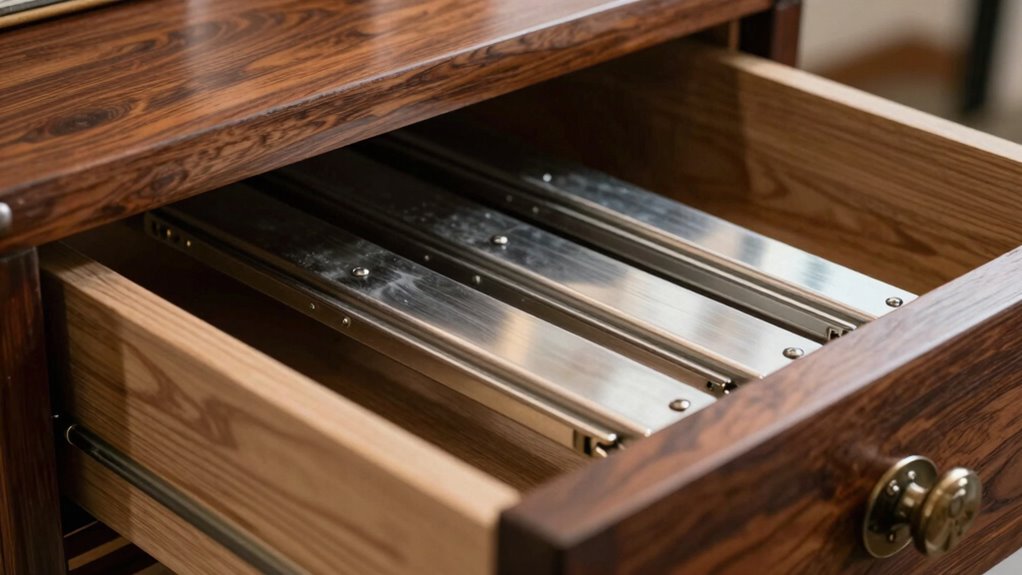
Choosing the right lubricant for your tool chest can make a significant difference in how smoothly your drawers operate over time. For tool storage, select a lubricant that reduces friction without attracting dirt or dust. Light machine oils, silicone sprays, or dry graphite lubricants are ideal options. These lubricants help maintain your organizational tips by ensuring drawers open effortlessly and stay in place.
Choose lightweight lubricants like silicone sprays or dry graphite to keep your tool drawers smooth and clean.
Using lubricants designed for metal or plastic components can prevent damage and ensure longevity. Regular application of these lubricants can also help prevent corrosion on metal surfaces. Remember: – Use a lubricant suited for metal or plastic components – Avoid heavy grease that can gum up slides – Apply sparingly to prevent excess buildup
Proper lubrication reduces wear and tear on your drawer slides, helping to prevent corrosion and ensuring your tool chest remains in top condition. The goal is to keep your tool storage organized and your drawers functioning smoothly without creating messes. Proper lubrication extends the lifespan of your tool chest and keeps your workspace efficient.
Routine Maintenance Tips to Keep Your Drawer Slides Moving Smoothly
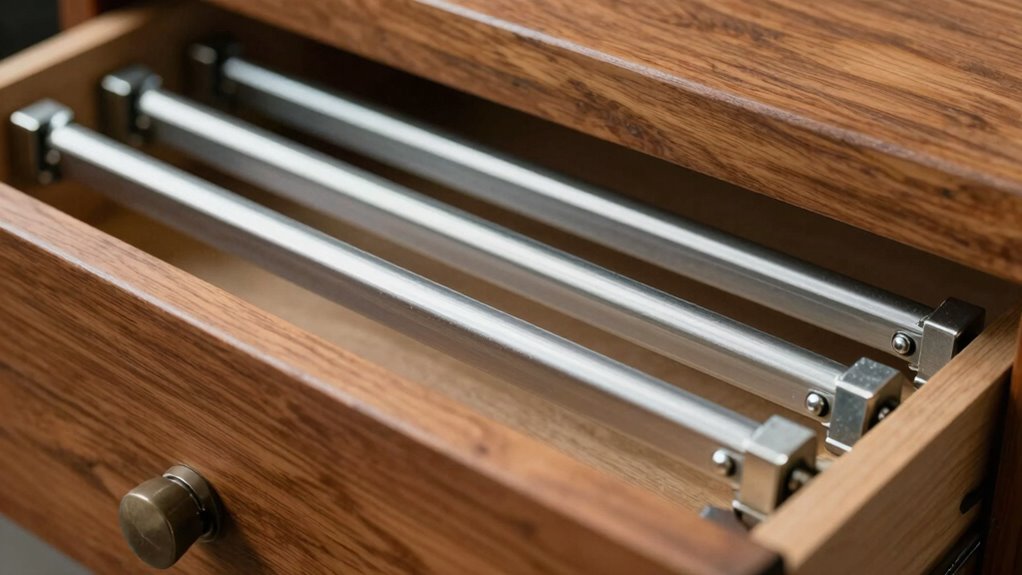
Regularly inspecting and cleaning your drawer slides is essential to keep them moving smoothly. Dust, dirt, and debris can hinder their function, especially with different drawer slide materials like metal or plastic. Use a soft cloth and mild cleaner to wipe away grime. Lubricate the slides with a light, suitable lubricant to prevent sticking. Consider ergonomic design when maintaining, guaranteeing the slides are aligned for comfortable use. Proper care extends their lifespan and maintains ease of access.
| Step | Action | Tips |
|---|---|---|
| Inspection | Check for debris and wear | Look for signs of damage |
| Cleaning | Wipe with a cloth | Avoid harsh chemicals |
| Lubrication | Apply lubricant evenly | Use sparingly |
| Alignment | Ensure proper positioning | Adjust if necessary |
| Testing | Open and close smoothly | Repeat after maintenance |
Troubleshooting Common Drawer Slide Problems
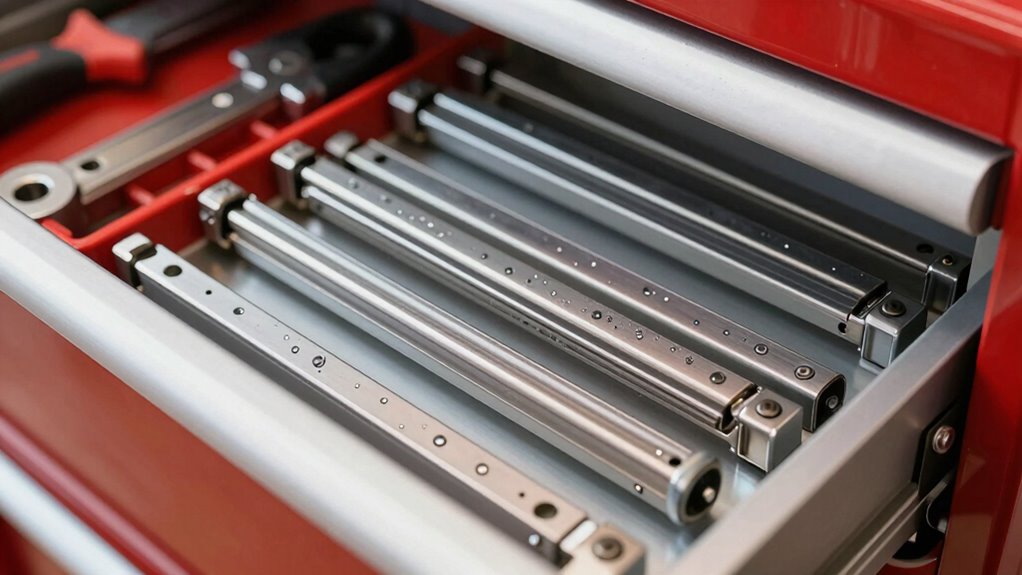
Even with proper maintenance, drawer slides can sometimes develop issues that hinder smooth operation. Common problems include sticking, misalignment, or noise during use. These issues often stem from the drawer slide materials or poor drawer installation techniques. To troubleshoot, first check if debris or dirt is causing resistance. Inspect for bent or damaged parts, which can disrupt alignment. Verify the slides are properly lubricated with suitable grease or silicone. If slides are misaligned, adjust the installation to correct the positioning. Remember, the type of drawer slide materials—whether metal or plastic—affects durability and movement. Proper drawer installation techniques can prevent future problems. Keep these aspects in mind for a quick diagnosis and effective solution.
When to Repair or Replace Your Drawer Slides or Tool Chest
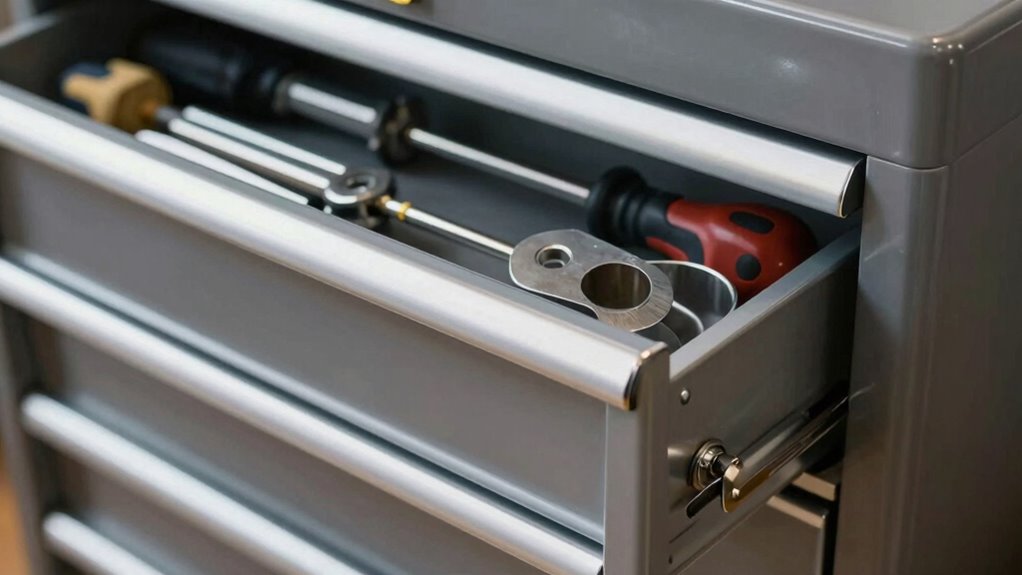
You’ll know it’s time to repair or replace your drawer slides when you notice signs of wear, like sticking or uneven openings. If the damage is extensive or the slides are sagging, replacing the entire unit might be the best option. Recognizing these signs early can save you time and prevent further damage to your tool chest.
Signs of Wear and Tear
Recognizing the signs of wear and tear on your tool chest and drawer slides is essential to maintaining their functionality. Over time, you might notice sticking, grinding, or uneven movement. These issues can stem from worn drawer material, damage caused by heavy loads, or manufacturing defects that weren’t apparent initially. Keep an eye out for:
- Increased effort to open or close drawers
- Visible dents, rust, or corrosion
- Loose or misaligned slides
These signs indicate your drawer slides may need repair or replacement. Addressing problems early can prevent further damage, ensuring your tool chest remains smooth and functional. Ignoring these signs can lead to more significant issues, so stay vigilant and act promptly when you notice these warning signs.
When to Replace Entirely
Deciding when to replace your drawer slides or entire tool chest depends on the severity of the damage and how well repairs can restore functionality. If your drawer slide materials are cracked, bent, or corroded beyond repair, replacement is best. Frequent sticking, looseness, or complete failure often signals it’s time for a new set or tool chest. When considering drawer slide installation, if repairs require complex work or multiple replacements, replacing the entire drawer system might be more cost-effective.
| Situation | Repair Feasible? | Recommended Action |
|---|---|---|
| Minor scratches or dirt | Yes, with cleaning or lubrication | Repair or clean |
| Bent or cracked drawer slide | No | Replace drawer slide |
| Corrosion or rust on slides | Sometimes, if minor | Replace if severe |
| Multiple failed components | No | Replace entire drawer or chest |
Frequently Asked Questions
Can Drawer Slide Issues Cause Damage to Tools Stored Inside?
Yes, drawer slide issues can cause damage to your tools. When slides become sticky or fail, tools inside might shift or fall, risking damage or injury. This compromises tool storage safety and drawer security, making it harder to access tools quickly. Regularly maintaining smooth drawer slides guarantees tools stay secure and protected, preventing unnecessary damage. Keep your tool chest in top shape to safeguard your tools and maintain safe, efficient storage.
How Often Should I Lubricate My Drawer Slides?
You should lubricate your drawer slides every six months to keep them smooth, especially if you use your tool chest frequently. Did you know that improper lubrication can reduce slide lifespan by up to 50%? Consider your storage environment—damp or dusty areas may require more frequent lubrication. Regular maintenance ensures smooth operation and prevents damage, so stay proactive and check your slides periodically to keep your tools safe and your drawers easy to open.
Are There Eco-Friendly Lubricants for Drawer Slides?
Yes, there are eco-friendly lubricants available for drawer slides. Look for products labeled as sustainable or biodegradable, which guarantee you’re practicing sustainable maintenance. These lubricants often use natural oils or plant-based ingredients, reducing environmental impact. By choosing eco-friendly lubricants, you protect your tool chest’s functionality while also caring for the environment. Regular use keeps your drawer slides smooth without harming ecosystems, making maintenance both effective and responsible.
Do Different Drawer Slide Materials Require Specific Maintenance?
Did you know that using the wrong lubricant can damage your drawer slides? Different materials, like metal or plastic, need specific maintenance to stay smooth. Material compatibility is key—metal slides may need oil-based lubricants, while plastic ones require silicone or dry lubricants. Regular maintenance frequency depends on use; check slides every few months to prevent sticking or corrosion. Proper care guarantees your drawer slides last longer and operate effortlessly.
Can DIY Repairs Extend the Life of My Tool Chest?
Yes, DIY repairs can extend your tool chest’s life. By maintaining proper tool chest organization, you prevent unnecessary wear and tear. When drawer slides become stiff or damaged, replacing drawer slides yourself is a cost-effective way to restore smooth operation. Regularly inspecting and lubricating the slides keeps everything functioning well, preventing more extensive damage and prolonging your tool chest’s durability.
Conclusion
With proper care, your drawer slides can glide like they’re on air, making your entire tool chest dance effortlessly every time you open it. Neglect them, and you’ll be stuck wrestling with stubborn, jammed drawers that could stop a freight train. Keep them clean, lubricated, and maintained, and you’ll guarantee your tools are always within arm’s reach—smooth as silk for years to come. Don’t let sloppy slides turn your workspace into a battle zone—give them the TLC they deserve!