TL;DR

Get home appliances delivered free with Prime
- Fast, free delivery on millions of items
- Prime Video, Amazon Music and more included
- Member-only deals all year
A House Beautiful report draws on professional organizers’ advice for four habits that can help keep clutter in small homes under control: use drop zones and a collection basket, follow a one-in-one-out rule, refuse unnecessary freebies, and put things away after use. The article presents these as repeatable routines, not a one-time fix, and does not claim they increase a home’s physical size.
A House Beautiful report outlines four habits recommended by professional organizers to help residents manage clutter in small homes: create places for everyday items, limit what comes in, sort out unneeded freebies, and put things away after use. The advice focuses on routines that can be maintained over time, rather than a single large clear-out.
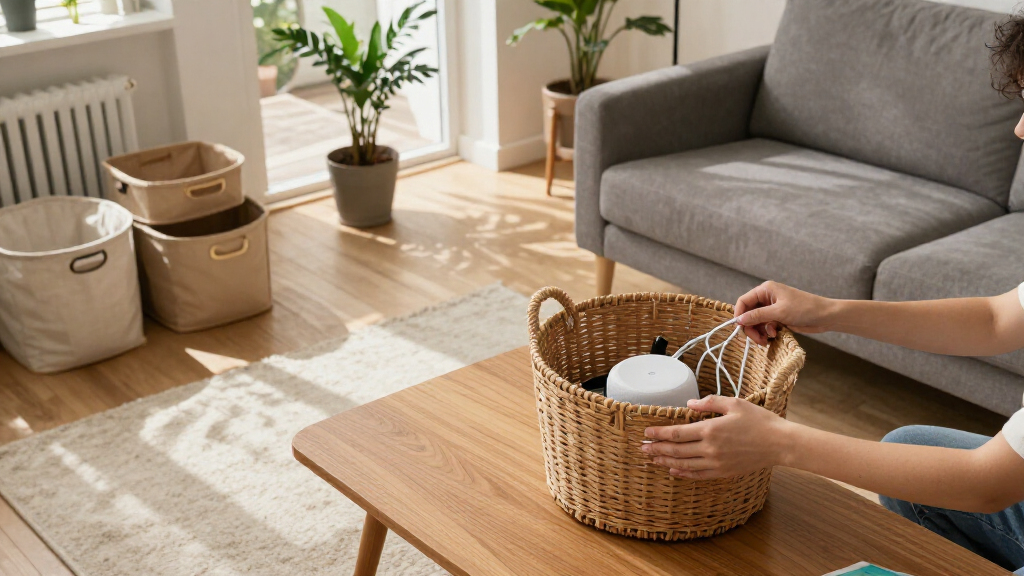
The first habit is to set up drop zones—small, designated places for items such as keys, bags, blankets, or remote controls—and use one collection basket for objects that have ended up in the wrong place. Cathy Orr, cofounder of The Uncluttered Life, recommends spending about 10 minutes at the end of the day returning the basket’s contents to their proper homes. That turns scattered items into one manageable task instead of requiring people to put every object away immediately.
The second habit is a one-in, one-out rule: when bringing a new item home, remove another item from the same category. The report also recommends checking existing supplies in closets, the refrigerator, and the pantry before shopping. Organizer Macie Kreutzer says people should clear at least one item from a category before buying more and avoid bringing in more than their space can hold. Moving donations toward the exit, such as to a hallway or car, can help prevent them from sitting unused at home.
The other recommendations are to decline unnecessary freebies and to put items away after using them. The report names hotel and airline giveaways, event merchandise, and extra takeout utensils and condiments as potential sources of unwanted accumulation. For everyday tidying, organizer Diane Greenhalgh advises handling tasks such as clearing dishes or putting away makeup after use. If that is not possible throughout the day, organizer Carroll Cartwright suggests setting aside 10 to 15 minutes to reset the home.
Small Routines, Less Surface Clutter
In a compact home, belongings have fewer places to disappear from view, so items left on counters, tables, or other flat surfaces can make rooms feel crowded. The report’s recommendations address both incoming clutter, such as impulse purchases and freebies, and the daily accumulation of items that have not been returned to their places.
The approach may also make upkeep feel more manageable. A basket and a short daily reset divide tidying into repeatable tasks instead of treating it as an occasional, hours-long project. These are practical suggestions from organizers, not measured evidence that following them will make a room physically larger or work equally well for every household.
Products Worth Considering

Levoit Vital 100S-P Air Purifier for Home and Pets

LEVOIT Air Purifier for Home, Pets, Bedroom, Smart WiFi

Philips Hue Essential Starter Kit with Bridge and 4 E26 Smart Bulbs
As an affiliate, we earn on qualifying purchases.
Why Small Homes Need Repeatable Systems
The House Beautiful article frames clutter prevention as more sustainable than waiting until belongings have accumulated and then attempting a major purge. It quotes professional organizers who stress that clearing a home is straightforward in principle, but following through requires attention and effort. That is why the recommendations emphasize routines that can be repeated during ordinary days.
The four habits cover different points where clutter can build: items entering the home, objects without a designated place, giveaways people keep without a specific need, and tasks left unfinished after use. The article says readers can begin the routines over a weekend, but it does not set out a formal challenge or report results from people who tried them.
“The hard part is actually DOING it. It requires motivation, presence of mind, initiative, and the necessary tools.”
— Gayle M. Gruenberg of Let’s Get Organized
What the Advice Does Not Measure
The report offers organizers’ recommendations, not a controlled study or a comparison of outcomes. It does not quantify how much time, space, or money readers might save, nor does it establish that each routine will suit every household. The source material also does not provide the article’s publication date, so its timing cannot be specified more precisely here.
It is also up to each household to decide what counts as unnecessary, which belongings need to remain accessible, and how often a reset is practical. The advice does not address larger issues such as limited storage, household size, or the reasons someone may have difficulty letting go of possessions.
A Weekend Start, Then Daily Resets
The suggested next step is to choose a manageable starting point: set out a catchall basket, review one category before shopping, or sort through a drawer of unused freebies. For items marked for donation, the report recommends moving them toward the exit rather than leaving them in a storage area where they may linger.
After the initial setup, the routines depend on repetition: return misplaced objects from the collection basket, put away items after use, and set aside a short period to reset the home when needed. The article does not describe a scheduled follow-up or report on reader results.
Key Questions
What are the four decluttering habits in the report?
They are to use drop zones and a collection basket, follow a one-in, one-out rule for new purchases, refuse freebies without a clear use, and put items away after using them.
How does a collection basket work?
Place misplaced everyday items in one basket as you find them, then spend about 10 minutes at the end of the day returning them to their usual locations. That timing is recommended by Cathy Orr of The Uncluttered Life.
What does one-in, one-out mean?
When bringing a new item into a category, remove an existing item from that category. The report also advises checking supplies already at home before shopping and keeping purchases within available space.
How long should a daily reset take?
Carroll Cartwright suggests setting aside 10 to 15 minutes to put away items and finish small tasks when you cannot tidy as you go. The report presents this as advice, not a required schedule.
Source: housebeautiful.com