
TL;DR
Apartment Therapy Style Editor Emma Dangel tried a Pinterest-inspired way to make a fabric mat for a float frame, using leftover chenille, double-sided tape and the frame’s plastic sheets. She said the project took about five minutes and cost nothing because she already owned the supplies, though thicker fabric could make the frame difficult to close.
Apartment Therapy Style Editor Emma Dangel has shared a quick, Pinterest-inspired way to turn leftover fabric into a mat for a float frame, using the frame’s plastic sheets and double-sided tape to display cards and photographs. Dangel said the project took about five minutes and cost her nothing because she already had the fabric and frames; her account is a personal DIY report, not a tested guide for every frame or material.

Get home appliances delivered free with Prime
- Fast, free delivery on millions of items
- Prime Video, Amazon Music and more included
- Member-only deals all year
Dangel said she had been keeping paper mementos, including notes, birthday cards, gift tags, magazine pages and movie tickets, but found that her existing float-frame displays looked too much like a casual collage. She wanted to keep the keepsakes visible while making them feel more at home in her bedroom decor.
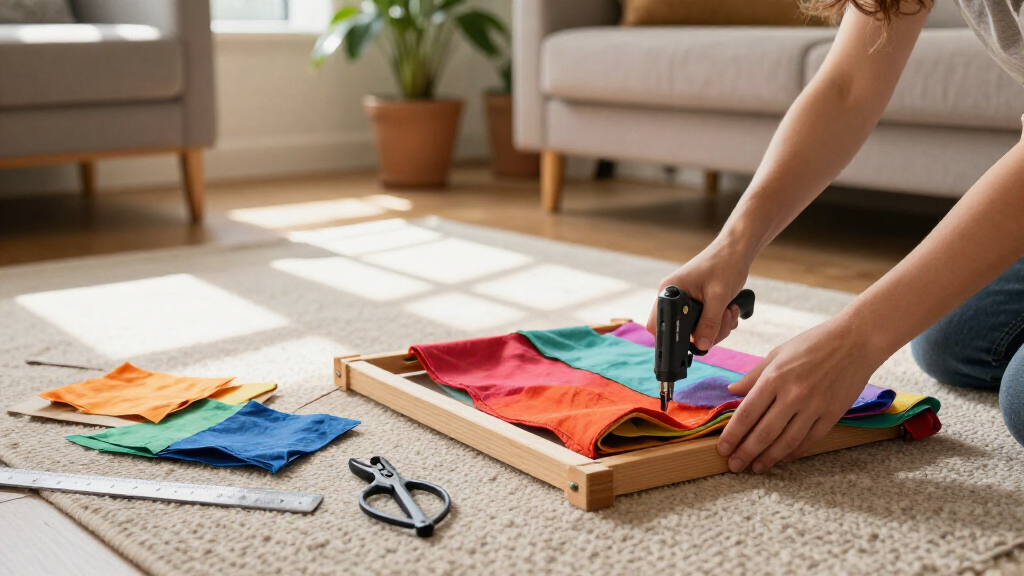
For the project, she placed one of the frame’s plastic sheets over leftover red chenille fabric, cut fabric around it, and attached the cloth to the plastic backing with double-sided tape. She arranged selected cards off-center toward the lower-right corner, then placed the second plastic sheet on top and returned the assembled display to the frame.
Dangel said she removed most of the cards afterward, but plans to make more fabric frames so she can put additional keepsakes on display. She described the result as adding texture and said the fabric linked visually with a bench she had reupholstered in the same material. She also plans to paint the frame to match the fabric; that work has not yet been completed.
A Low-Cost Way to Display Keepsakes
The project offers renters and other people with limited storage a way to put small, sentimental items on display rather than keeping them in a box. Its main appeal, as described by Dangel, is practical: leftover fabric and an existing frame can change the appearance of a display without buying a new mat or frame.
The method also shows how a material already used elsewhere in a room can make a collection feel connected to the rest of the decor. Dangel used the same chenille on a bedroom bench and said she may use more for pillows. That is her design rationale, not evidence that the approach will suit every room or collection. The report gives no pricing for someone who would need to purchase the materials.
For readers considering the hack, the key constraint is the space inside the frame. The fabric has to fit between the backing and the front sheet without preventing the frame from closing. Dangel’s account suggests trying a thinner cloth if thickness becomes an issue, rather than assuming every upholstery fabric will work.
Products Worth Considering

Arlo Pro Wireless Security Camera, 2K HDR, 6th Gen, 4-Camera System

VIZIO 65-Inch V-Series 4K HDR Smart TV

eufy Security eufyCam C35 4-Camera Wireless Indoor/Outdoor Kit
As an affiliate, we earn on qualifying purchases.
From Paper Collection to Wall Display
Dangel wrote that she lives in New York and has limited room to store keepsakes. She had already put some of her paper collection in two large float frames, but was unhappy with the way the displays looked. The fabric idea came after she saw fabric-frame DIY projects on Pinterest and realized a textile could serve as a mat.
She had the red chenille on hand from a bedroom vanity bench reupholstery project. That circumstance shaped both the material choice and the reported price: the frame and fabric were already available to her. Her account does not describe a broader product launch or a new commercial service; it is a first-person home-decor experiment published by Apartment Therapy.
““all I needed to do that was about five minutes and a few yards of fabric.””
— Emma Dangel, Apartment Therapy Style Editor
Frame Fit Depends on Fabric
The report does not identify the frame brand, dimensions, or exact fabric weight, so it is unclear how well the method would work with different frame designs. Dangel said the chenille worked for her but suggested thinner fabric, such as linen or cotton, as a better option. She did not provide measurements, a materials list with quantities, or instructions for frames that do not use removable plastic sheets.
The five-minute estimate and no-cost result are also specific to Dangel’s experience. The source does not report independent testing, durability over time, or whether tape will hold equally well on other fabric and frame surfaces. Her plan to paint the frame is still a future project, with no reported completion date.
More Frames and a Painted Finish
Dangel said she plans to make more fabric frames to display the cards she removed from the first arrangement. She also intends to paint the frame so it matches the red fabric and has leftover chenille she may use for bedroom throw pillows. Those are plans she described in the report, not completed updates.
For anyone trying the idea, the next step is to check that the chosen fabric fits inside the frame and does not stop the backing from securing. A thin scrap can be tested before cutting a larger piece. The source offers no follow-up results on the frame’s long-term condition or on whether Dangel has completed the additional projects.
Key Questions
What is the fabric-frame hack?
It uses fabric as a mat inside a float frame. Dangel cut cloth to the size of a plastic frame sheet, secured it to the backing with double-sided tape, arranged cards on top and added the second plastic sheet.
How long did the project take?
Dangel described it as taking about five minutes. That is her estimate for her own frame and materials, not a guaranteed time for other projects.
What fabric works best?
Dangel said thinner fabric, such as linen or cotton, would ideally be used because thick fabric may keep the frame from closing. Her red chenille worked in her frame, but she did not test other materials.
Did the project cost anything?
Dangel said it cost her nothing because she already owned the fabric and frames. The report does not give a total for people who need to buy those supplies.
What does Dangel plan to do next?
She said she plans to make more fabric frames for her keepsakes and paint the frame to match the fabric. She also said she may use the remaining chenille for throw pillows.
Source: apartmenttherapy.com