TL;DR
A Matter Alpha report describes using SwitchBot fans and air purifiers as sources of ambient light, even though their lighting features are not exposed through Matter. The examples show how devices bought for other purposes can add low-level lighting, but they do not replace dedicated lamps or brighter task lighting.
Matter Alpha has reported that several devices in a smart home can provide useful ambient lighting even when they are sold primarily as fans or air purifiers. The first-person account describes using SwitchBot products for low-level light at night, while noting that their lighting controls are not exposed through Matter.

Get home appliances delivered free with Prime
- Fast, free delivery on millions of items
- Prime Video, Amazon Music and more included
- Member-only deals all year
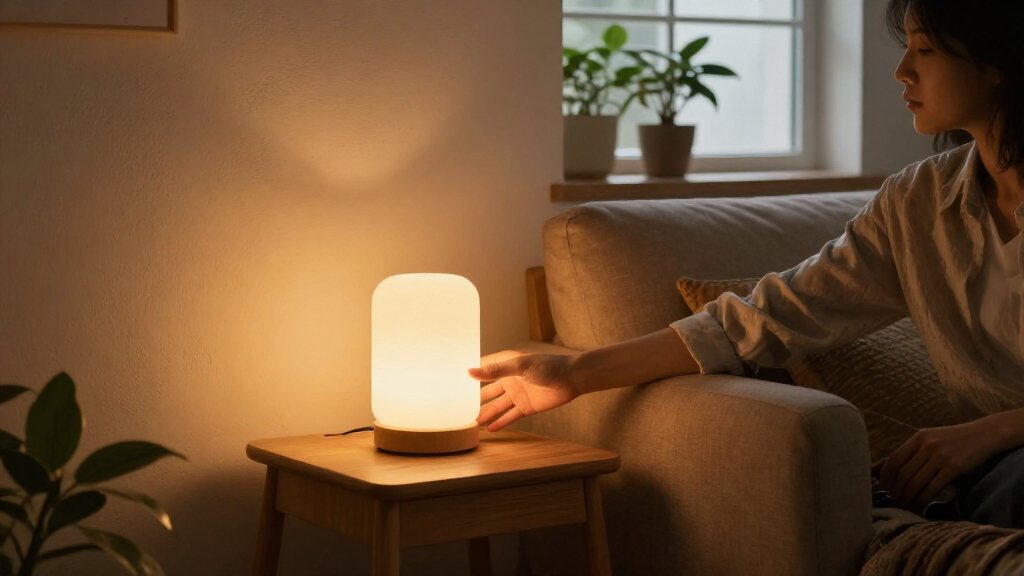
The report’s author says a SwitchBot Circulator Floor Fan beside the bed serves as both a fan and a floor lamp. Its light provides enough visibility to move around at night without turning on overhead lights, which the author finds too bright for that setting. The fan’s battery also makes it easy to move, according to the account.
The fan appears in Matter as a fan, not as a lighting device, the author says. To change its light, the author uses the SwitchBot app or other platform integrations. Through the SwitchBot Homey app, the light can be set to bright, dim or off; the report says it is not fully dimmable.
The author also uses SwitchBot air purifiers that have integrated lights. The report says these offer dimming and color choices, although the lighting is likewise not exposed through Matter. The author prefers the fan’s light, showing that the usefulness of an integrated light can depend on the room and the kind of illumination a household wants.
A Second Job for Smart Devices
The report points to a practical consideration for people furnishing a home: a device bought for one purpose may also help with low-level lighting. That can be useful in bedrooms or other areas where people want to see at night without switching on a bright ceiling fixture. It may also make use of floor or shelf space more efficient, particularly in smaller rooms.
These examples are not a claim that multifunctional devices can replace purpose-built lights. The author says the fan’s ambient light does not provide enough illumination for work, reading or video calls, and still uses a dedicated Govee Floor Lamp 2 in a home office. The distinction matters: ambient light helps with navigation and atmosphere, while brighter task lighting serves different needs.
There is also a connectivity trade-off. Buyers who expect to manage every feature through Matter should check whether a product exposes its lighting controls to that standard. In the examples described, the devices can provide light, but controlling that feature requires the manufacturer’s app or another integration.
Products Worth Considering

Samsung 65-Inch S90H OLED 4K Smart TV Bundle with HW-B630F Soundbar, Subwoofer, and Screen Cleaner (2026)

LG OLED evo C4 55-Inch 4K Smart OLED TV (OLED55C4PUA) with 144Hz Refresh Rate, HDMI Cable, 24-Month Protection Plan, and Streaming Bundle

Philips Hue Bridge Pro Smart Lighting Hub, 1-Pack
As an affiliate, we earn on qualifying purchases.
Lighting Beyond Bulbs and Strips
The report begins from a familiar view of smart lighting: bulbs, lamps and light strips. It argues that lighting can also be built into products whose main functions are airflow or air purification. The article describes this as part of a broader range of unconventional forms for smart-home lighting, rather than a replacement for conventional fixtures.
Other examples in the account include GE plug-in power-failure night lights, which the author says provide everyday ambient light and also operate as flashlights during an outage. The report contrasts those with a Linkind smart plug with a night light, which it says has Matter support but does not stay lit when power is out. It also mentions Govee Curtain Lights, which the author says can be used to mark a closet or room entrance as well as to provide light.
The article is a first-person account, not a comparative product test. It does not present measured brightness, energy use, reliability results or a broader survey of smart-home devices. Its central point is narrower: when considering a new household device, buyers may want to check whether it can also meet a lighting need.
“The light isn’t accessible via Matter, sadly.”
— Matter Alpha report
Matter Controls Remain Limited
The report does not specify the devices’ model numbers, firmware versions, Matter compatibility details or the other platform integrations used for each product. It also does not provide brightness measurements or explain whether software updates could change how the integrated lights appear in Matter. Those details matter to buyers comparing control options and should be checked against the specifications for the exact model.
The account reflects one author’s home and preferences. It does not establish how well the lights perform in other rooms or households, or whether the cited products are available at the same price and configuration everywhere. The report also does not compare their lighting performance with dedicated night lights, lamps or smart bulbs.
Check Features Before Buying
The report does not identify a pending product launch or a scheduled Matter update. For now, readers considering a fan or air purifier with an integrated light can check the manufacturer’s current specifications for brightness, dimming, color options and app support, and confirm whether the light itself is controllable through Matter. That distinction may be more important than the device’s general smart-home compatibility.
For households planning room lighting, the article’s examples suggest starting with the intended use: gentle light for nighttime movement, or stronger illumination for reading and work. A multifunctional device may serve the first purpose while a dedicated lamp or fixture remains necessary for the second. The author also says they would still like to add under-cabinet strips and dimmable smart ceiling lights, underscoring that these devices supplement rather than close out a lighting plan.
Key Questions
Which devices in the report provide light?
The author describes integrated lights in a SwitchBot Circulator Floor Fan and SwitchBot air purifiers. The account also mentions GE plug-in power-failure night lights, a Linkind smart plug with a night light and Govee Curtain Lights.
Can the SwitchBot fan’s light be controlled through Matter?
According to the report, the light is not exposed through Matter; the fan appears as a fan. The author uses the SwitchBot app or another platform integration to control the light.
Does the fan provide enough light for reading or work?
The author describes it as useful ambient light for moving around at night, but says it does not provide enough light for tasks such as working, reading or video calls. The author uses a dedicated floor lamp in a home office.
Do the air purifier lights offer more control?
The report says the SwitchBot air purifier lights can be dimmed and set to different colors. It also says those lighting controls are not exposed through Matter.
What should buyers check before choosing a multifunctional device?
Check the exact model’s lighting controls, brightness, dimming and compatibility with the apps or smart-home standard you use. An integrated light may be useful for ambient illumination without replacing a brighter dedicated lamp.
Source: matteralpha.com