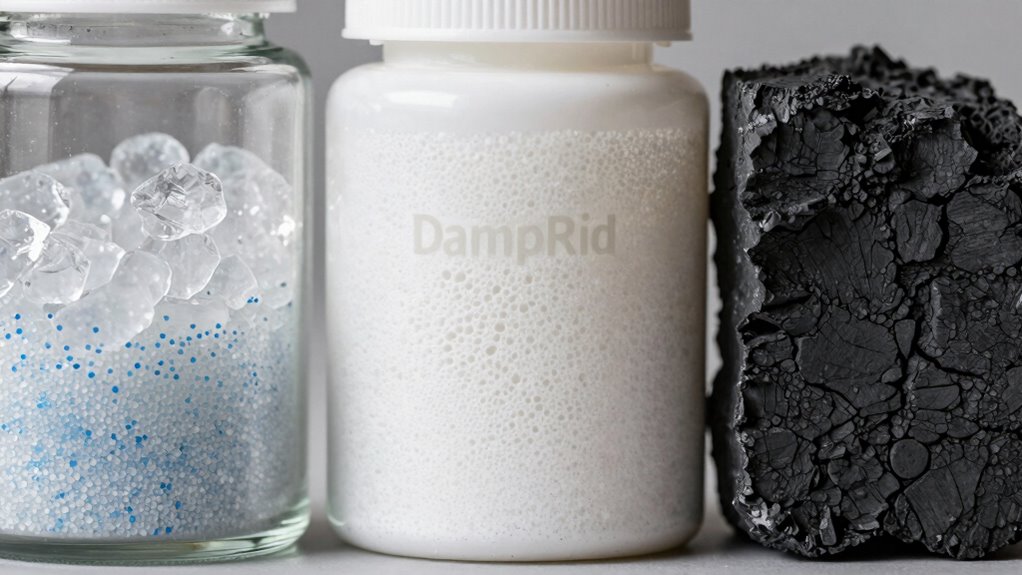

Desiccants like silica gel, DampRid, and charcoal help control moisture and prevent damage. Silica gel absorbs moisture with porous beads and is great for small items, while DampRid uses calcium chloride to handle larger spaces effectively. Charcoal is natural and deodorizes while absorbing some humidity. Each has unique benefits, so choosing the right one depends on your needs. Keep exploring to understand which desiccant suits your home and valuables best.
Key Takeaways
- Silica gel absorbs moisture via porous beads and is reusable, ideal for small items and electronics.
- DampRid uses calcium chloride to attract and convert moisture into liquid, suitable for large spaces.
- Charcoal absorbs moisture physically and neutralizes odors, best for odor control and general air purification.
- Silica gel is environmentally friendly, while DampRid offers longer-lasting moisture absorption in bigger areas.
- Proper placement, regular monitoring, and understanding each desiccant’s strengths optimize moisture control at home.

Vbeijll 5 Gram (50 Pack) Color-Indicating Silica Gel Packets, Premium Food Grade Desiccant – Rechargeable Moisture Absorbers for Food Storage, Electronics, 3D Filament & Safes
FOOD GRADE & SAFE: The storage desiccant packs are made from food grade silicone and has passed a…
As an affiliate, we earn on qualifying purchases.
As an affiliate, we earn on qualifying purchases.
What Are Desiccants and How Do They Prevent Moisture Damage?
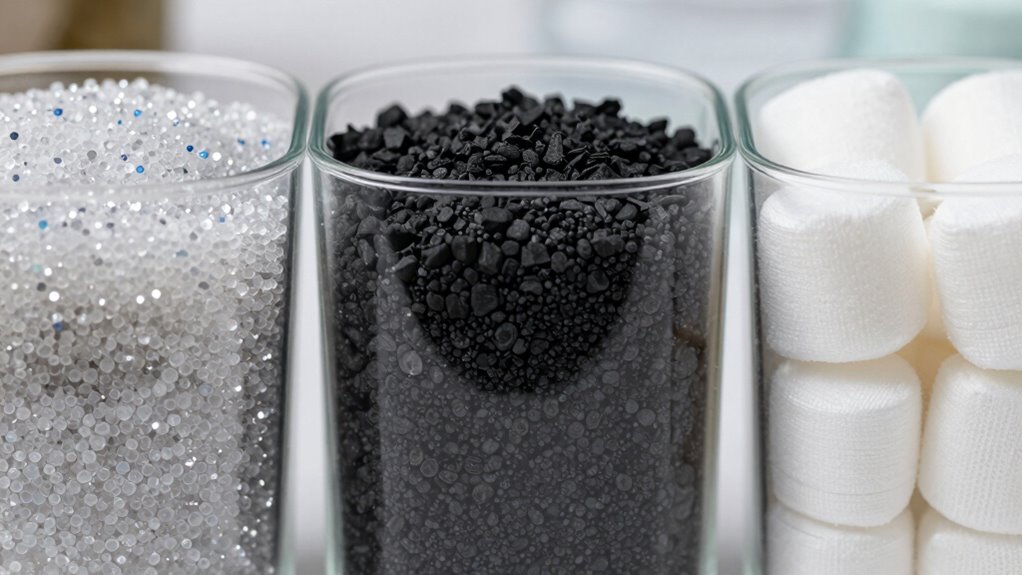
Have you ever wondered how certain products stay dry and free from moisture damage? That’s where desiccants come in. They’re materials designed for humidity control, actively removing excess moisture from the air or enclosed spaces. When moisture is present, desiccants absorb it, preventing humidity levels from rising too high. This process is essential for moisture prevention, especially in storage or shipping environments. By maintaining low humidity, desiccants protect items from mold, corrosion, and spoilage. They work by trapping water molecules within their structure, keeping the surrounding air dry. Whether in packaging, safes, or storage containers, desiccants play a crucial role in safeguarding your valuables from moisture-related damage. Their simple yet effective action makes them indispensable for moisture prevention. Desiccant materials are designed to efficiently absorb moisture, further enhancing their protective capabilities. The effectiveness of a desiccant can also depend on its regeneration process, which allows it to be reused after saturation. Selecting the appropriate desiccant type can also influence the moisture absorption capacity, ensuring optimal performance based on specific needs and environments. Proper moisture management is vital for preserving the integrity and longevity of stored items.

DampRid Hi-Capacity Moisture Absorber Bucket, Fragrance Free, 2 lb. 15.5 oz. & Moisture Detection Strip (2 Pack), Attracts & Traps Excess Moisture
DampRid Hi-Capacity Moisture Absorber Bucket, Fragrance Free, 2 lb. 15.5 oz. & Moisture Detection Strip (2 Pack), Attracts…
As an affiliate, we earn on qualifying purchases.
As an affiliate, we earn on qualifying purchases.
Which Desiccant Is Best for Protecting Valuables, Mold, or Your Home?
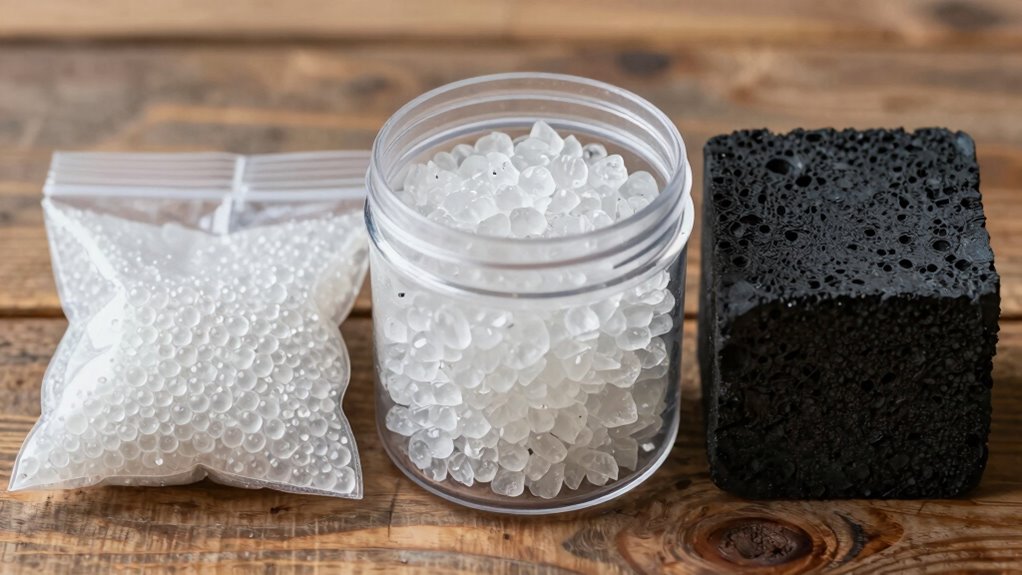
Choosing the right desiccant depends on what you need to protect. If you’re safeguarding valuables or preventing mold, silica gel is often the best choice due to its high moisture absorption capacity and inert nature. Historically, silica gel has been used in packaging, making it a reliable option for protecting electronics, jewelry, and documents. Piercing Care and Hygiene emphasizes the importance of proper maintenance and cleanliness, which can be supported by using desiccants to prevent moisture buildup. Proper moisture control is essential for maintaining a healthy environment and protecting your belongings from damage. DampRid is convenient for larger spaces like closets or basements, as it actively absorbs excess humidity without complicated maintenance. Charcoal, with its natural deodorizing properties, is environmentally friendly and has been used traditionally for air purification and moisture control. In relation to environmental impact, silica gel and charcoal typically have lower footprints than chemical-based alternatives. When selecting a desiccant, it’s important to consider household safety and the specific needs of your environment.

CLEVAST Bamboo Charcoal Air Purifying Bags – (Large, 4×200g), Removes Odors and Moisture, Nature Fresh Air Purifier Bags, Odor Eliminator for Home, Car, Pets, Bathroom, Basement
100% NATURAL BAMBOO CHARCOAL: The bamboo charcoal bags are made of 100% natural bamboo charcoal, without any fragrance…
As an affiliate, we earn on qualifying purchases.
As an affiliate, we earn on qualifying purchases.
How Do Silica Gel, DampRid, and Charcoal Compare?
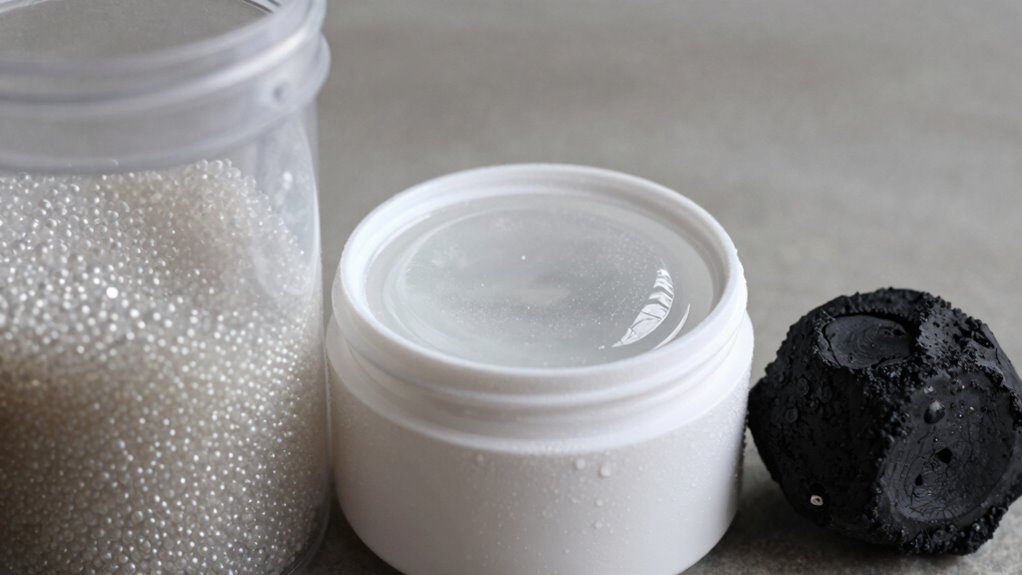
Silica gel, DampRid, and charcoal each serve as effective desiccants, but they differ considerably in how they perform and suit various needs. These desiccant types use different moisture absorption methods: silica gel absorbs moisture through its porous silica beads, trapping water molecules inside; DampRid uses calcium chloride to attract and convert moisture into liquid, which is then contained; charcoal absorbs moisture physically and also helps neutralize odors. Silica gel is reusable and ideal for small, delicate items, while DampRid works well in larger spaces like basements or closets. Charcoal is versatile and natural but less targeted. Your choice depends on whether you prioritize reusability, odor control, or ease of use. Additionally, some desiccants like silica gel can be infused with essential oils for added odor control benefits, making them more effective in certain environments. It’s also important to consider the moisture absorption capacity of each desiccant to ensure it meets your specific needs. Understanding the different moisture absorption methods can help you select the most suitable desiccant for your situation. For optimal results, consider factors such as humidity levels and the size of the space that needs moisture regulation, as these can influence which desiccant performs best. Each desiccant type offers unique benefits suited to specific moisture control needs. Moreover, assessing the cost-effectiveness of each option can help determine the best long-term solution for your environment.
Vbeijll 5 Gram (50 Pack) Color-Indicating Silica Gel Packets, Premium Food Grade Desiccant – Rechargeable Moisture Absorbers for Food Storage, Electronics, 3D Filament & Safes
FOOD GRADE & SAFE: The storage desiccant packs are made from food grade silicone and has passed a…
As an affiliate, we earn on qualifying purchases.
As an affiliate, we earn on qualifying purchases.
What Factors Should You Consider When Choosing a Moisture Absorber?
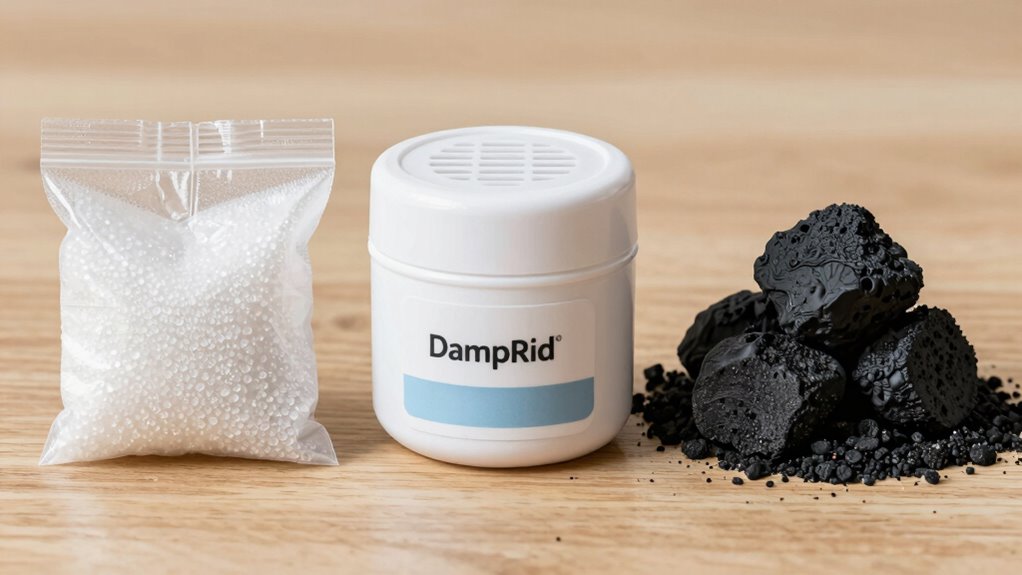
When selecting a moisture absorber, it’s important to take into account the specific environment and your overall goals. Consider factors like the size of the space, the level of humidity, and how long the product needs to last. Cost considerations are key; some options, like silica gel, may be more affordable upfront, while others, like DampRid, provide longer-lasting solutions. Environmental impact also matters—choose eco-friendly options if reducing waste is a priority. Here’s a comparison:
| Factor | Silica Gel | DampRid | Charcoal |
|---|---|---|---|
| Cost | Moderate | Higher | Low |
| Environmental Impact | Reusable, eco-friendly | Disposable, waste | Natural, biodegradable |
| Effectiveness | Dry, small areas | Large spaces | Odor control, moisture |
Pick based on your budget and environmental values.
How to Use Desiccants Safely and Effectively at Home
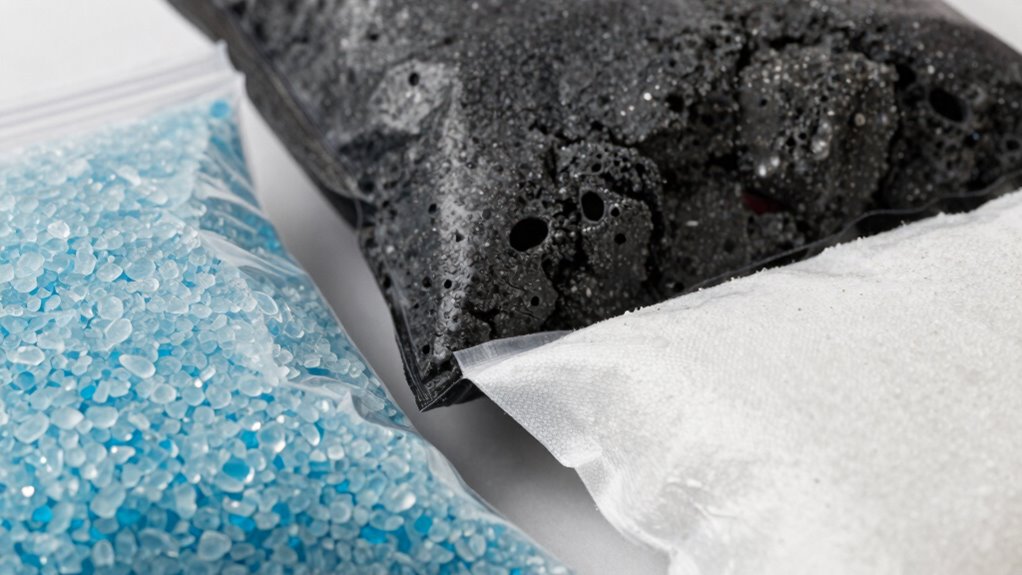
Using desiccants safely and effectively at home involves understanding how to handle and place them properly to maximize their moisture-absorbing benefits while minimizing potential hazards. Always store desiccants in appropriate storage containers that are sealed tightly to prevent accidental spills or ingestion. When using reusable options like silica gel pouches, confirm they are completely dry before reusing and keep them out of reach of children and pets. Place desiccants in areas prone to moisture, such as closets, cabinets, or storage boxes, but avoid direct contact with delicate items. Regularly check the desiccants and replace or recharge them as needed to maintain ideal dryness. Proper placement and storage help you get the most out of the moisture control while ensuring safety at home. Additionally, choosing the right type of battery inverter generator for your needs can enhance the efficiency and safety of your power sources during outages. Understanding desiccant types and their specific uses can further help optimize your moisture control strategy, especially considering the importance of attention to detail in maintaining quality. Being aware of the different desiccant materials can also help you select the most suitable option for your environment. Incorporating knowledge of sustainable textile care and exploring eco-friendly options can further reduce environmental impact and improve your overall approach to moisture management.
Frequently Asked Questions
Are Desiccants Reusable or Single-Use?
Most desiccant types are reusable, but their reusability factors vary. Silica gel can often be dried out and reused multiple times by heating it, while DampRid typically needs replacement after it’s saturated. Charcoal-based desiccants can sometimes be reactivated through specific processes, but it’s less common. You should always check the product instructions to determine if your desiccant is reusable or needs replacing, ensuring maximum moisture control.
How Long Do Different Desiccants Typically Last?
Imagine a tiny sponge soaking up moisture—each desiccant has a lifespan that varies. Silica gel typically lasts 1-3 months, depending on humidity levels, while DampRid can last about 60 days in low to moderate moisture environments. Charcoal’s moisture absorption varies but generally lasts longer, around 2-6 months. Your desiccant’s lifespan depends on how much moisture it handles and the environment’s humidity.
Can Desiccants Cause Any Health Hazards?
Desiccants can pose health risks if ingested or if their dust is inhaled, especially with silica gel and charcoal, which may contain toxins. Toxicity concerns include choking hazards or chemical exposure, so you should keep them out of reach of children and pets. Always follow manufacturer instructions, avoid breaking open the packets, and use proper ventilation to minimize health risks associated with desiccants.
What Environmental Impacts Do Desiccants Have?
Desiccants can contribute to environmental pollution if not disposed of properly, especially silica gel and charcoal that may linger in landfills. While some desiccants are non-biodegradable, others like charcoal pose fewer biodegradability concerns. You should consider their environmental impact and opt for eco-friendly options when possible. Proper disposal minimizes environmental pollution, helping to reduce harmful effects on ecosystems and ensuring you’re making a more sustainable choice.
Are There DIY Alternatives to Commercial Desiccants?
Think of homemade desiccants as tiny guardians for your belongings. You can use natural remedies like rice, activated charcoal, or even baking soda for home drying. These DIY options absorb moisture effectively and are eco-friendly. Just place them in breathable containers near damp areas. While they may not last as long as commercial desiccants, they’re simple, cost-effective, and a great way to protect your items naturally.
Conclusion
Choosing the right desiccant can feel overwhelming, but with the right info, you’ll keep your valuables safe from moisture’s sneaky damage. Silica gel, DampRid, and charcoal each have their strengths, so pick what fits your needs best. Remember, a good moisture absorber can be your home’s superhero, saving you from mold and ruin. Don’t wait until humidity turns your space into a soggy disaster—act now and keep your belongings dry as the desert!