
To prevent rust on your metal trunk, keep it dry and store it in a low-humidity area. Use protective coatings like rust-inhibiting paint, sealants, or powder coatings to create a moisture barrier. Elevate the trunk off damp surfaces and consider adding desiccants inside. Regularly inspect and clean the surface, touching up any scratches immediately. Following these tips will help you maintain its look and strength over time—learn more about effective rust prevention strategies next.
Key Takeaways
- Choose rust-resistant materials like stainless steel or aluminum for the trunk.
- Apply protective coatings such as epoxy, polyurethane, or powder paint to create a moisture barrier.
- Store trunks in dry, low-humidity environments with proper ventilation and elevation off damp surfaces.
- Regularly inspect, clean, and touch up coatings or scratches to prevent rust from developing.
- Use desiccants or silica gel packs inside the trunk to absorb excess moisture and maintain dryness.

Rust-Oleum 248658 Stops Rust Reformer Spray Paint, 10.25 oz, Matte Black
Use on any rusty, metal surface to Instantly convert rust to a flat black, paintable surface that is…
As an affiliate, we earn on qualifying purchases.
As an affiliate, we earn on qualifying purchases.
Why Rust Prevention Is Essential for Metal Trunks
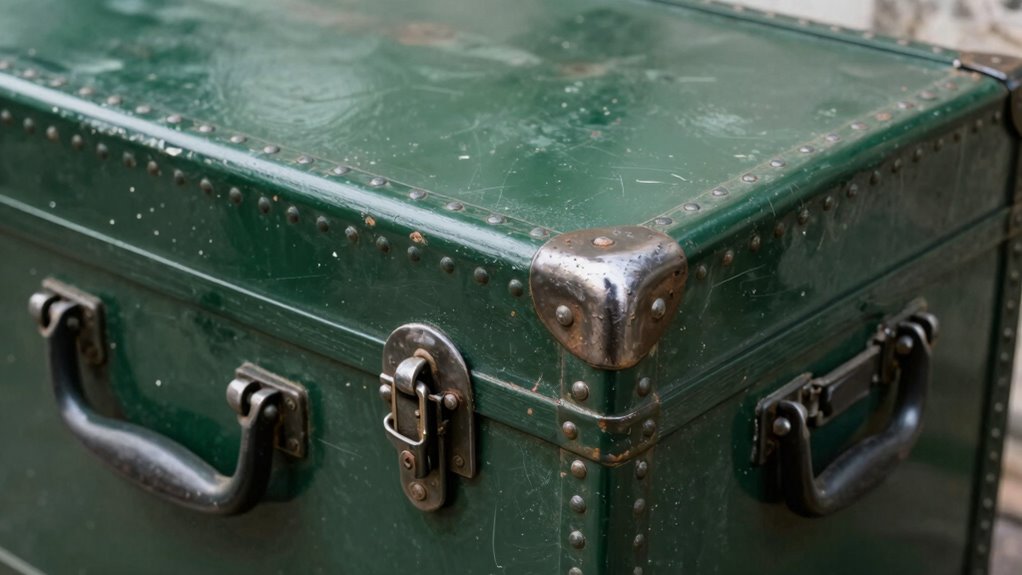
Metal trunks are valuable storage options, but they’re vulnerable to rust if not properly protected. This is because many metal trunks are made from various metal alloys that can corrode when exposed to moisture and oxygen. Rust weakens the structure, making your trunk less durable and less secure over time. To prevent this, applying rust inhibitors is essential. These products create a protective barrier that prevents moisture from reaching the metal surface. Regular maintenance, including using rust inhibitors suited for your metal alloy, helps extend your trunk’s lifespan. Properly protected trunks maintain their appearance and structural integrity. Without rust prevention, you risk costly repairs or replacement. Additionally, understanding the causes of corrosion can help you choose the most effective preventative measures, such as selecting the right rust inhibitors for your specific metal type. Protect your investment by understanding the importance of rust prevention and using appropriate treatments to keep your metal trunk in top condition.

15 Pcs 20 Gram Silica Gel Packs, Transparent Desiccant, Desiccant Packets for Storage, Moisture Packs for Spices Jewelry Shoes Boxes Electronics Storage
GOOD ADSORPTION CAPACITY: Silica gel desiccant is a highly active adsorption material, has good thermal properties and chemical…
As an affiliate, we earn on qualifying purchases.
As an affiliate, we earn on qualifying purchases.
What Causes Rust on Metal Trunks and How to Recognize It
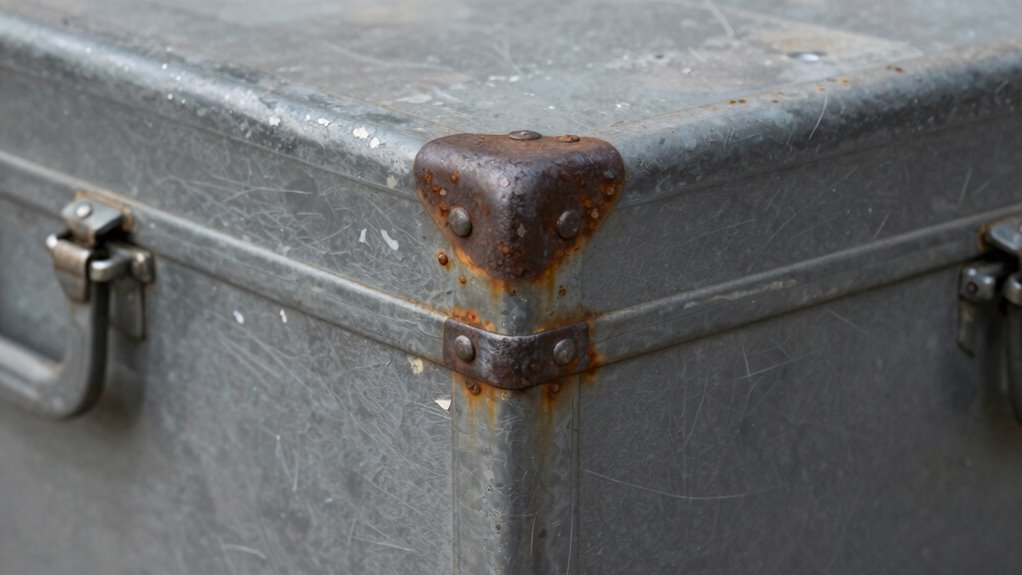
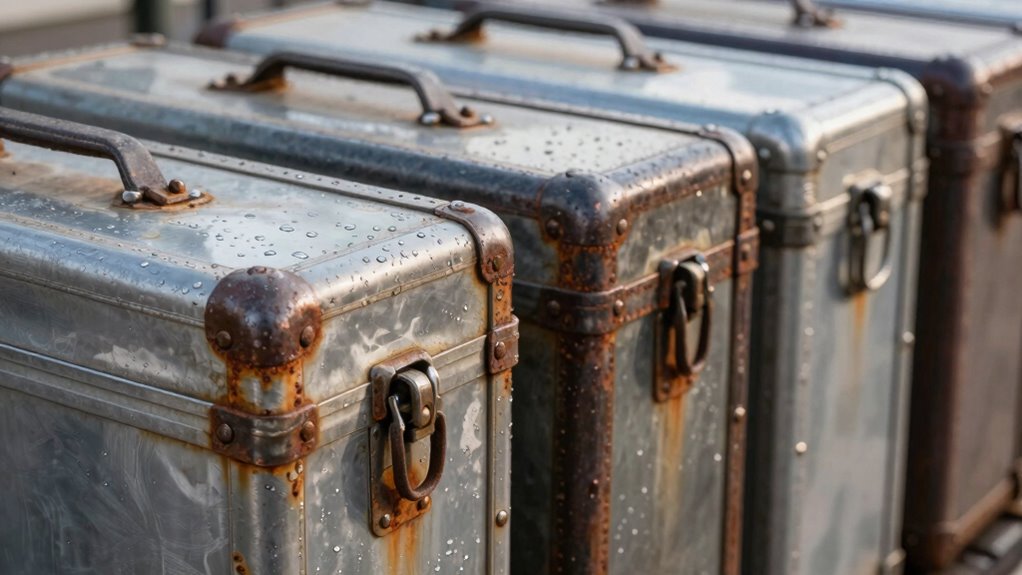
Rust forms on metal trunks when moisture and oxygen interact with the metal surface, causing oxidation that weakens the material. Recognizing rust early helps you prevent further damage. Several factors influence rust development:
- Metal Composition: Trunks made from iron or steel are more prone to rust than those with corrosion-resistant alloys.
- Environmental Factors: High humidity, temperature fluctuations, and exposure to rain accelerate rust formation. Proper ventilation can reduce moisture buildup around stored trunks.
- Surface Damage: Scratches or chips expose raw metal, making it easier for rust to start. Regularly inspecting your trunks can help catch these issues early.
- Protective Coatings: Applying paint or sealants can prevent rust formation by creating a barrier against moisture and oxygen. Routine maintenance and inspection also help identify early signs of rust before it spreads.
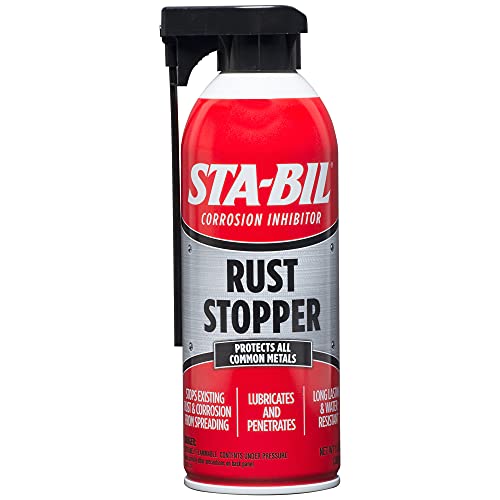
STA-BIL Rust Stopper – Anti-Corrosion Spray and Antirust Lubricant – Prevents Car Rust, Protects Battery Terminals, Stops Existing Rust, Rust Preventative Coating – 13 Oz (22003)
Corrosion Inhibitor – Fights the formation of rust and corrosion on exposed or painted metal surfaces while leaving…
As an affiliate, we earn on qualifying purchases.
As an affiliate, we earn on qualifying purchases.
Choosing Rust-Resistant Materials and Coatings for Your Metal Trunk

To effectively prevent rust from damaging your metal trunk, selecting materials and coatings designed to resist corrosion is key. Focus on choosing the right metal alloy, such as stainless steel or aluminum, which naturally resist rust better than steel. Applying protective paint coatings creates a barrier against moisture and oxygen, further shielding your trunk. Here’s a quick guide:
| Metal Alloy | Protective Paint Coatings | Best Use |
|---|---|---|
| Stainless Steel | Epoxy or Polyurethane | Heavy-duty outdoor storage |
| Aluminum | Powder Coating | Light, portable trunks |
| Galvanized Steel | Rust-inhibitive primer | Budget-friendly options |
Selecting the right combination guarantees longevity and rust resistance for your trunk. Additionally, understanding corrosion-resistant materials can help you make more informed choices for long-term protection. It is also beneficial to consider proper storage conditions since environmental factors significantly influence rust development, and keeping the trunk in a dry, well-ventilated area can further prevent corrosion and prolong its lifespan. Proper ventilation and humidity control can greatly reduce the risk of moisture buildup that leads to rust formation. Implementing regular maintenance routines can also help identify early signs of rust and address them promptly.

Vixdonos Metal Trunks College Dorm Steel Chests Decorative Storage Box Set of 2 Bedroom Organizer for Home Decor,23.7X14.2X9.5 Inches(Pink and White)
MODERN EXTERIOR DESIGN:The metal storage box set consists of two different macaron color storage boxes, which are beautiful…
As an affiliate, we earn on qualifying purchases.
As an affiliate, we earn on qualifying purchases.
How to Keep Your Metal Trunk Dry and Store It Properly
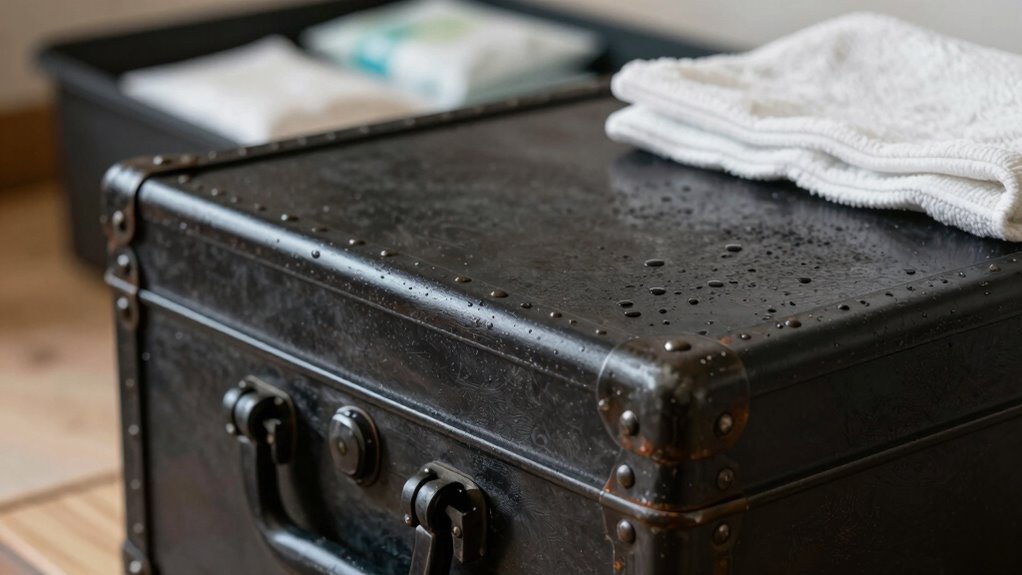
To keep your metal trunk in good shape, you should store it in a dry location away from moisture. Applying a protective coating can help prevent rust and damage over time. Additionally, proper storage practices such as elevating the trunk off the ground and inspecting it regularly can further extend its lifespan. Using free floating storage options can help prevent moisture buildup around the trunk, reducing rust risk. Incorporating climate control measures, such as dehumidifiers, can also be highly effective in maintaining a dry environment. Being mindful of DIY tools and safety tips during maintenance can further protect your investment and ensure safe handling. Proper organization of stored items and using tagging systems can make it easier to monitor the condition of your trunk and ensure it remains protected. With these simple steps, your trunk will stay dry and last longer.
Choose a Dry Location
Choosing a dry location is crucial for keeping your metal trunk in good condition. To prevent rust, focus on humidity control and proper ventilation. Here are three key tips:
- Select a space with low humidity—using a dehumidifier can help maintain ideal moisture levels.
- Guarantee good airflow by choosing a well-ventilated area or adding ventilation solutions like vents or fans.
- Keep the trunk off the floor on pallets or shelves to avoid contact with damp surfaces.
- Regular inspection and cleaning can also help detect early signs of rust and maintain the trunk’s integrity proper storage conditions. Ensuring the storage environment meets industry standards and minimizes microplastic accumulation can further protect your valuable investment. Additionally, maintaining appropriate environmental controls helps sustain optimal conditions and prevent corrosion, especially when considering humidity regulation techniques.
Use Protective Coatings
Applying protective coatings is an effective way to prevent rust and moisture damage on your metal trunk. Start with thorough surface preparation by cleaning off dirt, grease, and rust to guarantee the coating adheres properly. Use a wire brush or sandpaper to smooth rough spots, then wipe the surface with a damp cloth and let it dry completely. Once prepared, apply a quality paint protection designed for metal surfaces. Multiple thin coats work better than one thick layer, providing a durable barrier against moisture. Regularly inspect the coating for chips or wear, and touch up as needed. Proper surface preparation combined with a good protective paint creates a long-lasting shield, keeping your trunk dry and rust-free for years to come. Additionally, choosing the right protective coatings tailored for metal can significantly enhance corrosion resistance. Using weather-resistant paints can further improve the durability of your protective layer, especially in humid environments. This proactive approach helps prevent moisture accumulation that can lead to rust formation over time. Incorporating proper storage techniques can also greatly reduce exposure to moisture and extend the life of your trunk. Being aware of metal surface treatments can further improve your protection strategy and prolong the trunk’s lifespan.
Best Protective Finishes and Sealants to Prevent Rust
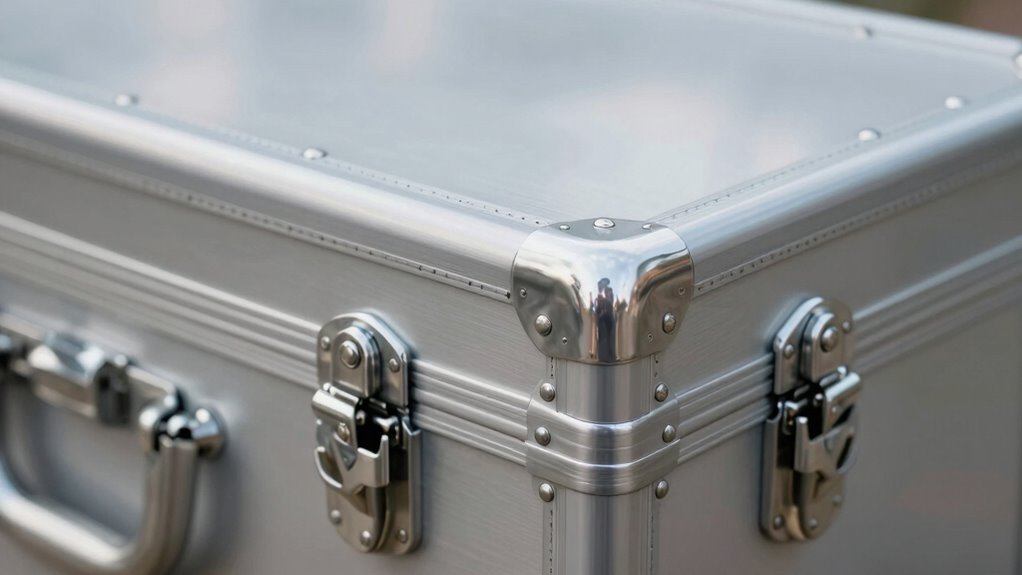
Protecting metal trunks from rust starts with selecting the right finishes and sealants that create a durable barrier against moisture and corrosion. Effective metal finishing involves applying rust inhibitors that prevent oxidation. To guarantee maximum protection, consider these options:
- Oil-based paints or enamel coatings: These form a tough, moisture-resistant layer that blocks rust formation.
- Clear sealants with rust inhibitors: These provide a transparent shield while actively preventing corrosion.
- Powder coating: This high-quality finish offers excellent durability and corrosion resistance for long-term protection.
- Understanding metal corrosion processes can help you choose the most effective protective measures for your trunk.
Choosing the right protective finish depends on your trunk’s environment and usage. Prioritize rust inhibitors within your metal finishing process to extend the lifespan and keep your trunk rust-free.
Regular Maintenance Tips to Spot and Fix Rust Early
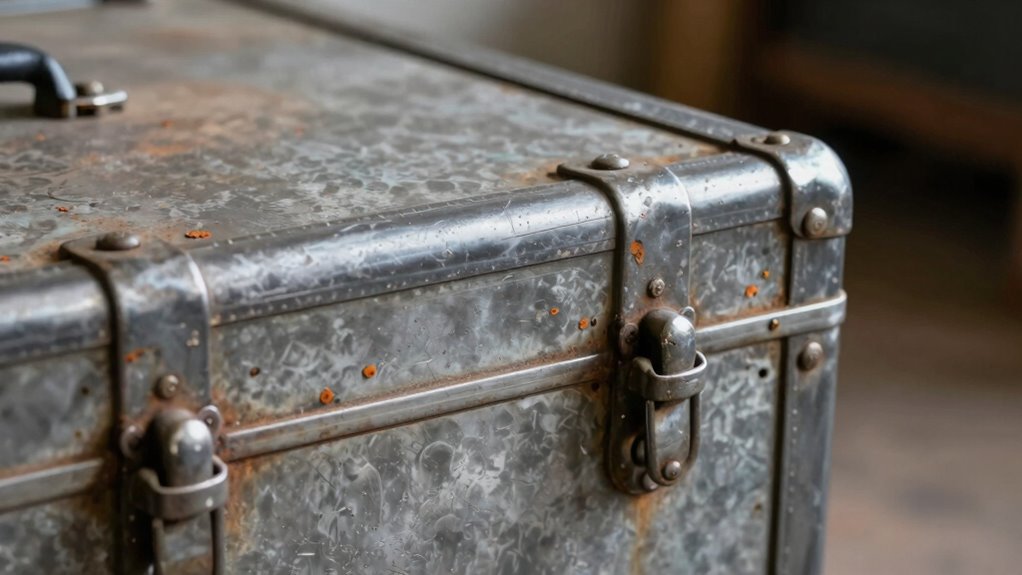
To keep your metal trunk in top shape, you should regularly check for signs of rust or damage. If you spot any issues, applying a fresh protective coating can prevent further corrosion. Staying proactive with inspections and coatings helps extend your trunk’s lifespan and keeps it looking good.
Conduct Regular Inspections
Regular inspections are essential for catching rust early before it causes significant damage. By sticking to a consistent maintenance schedule, you can identify issues before they worsen. Use an inspection checklist to systematically examine your metal trunk for signs of rust, such as discoloration or bubbling paint. Focus on areas prone to moisture buildup, like seams and corners. Regularly check for scratches or dents that can expose bare metal to corrosion. Schedule inspections at least once every few months, especially during humid seasons. This proactive approach helps you address small problems before they escalate. Remember, early detection makes rust treatment easier and more affordable. Staying vigilant with your inspection routine ensures your metal trunk stays protected and rust-free over time.
Apply Protective Coatings
Applying protective coatings is one of the most effective ways to prevent rust from forming on your metal trunk. It creates a barrier against moisture and corrosion. Use quality paint protection or rust inhibitors to keep your trunk in top shape. Before applying, clean the surface thoroughly to remove dirt and rust. Then, apply a rust-inhibiting primer followed by your chosen coating. Regularly inspect your trunk for chips or scratches, and touch up promptly to prevent rust from taking hold.
| Step | Tip |
|---|---|
| Clean thoroughly | Remove dirt, rust, and debris before coating |
| Use rust inhibitors | Apply to vulnerable areas for extra protection |
| Apply paint protection | Use weather-resistant paint for durability |
| Inspect regularly | Spot early signs of rust and fix immediately |
| Touch up chips | Prevent rust from spreading through scratches |
Long-Term Strategies for Storing and Using Your Metal Trunk Without Rust
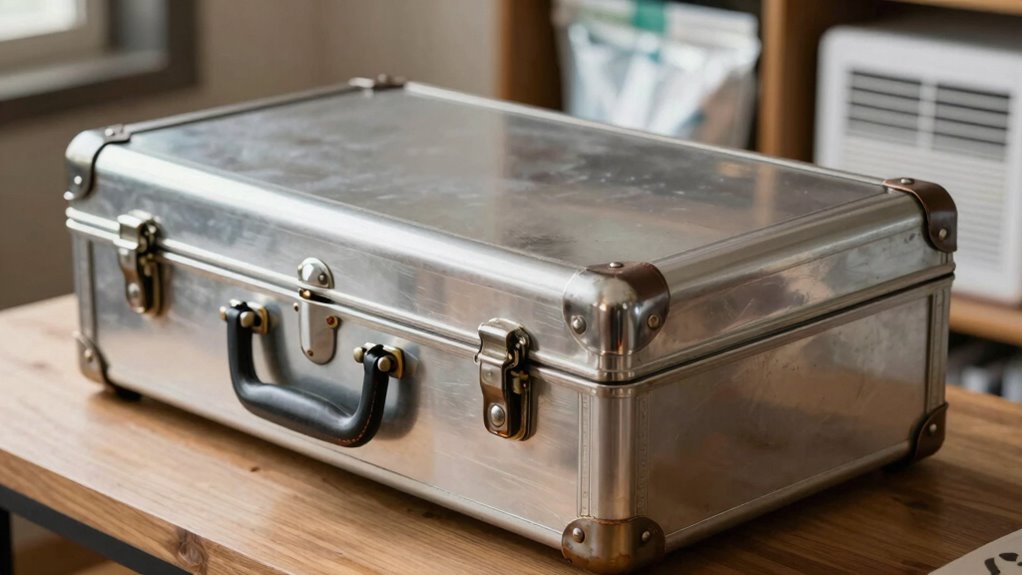
Storing your metal trunk properly is essential to prevent rust and guarantee its longevity. To preserve its metal trunk aesthetics and highlight its historical trunk designs, consider these strategies:
- Store in a cool, dry environment with stable humidity to prevent moisture buildup that causes rust.
- Use silica gel packs or desiccants inside the trunk to absorb excess moisture and keep the interior dry.
- Regularly inspect and clean your trunk, especially if it’s a vintage piece, to catch early signs of corrosion and maintain its historical charm.
Frequently Asked Questions
Can Indoor Humidity Affect Rust Formation on Metal Trunks?
Yes, indoor humidity levels can affect rust formation on metal trunks. Higher indoor moisture creates a damp environment that accelerates rust development. To prevent this, keep humidity levels low with dehumidifiers or good ventilation, and store your trunk in a dry, cool spot. Regularly check for any signs of moisture or corrosion, and wipe down the surface to maintain a protective layer that keeps rust at bay.
Are There Eco-Friendly Rust Prevention Options for Metal Trunks?
Yes, you can use eco-friendly coatings and natural rust inhibitors to protect your metal trunks. These options are safe for the environment and effective at preventing rust without harmful chemicals. Apply eco-friendly coatings like beeswax or plant-based oils, which create a barrier against moisture. Natural rust inhibitors such as vinegar or lemon juice can also help. Regular maintenance with these eco-conscious methods keeps your trunks rust-free and eco-friendly.
How Often Should I Inspect My Metal Trunk for Rust Signs?
You should inspect your metal trunk regularly, ideally every three to six months, to catch rust warning signs early. Frequent inspections help you stay ahead of potential corrosion, catching rust before it spreads. Pay attention to areas prone to moisture and scratches, and look for discoloration or bubbling paint. By maintaining a consistent inspection frequency, you guarantee your trunk stays protected and rust-free for years to come.
Does the Type of Metal Influence Rust Resistance?
Yes, the type of metal definitely influences rust resistance. You should look for metal alloys like stainless steel or aluminum, which naturally resist rust better than plain iron or steel. These alloys contain elements that form a protective layer, preventing moisture from causing corrosion. When choosing a metal trunk, prioritize rust-resistant alloys to guarantee longevity. Regular inspections and proper maintenance can also help keep rust at bay, especially with more vulnerable metals.
Can Seasonal Changes Increase the Risk of Rust Development?
Yes, seasonal moisture and temperature fluctuations can turn your metal trunk into a rusting nightmare. As seasons change, moisture seeps in and expands with temperature swings, creating a perfect storm for rust to take hold. You’ll see a slow, creeping decay if you don’t keep it dry and protected. To avoid this, regularly check for dampness, apply protective coatings, and store it in a stable environment to keep rust at bay all year round.
Conclusion
Think of your metal trunk as a trusted friend; with proper care, it’ll stand strong for years. I once ignored a small rust spot, only to find it spread like wildfire. Don’t let rust sneak up on you—regular inspections, protective coatings, and dry storage are your best defenses. Treat your trunk like a treasure, and it’ll reward you with decades of reliable service without a single rust stain.