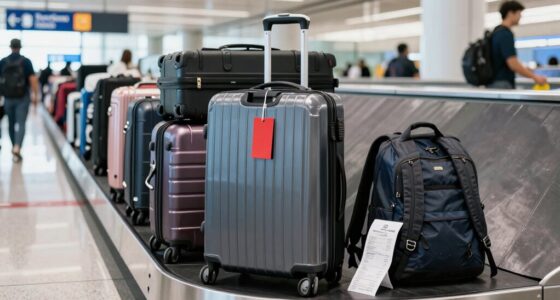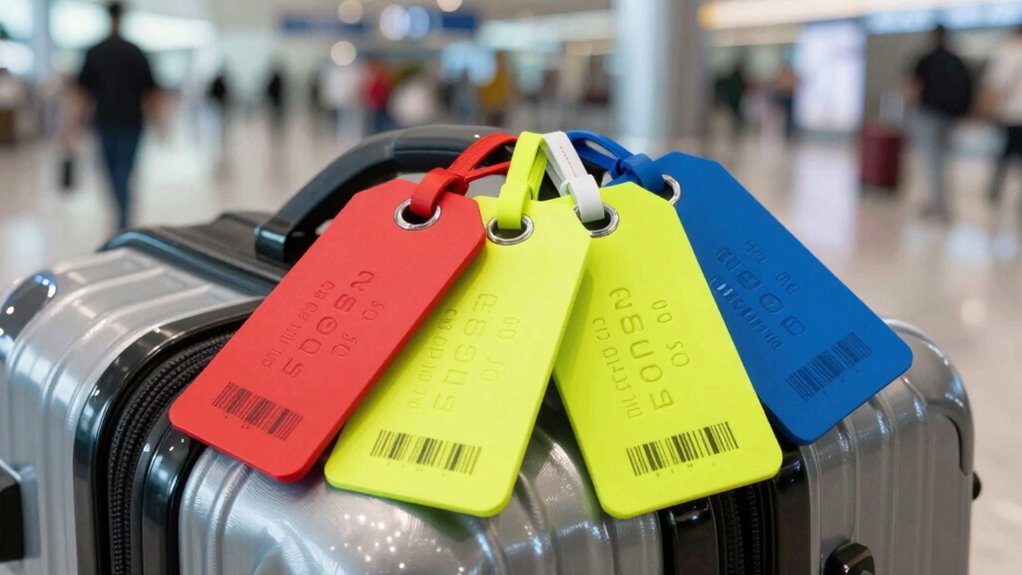

Luggage tags and trackers that work best at airports include durable, brightly colored tags with clear info, plus smart trackers like RFID, Bluetooth, or GPS for added security. RFID tags help airport scans, Bluetooth trackers connect easily with your phone, and GPS devices provide real-time location updates. Choosing the right tech depends on your travel style, but combining these tools can markedly increase your chances of keeping your luggage safe. Keep exploring to discover how to maximize their effectiveness.
Key Takeaways
- Durable, clearly visible luggage tags with bright colors or bold fonts help quick identification at airports.
- RFID tags facilitate seamless security scans and quick baggage processing without batteries.
- Bluetooth trackers provide real-time location updates near your device, aiding recovery in busy or crowded airports.
- Smart tags with GPS offer detailed tracking, but may be limited by airport policies and signal interference.
- Proper attachment, weather resistance, and compatibility with your devices ensure reliable tracking and identification at airports.
How Do Luggage Tags Keep Your Bags Safe?
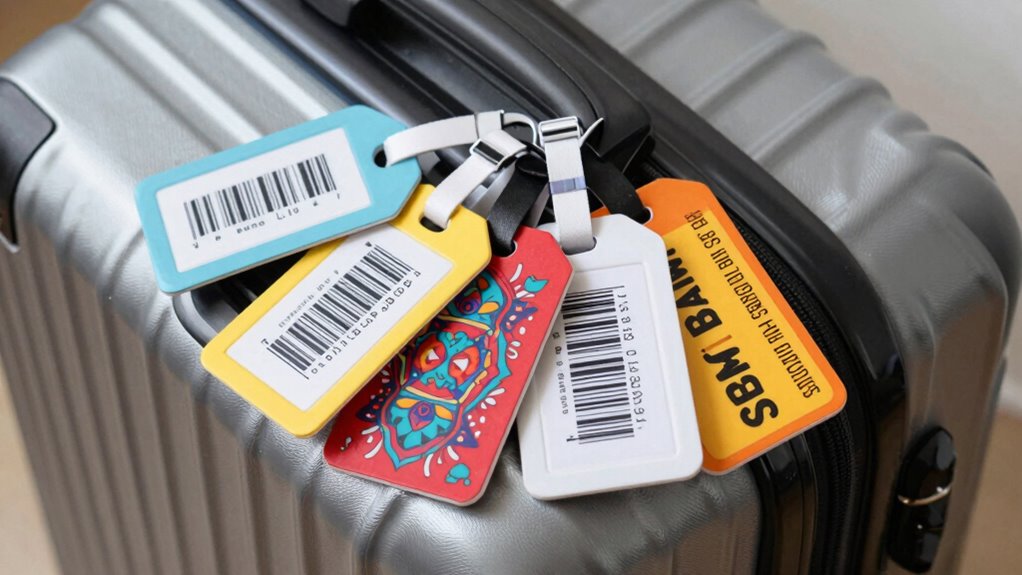
Luggage tags help keep your bags safe by providing clear identification, making it easier for airlines and handlers to match your luggage with you. The design of your luggage tag matters—bright colors, bold fonts, or unique patterns can make your bag stand out on the conveyor belt. A well-designed luggage tag also enhances airport security by allowing quick visual checks and reducing the chance of mix-ups. When your luggage features a clear and sturdy tag, staff can easily verify ownership without opening your bag or searching through multiple pieces. This streamlined process minimizes delays and mishandling. Additionally, using durable materials for your luggage tag ensures it withstands the rigors of travel, maintaining visibility and legibility throughout your journey. Incorporating weather-resistant tags can further protect your information from rain or other elements during transit. Selecting impact-resistant materials can prevent damage from rough handling or accidental drops, further safeguarding your information. Choosing high-visibility designs can also help your luggage stand out even in crowded baggage claim areas, making it easier to identify. Furthermore, some travelers opt for smart luggage tags equipped with GPS tracking to add an extra layer of security. Ultimately, thoughtful luggage tag design supports both safety and efficiency, helping ensure your luggage arrives at the right destination without unnecessary complications.
Do GPS Trackers Really Help Find Lost Luggage?
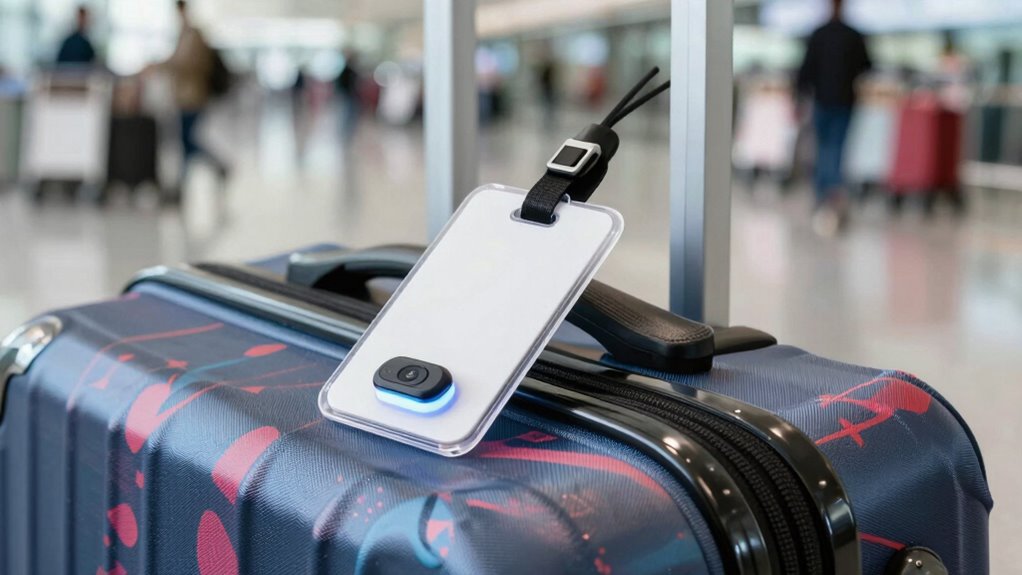
GPS trackers have become popular tools for travelers wanting to locate their luggage quickly. They can provide real-time updates on your baggage’s location, giving you peace of mind during your trip. However, they aren’t foolproof—lost luggage can still be a challenge, especially if baggage restrictions limit what you can carry or if your airline mishandles your bag. Using a GPS tracker may help recover your luggage faster, but it’s not a guarantee. It’s also wise to check if your travel insurance covers lost bags, as GPS trackers alone can’t replace insurance. Remember, some airports and airlines have strict baggage restrictions that could prevent you from carrying certain trackers. Additionally, understanding simple recovery routines like foam rolling can help you stay active and reduce stress during your travels, supporting overall recovery and well-being. Being aware of airport regulations regarding gadgets can prevent unexpected issues at security checkpoints. Staying informed about baggage handling procedures can further improve your chances of recovering lost luggage. Incorporating effective luggage security measures can also enhance your overall travel experience and reduce the risk of loss. Additionally, familiarizing yourself with proper packing techniques can help prevent damage or loss of items, making recovery easier if necessary.
What’s the Difference Between RFID and Bluetooth Trackers?
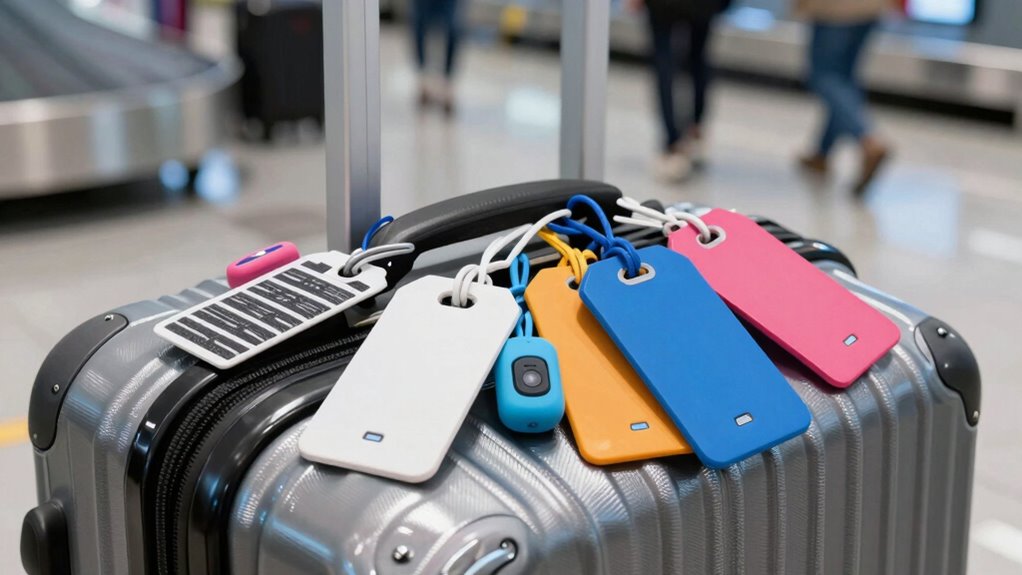
Ever wondered how RFID and Bluetooth trackers differ in helping you find your luggage? RFID (Radio Frequency Identification) tags are embedded in smart luggage and are scanned at airport security to quickly verify your bag’s identity. They don’t require a battery and work passively, making them ideal for security checks. RFID offers a seamless security process, while Bluetooth provides real-time tracking when your bag is close. Bluetooth trackers, on the other hand, connect to your phone via an app within a limited range, usually up to 100 feet. They’re useful for locating your luggage nearby but depend on battery life. Both have their place, but RFID’s passive scan suits airport security needs, whereas Bluetooth excels in personal luggage tracking around airports or at home. Understanding tracking technology can help you choose the best option for your travel needs. Additionally, knowing tracking technology can help you better interpret the capabilities and limitations of each system during your travels. Recognizing the types of tags used in luggage can further inform your choice of tracking device. Moreover, understanding the power sources behind these devices can help you select options that fit your travel style and reliability expectations.
Are Smart Tags Worth It for Frequent Travelers?
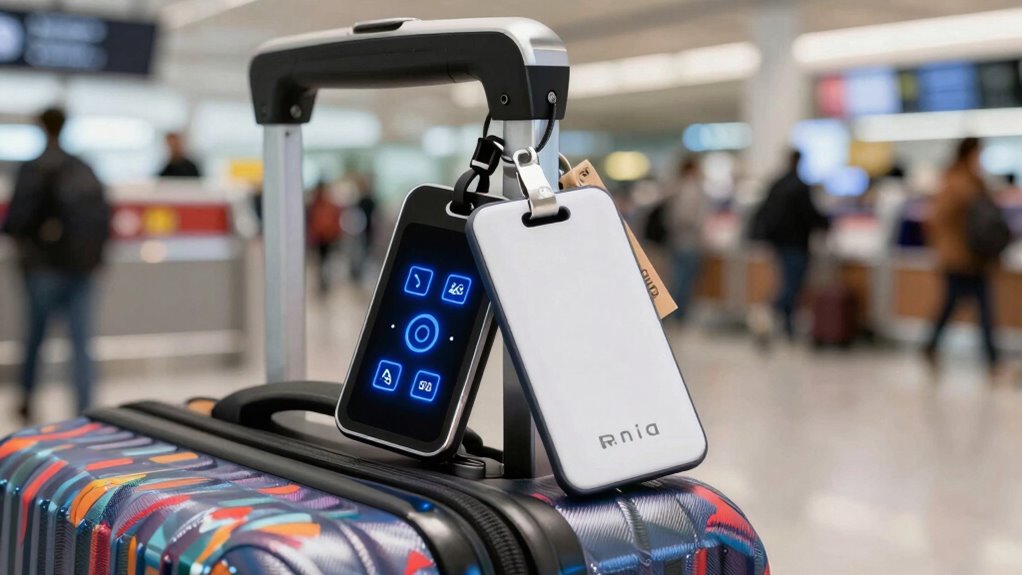
Smart tags can offer better tracking accuracy and reliability, but it’s worth considering if they meet your specific travel needs. You’ll also want to evaluate whether they are cost-effective compared to other options and if they work seamlessly with your devices. Making these assessments helps determine if smart tags are a worthwhile investment for frequent travelers like you. Additionally, understanding power safety and how these devices are designed can ensure your luggage remains secure and accessible during your travels. Proper device maintenance can also extend the lifespan of your trackers and prevent potential malfunctions. Being aware of tracking technology can further help you choose the right device that aligns with your security and convenience requirements. Considering compatibility issues is also important to ensure your smart tags work smoothly with your existing gadgets and apps, especially as technology evolves to incorporate solar-powered security solutions for enhanced sustainability and efficiency.
Tracking Accuracy and Reliability
Are smart luggage tags reliable enough to keep up with your travel needs? While they offer real-time updates, their tracking accuracy can vary due to factors like signal interference or network issues. Some trackers struggle in crowded airports or remote areas, making reliable updates less consistent. To improve visibility, some brands use color coding or distinctive branding strategies that help identify your luggage quickly. However, don’t solely rely on these devices for critical tracking; they’re best as supplementary tools. Key points to think about include:
- Signal strength varies depending on location and environment
- Some trackers have delays or inaccuracies
- Effective branding strategies help distinguish your luggage visually
- Tracking reliability depends on device quality and usage context
- Environmental factors can impact signal quality, affecting overall performance
Additionally, signal interference from other electronic devices can further reduce tracking effectiveness. External factors like environmental conditions can also play a significant role in overall device performance. Understanding the technological limitations of these trackers can help set realistic expectations for their performance.
Cost Effectiveness Analysis
For frequent travelers, investing in smart luggage tags can be a cost-effective choice if the benefits outweigh the expenses over time. When doing a cost comparison, consider the initial price of smart tags against traditional ones and the potential savings from reduced lost luggage or delays. Smart tags often come with features like tracking and notifications that can save you time and frustration. Budget options are available, offering basic tracking features at a lower cost, making them accessible for travelers with tight budgets. If you travel often, these features can justify the investment by providing peace of mind and minimizing the hassle of lost luggage. Additionally, analyzing different types of luggage tags can help determine which options provide the best value for your specific travel needs. Ultimately, smart tags are worth it if they enhance your travel experience enough to offset their higher upfront cost.
Compatibility With Devices
Since compatibility with your devices is essential for maximizing the benefits of smart luggage tags, it’s important to verify whether they work seamlessly with your smartphones or tablets before making a purchase. Confirming proper device synchronization and app compatibility means you can easily track your luggage without frustration. Check if the tracker’s app supports your device’s operating system, whether iOS or Android, to avoid surprises. Some trackers only work with specific devices or require updates for full functionality. Before buying, consider these key points:
- Confirm the tracker’s app supports your device’s OS
- Ensure it offers smooth device synchronization
- Read reviews about app stability and updates
How to Choose the Best Luggage Tag or Tracker for Your Travel Needs
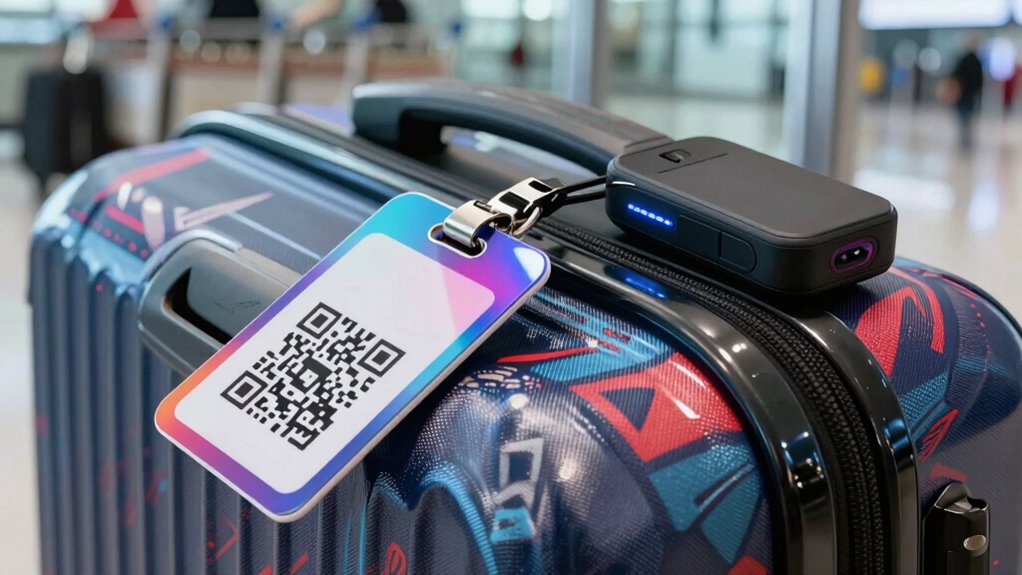
When selecting a luggage tag or tracker, start by ensuring it’s compatible with your luggage and devices. Consider the tracking technology that fits your travel style, whether Bluetooth, GPS, or smart features. Also, look for options that are durable and secure to withstand frequent handling and prevent theft.
Compatibility With Luggage
Choosing the right luggage tag or tracker depends on guaranteeing compatibility with your specific travel luggage. You want a device that fits well and aligns with your travel style. Consider whether your luggage features color coding, which can help you quickly identify your bag; a compatible tag or tracker that supports this helps avoid confusion. If your luggage displays airline branding or logos, ensure your tag or tracker doesn’t clash visually. Also, check the size and attachment method—some trackers are better suited for hard-shell cases, while others fit soft bags easily. Compatibility ensures your device stays secure and functional throughout your trip, reducing the risk of lost luggage.
- Match the color coding for easier identification
- Ensure compatibility with airline branding aesthetics
- Confirm attachment method suits your luggage type
Tracking Technology Options
Selecting the right tracking technology for your luggage involves understanding the various options available and how they align with your travel habits. RFID tags are popular because they integrate easily into baggage handling systems, making them quick for airline staff to scan and track. Bluetooth trackers, like Tile or Apple AirTag, connect to your phone and are ideal for personal tracking but may face limitations with airline policies and airport baggage handling. GPS trackers give real-time location updates over cellular networks, offering precise tracking regardless of baggage handling processes. Consider how often you travel, the airports you use, and airline policies around tracking devices. Your choice depends on balancing convenience, compatibility with baggage handling systems, and the level of detail you want during your trip.
Durability and Security
Ensuring your luggage tag or tracker can withstand the rigors of travel is essential for reliable security. You want durable material and effective theft prevention features to protect your belongings. Look for tags made from high-quality materials like silicone, reinforced plastic, or metal, which resist tearing and water damage. For trackers, choose sturdy casings that guard against impacts and rough handling. Secure attachment options, such as reinforced loops or locking mechanisms, help prevent theft or accidental loss.
- Material durability guarantees your tag or tracker endures frequent handling.
- Theft prevention features, like locking clips, keep your luggage secure.
- Impact-resistant designs protect devices from drops and rough baggage handling.
Common Mistakes That Reduce Luggage Tracker Effectiveness
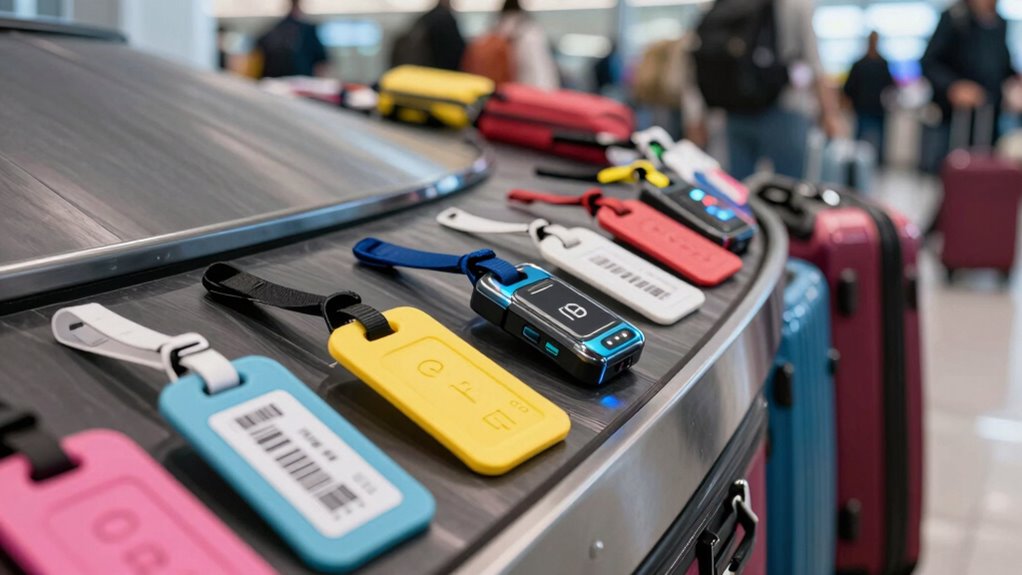
One common mistake that can compromise the effectiveness of luggage trackers is failing to update contact information regularly. If your baggage details are outdated, it’s harder for airport staff to identify and reunite your luggage. Incorrect luggage labeling also hampers baggage identification, especially if tags are damaged or missing. To avoid this, double-check your info before each trip and use clear, durable tags.
| Mistake | Impact |
|---|---|
| Outdated contact details | Delays in luggage recovery |
| Damaged baggage tags | Difficult baggage identification |
| Poor luggage labeling | Increased risk of misplacement |
Can These Tech Gadgets Work Internationally or Only Locally?
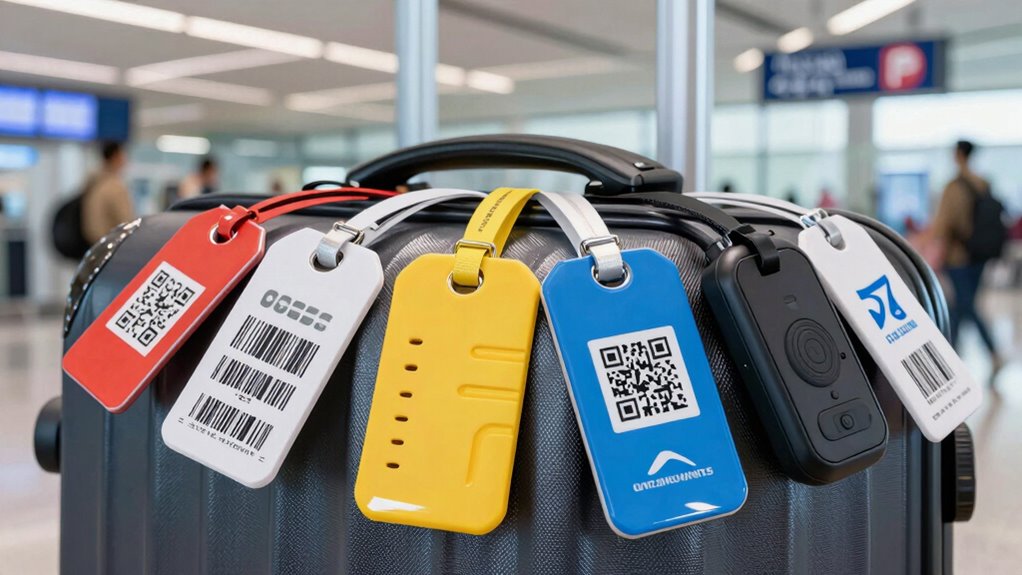
Many luggage trackers and tech gadgets claim to help you locate your belongings, but their functionality can vary depending on where you travel. Not all devices have the same international compatibility or global tracking capabilities. Some trackers rely on specific local networks, limiting their use outside certain regions. Others use global satellite systems, allowing you to track your luggage almost anywhere. Before choosing a gadget, check if it supports international use and offers real-time updates across borders.
Ensure your luggage tracker supports global networks and offers real-time updates for seamless international use.
- Make sure the device uses global tracking capabilities like LTE or satellite networks
- Verify if it works seamlessly with international SIM cards
- Confirm compatibility with multiple country networks for reliable global coverage
Tips to Use Luggage Tags and Trackers With Confidence
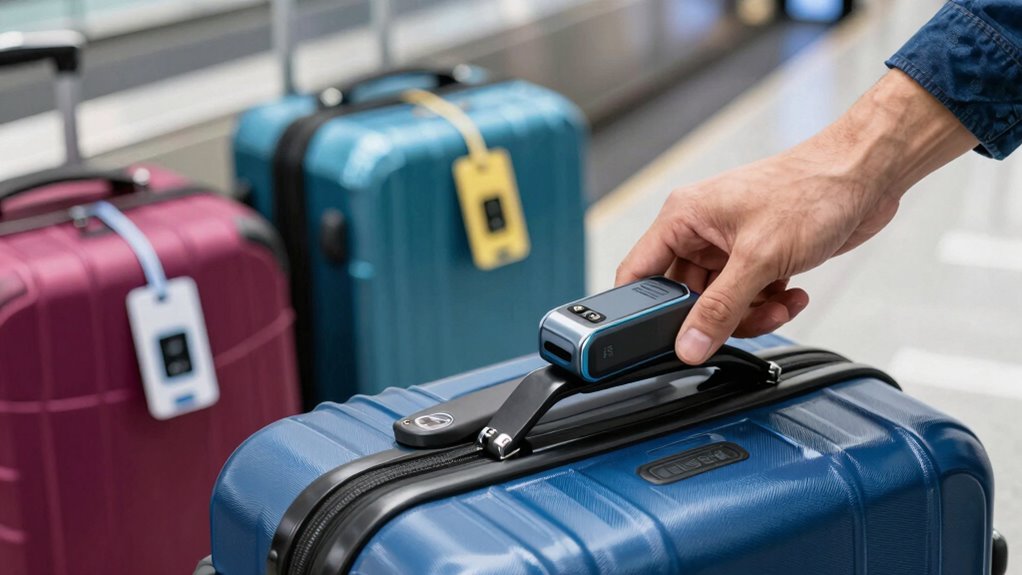
To use luggage tags and trackers with confidence, you need to understand their features and limitations. Knowing how they help prevent luggage theft can boost your peace of mind, but remember that airline policies vary. Some airlines may handle lost luggage differently, so check their procedures beforehand. Always make certain your tags are securely attached and clearly display your contact information to prevent theft or misplacement. When using trackers, choose reliable brands that work internationally if you travel abroad often. Keep your device updated and test it regularly to ensure it functions properly. Be aware that some airports’ security protocols might restrict certain gadgets. Staying informed about airline policies and using your luggage tags and trackers thoughtfully will help you travel more confidently.
Frequently Asked Questions
Are Luggage Tags and Trackers Compatible With All Airline Systems?
Luggage tags and trackers aren’t compatible with all airline systems because of varying airline compatibility and tag integration. Before you fly, check if your tracker or tag is compatible with your airline’s system to avoid issues. Some trackers easily integrate with multiple airlines, but others may require specific features. Always verify compatibility details so your luggage stays connected and easily trackable throughout your journey.
How Secure Are Bluetooth Trackers Against Hacking or Theft?
Bluetooth trackers are generally secure, but they’re not invulnerable to hacking vulnerabilities. They use encryption protocols to protect your data, making unauthorized access difficult. However, savvy hackers could exploit potential security flaws if the device’s firmware isn’t regularly updated. To stay safe, choose reputable brands that prioritize security, keep your tracker’s software current, and disable Bluetooth when you’re not using it to reduce the risk of hacking or theft.
Do GPS Trackers Require a Cellular Plan to Function Internationally?
Think of GPS trackers as international travelers—they need cellular coverage to do their job. Yes, they require a cellular plan, and that often means international roaming, to work abroad. Without it, your tracker is like a ship without a sail, stuck in one place. Make sure to choose a tracker with global coverage or an international plan to keep tabs on your luggage no matter where your journey takes you.
Can Luggage Tags and Trackers Withstand Rough Handling and Weather?
Most luggage tags and trackers are designed to handle rough handling and weather conditions, but durability concerns vary by product. Look for trackers with weather resistance features like water-proof or water-resistant materials to protect against rain or snow. Durable tags often use sturdy plastics or metals that withstand impacts and rough handling. Always check product specifications for durability and weather resistance to guarantee your luggage stays protected during travel.
What Are the Privacy Implications of Using Tracking Devices on Luggage?
Using tracking devices on your luggage raises personal privacy concerns because your location data could be accessed by unauthorized parties. You might unknowingly share sensitive information, increasing data security risks. It is crucial to choose reputable brands that prioritize encryption and privacy policies. Be aware that continual tracking might expose your travel patterns, so weigh the convenience against potential privacy impacts before using these devices.
Conclusion
Choosing the right luggage tags and trackers can turn travel chaos into calm. When you understand how they work and avoid common mistakes, you empower yourself to find your bags faster and with confidence. Think of these gadgets as your travel allies—silent guardians that keep your journey smooth. So, equip yourself wisely, and let technology be the steady hand guiding your luggage back home, no matter where your adventures take you.