
To photograph and inventory your belongings for insurance, start by gathering your phone or camera, extra batteries, and organize your space with good lighting. Take clear, detailed photos from multiple angles, especially of high-value or fragile items, and include close-ups. Create labeled digital folders or lists with descriptions, purchase info, and locations. Store your records securely and back them up. Keep your inventory updated regularly to guarantee your coverage stays accurate—more tips await if you continue along.
Key Takeaways
- Use natural or diffused lighting with tripods for clear, detailed photos of all belongings.
- Organize items systematically by category or location, and take multiple angles for each item.
- Capture close-up images of high-value or fragile items with protective padding to highlight details.
- Create a digital inventory system with consistent labels, descriptions, purchase info, and condition notes.
- Back up all photos and records securely to cloud storage or external drives for safekeeping.

QRganiz Smart QR Code Labels for Storage & Organization | Color-Coded Inventory Tracking Stickers with Free App | 12 Unique Scannable Labels for Moving, Home & Office | Digital Inventory System
FIND ANYTHING INSTANTLY: Stop box diving forever! QRganiz Smart QR Code stickers create a digital inventory of your…
As an affiliate, we earn on qualifying purchases.
As an affiliate, we earn on qualifying purchases.
Why You Need a Photo Inventory for Insurance Claims
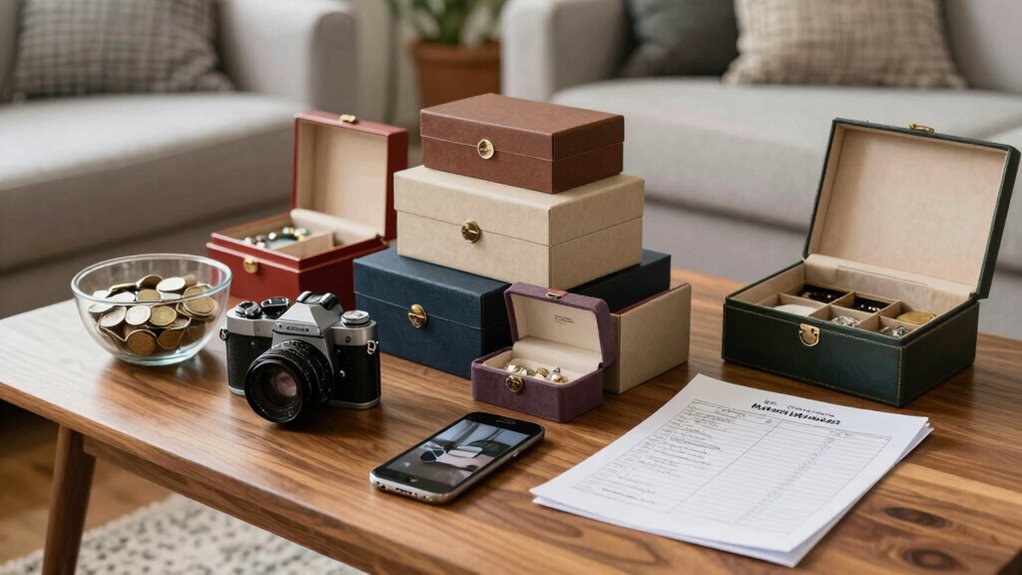
Having a photo inventory is essential because it provides clear, visual proof of your belongings’ condition and value before a loss occurs. When filing insurance claims, having detailed photos streamlines the damage assessment process, helping insurers verify what was damaged or lost. Without this documentation, you may struggle to prove the worth of your possessions or their condition prior to the incident. A thorough photo inventory ensures that your claim accurately reflects your belongings, reducing delays and disputes. It also offers peace of mind, knowing you have proof ready if you need to support your insurance claim. Additionally, creating an organized photo inventory can help you quickly locate specific items when needed. Properly documenting your possessions also supports effective personal finance planning by giving you a clear understanding of your assets’ value. Including a comprehensive record of your belongings can further simplify the process of updating your insurance coverage over time, ensuring your policy remains adequate. Regularly reviewing and updating your property documentation can help you stay prepared for any unexpected events. Maintaining an up-to-date home inventory can also assist in identifying items for potential replacement or donation, making your recovery process more efficient. Overall, this visual record simplifies the claims process, making it easier to recover financially and rebuild after unexpected damage or loss.

Amazon Basics 50-inch Lightweight Portable Camera Tripod Stand with Quick-Release Plate, Adjustable Height, Aluminum, for Travel Photography, Champagne
Camera mount tripod stand with zippered storage bag
As an affiliate, we earn on qualifying purchases.
As an affiliate, we earn on qualifying purchases.
Gather the Right Equipment and Set Up Your Space
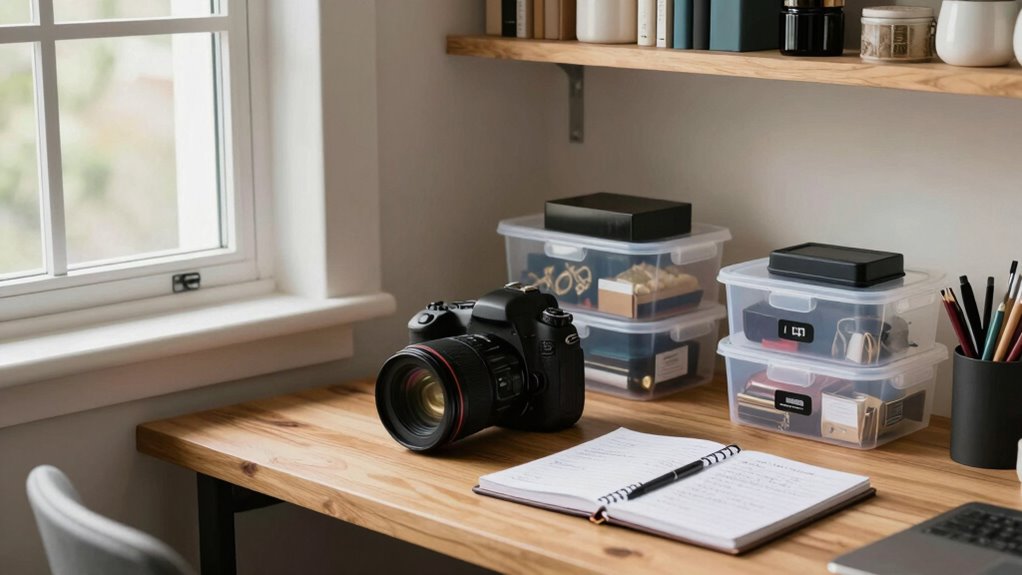
To create an effective photo inventory, you need the right equipment and a well-organized space. Start by setting up your lighting to avoid shadows and uneven brightness; natural light or soft, diffused lamps work best. Use a stable surface or tripod to keep your camera steady, ensuring sharp images. Gather essential camera accessories like extra batteries, memory cards, and a lens cleaning kit to prevent interruptions. Clear your space of clutter so your belongings stand out and backgrounds are clean. Arrange items systematically, grouping similar items together, and set up your camera for consistent shots. Proper lighting setup and organized equipment make it easier to capture clear, detailed photos, which are *vital* for creating an accurate inventory for insurance purposes. Additionally, consider using cable management solutions like cable clips or sleeves to keep cords organized and prevent tangles, further safeguarding your items and enhancing your inventory photos. Implementing inventory management techniques can also streamline the process and improve accuracy. Ensuring your workspace is organized and clutter-free can significantly improve both efficiency and photo quality during your inventory process.
Furthermore, understanding the importance of battery capacity can help you plan your photography sessions by ensuring your equipment has sufficient power, especially if you’re using battery-powered lighting or camera gear.

WD 5TB My Passport, Portable External Hard Drive, Black, backup software with defense against ransomware, and password protection, USB 3.1/USB 3.0 compatible – WDBPKJ0050BBK-WESN
Slim durable design to help take your important files with you
As an affiliate, we earn on qualifying purchases.
As an affiliate, we earn on qualifying purchases.
How to Take Clear, Detailed Photos of Your Belongings

Wondering how to guarantee your photos accurately represent your belongings? Start with good lighting techniques—use natural light or soft, even illumination to avoid harsh shadows. Adjust your camera settings: set a low ISO for clarity, a narrow aperture for depth, and a proper shutter speed to prevent blur. Use a tripod when possible for stability. Here’s a quick reference:
| Lighting Techniques | Camera Settings | Tips |
|---|---|---|
| Use natural light | Low ISO (100-200) | Avoid grainy images |
| Diffuse harsh light | Narrow aperture | Keep details sharp |
| Avoid direct flash | Slow shutter speed | Prevent overexposure |
| Use reflectors | Adjust for scene | Enhance details |
| Consistent lighting | Manual mode | Maintain uniformity |
Additionally, understanding insurance coverage can help you know what details are most important to capture. To ensure your photos are comprehensive, pay attention to detail orientation and include close-ups of valuable or fragile items. Properly managing light balance will also improve overall image quality. Recognizing the importance of photo resolution can make a significant difference in how well your images display details. Clear, detailed photos require attention to lighting and camera adjustments—get these right for effective documentation.

NEEWER 700W Equivalent Softbox Lighting Kit, 2Pack UL Certified 5700K LED Lighting Bulbs, 24×24 inches Softboxes with E26 Socket, Photography Continuous Lighting Kit Photo Studio Equipment
The kit includes (2) 24"X24"/60x60cm Softbox + (2) 35W 5700K LED Light Bulb (total equivalent to 700W regular…
As an affiliate, we earn on qualifying purchases.
As an affiliate, we earn on qualifying purchases.
Organize and Categorize Your Photos for Easy Access

Once you’ve taken clear, detailed photos of your belongings, the next step is organizing them systematically. Create a labeling system that makes sense to you—group similar items by room, category, or value. Use digital categorization to assign tags or folders to each photo, making retrieval quick and easy. Consistent naming conventions help you locate specific items without hassle. For example, label photos with details like “Living Room, Electronics, TV” or “Kitchen, Utensils, Set of 8.” Keep your digital files organized on a cloud service or external drive to guarantee they’re accessible during emergencies. Incorporate digital organization techniques such as tagging and folder structures to streamline your inventory process. Applying digital security measures like password protection for sensitive files can further safeguard your information. This structured approach saves time and reduces frustration when you need to reference specific items for insurance claims. Clear organization is essential for a thorough, reliable inventory.
Make a Written List to Go With Your Photos
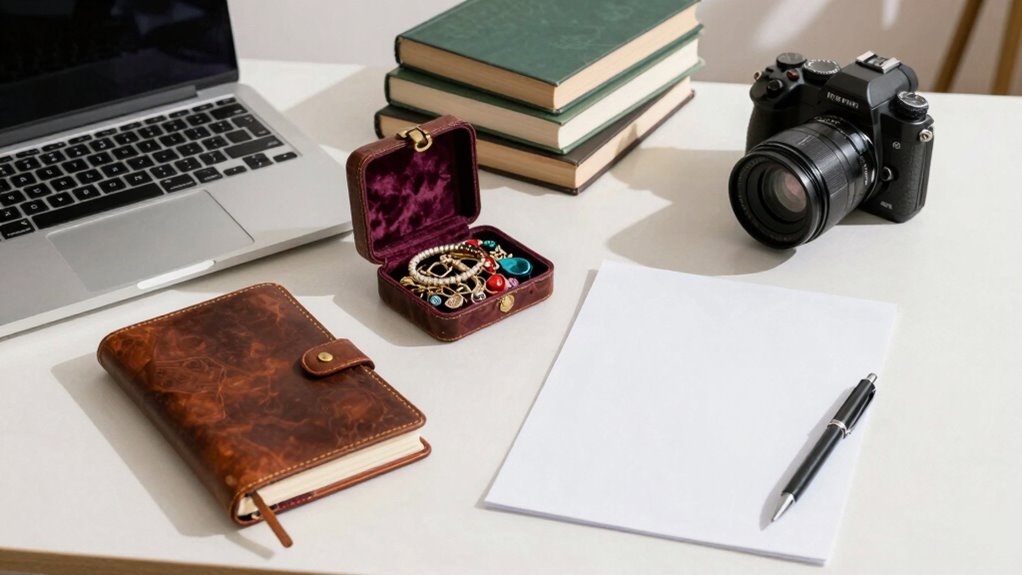
Creating a written list to accompany your photos guarantees you capture all essential details about each item. Include descriptions, purchase info, and notes on its location and condition to make recovery easier if needed. This clear documentation helps your insurance claim process go smoothly. Additionally, maintaining accurate records can assist in identifying suspicious activity or theft, especially when combined with surveillance footage. Incorporating sound vibrations and frequencies into your documentation process can further enhance the thoroughness of your inventory, especially for items related to sound healing or musical equipment. For example, documenting sound frequencies associated with musical instruments can be helpful in verifying authenticity or condition. Paying attention to region-specific details can also provide context for your items, especially if they are tied to particular cultural or geographical origins. Using comprehensive details ensures your records are thorough and useful in various scenarios.
Item Description Details
To guarantee your insurance claim is smooth, you should create a detailed written list of each item’s description to accompany your photos. The item description should include specific details of belongings, such as brand, model, color, size, and unique features. Clearly noting these details helps establish the item’s value and authenticity. For example, instead of just listing “laptop,” specify “Dell XPS 13, Silver, 16GB RAM, 512GB SSD.” Be thorough but concise, focusing on distinguishing features. This detailed documentation can also serve as proof of ownership if needed during the claims process. Keep your list organized, using categories or numbering, so it aligns with your photos and makes the claims process easier. Accurate item descriptions are essential for a complete, credible inventory. Additionally, incorporating visual documentation best practices can further support your claim by providing clear, comprehensive evidence. Including detailed descriptions also aids in preventing disputes during the claims process by clearly establishing what items you owned and their condition.
Purchase Information Included
Including purchase information in your inventory helps verify the value of your belongings and supports your insurance claim. Accurate details can assist with appraisal techniques and guarantee your policy terms are properly met. Make a written list that includes item name, purchase date, and purchase price. Use a simple table like this:
| Item | Purchase Date | Purchase Price |
|---|---|---|
| Designer Lamp | Jan 2021 | $150 |
| Laptop | Mar 2022 | $1,200 |
| Jewelry Set | Dec 2020 | $2,500 |
Having this info ready makes it easier to prove your items’ worth if you need to file a claim and helps clarify coverage under your insurance policy terms. Keep your list updated for accuracy.
Location & Condition Notes
When documenting your belongings for insurance, noting their location and condition is essential. Addressing location helps you remember exactly where each item is stored or displayed, making it easier for claims. Be specific—whether it’s on a bookshelf, in the attic, or in a closet. Noting condition is equally important; describe any damage, wear, or unique features. Include details like scratches, chips, or fading to provide a clear picture of each item’s state. Keep a written list that matches your photos, referencing the exact location and condition of each item. This organized approach ensures your inventory is thorough and accurate, making your insurance claims smoother and faster if you need to file.
Photograph High-Value and Fragile Items Safely

Photographing high-value and fragile items requires careful attention to safety and detail. To protect these items, use protective padding such as foam, bubble wrap, or soft cloths to prevent damage during handling and positioning. Always handle fragile items with proper handling techniques: support heavy or delicate objects from the base, avoid applying pressure to vulnerable areas, and keep a steady grip. Confirm your workspace is stable and free of clutter to reduce the risk of accidents. Use a clean, distraction-free background to highlight the item’s features, and take multiple shots from different angles. This approach not only preserves the integrity of your valuables but also provides a clear, thorough record for your insurance documentation.
Store and Back Up Your Inventory Securely
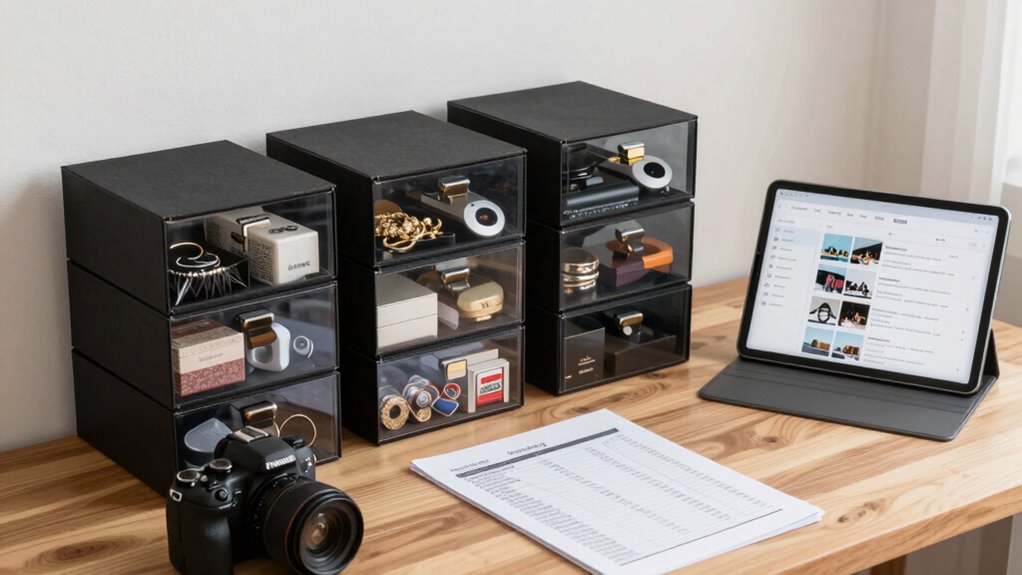
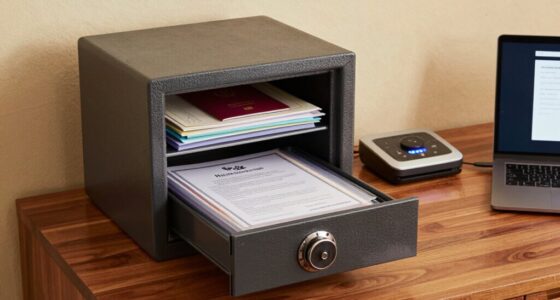
To protect your inventory, choose secure storage options like fireproof safes or locked cabinets. Back up your digital records to the cloud for extra safety, so you’re covered even if your physical copies are lost. Keep your inventory organized with a clear system, making it easy to find and update when needed.
Secure Storage Options
Are your inventory records and photos protected from theft, damage, or loss? Using fireproof safes is an excellent way to secure physical copies of your inventory and valuable documents, shielding them from fire or water damage. For larger quantities or multiple items, secure storage units offer a safe, organized place to keep your inventory protected. Look for facilities with robust security measures, such as surveillance cameras and access controls. Combining these options ensures your records are safe from unexpected disasters and theft. Keep your inventory in a dedicated, fire-resistant safe at home for quick access, and store backup copies in a secure, off-site location. This layered approach minimizes risks and keeps your insurance documentation safe and accessible when you need it most.
Cloud Backups for Safety
Building on your physical storage strategies, using cloud backups offers an extra layer of security for your inventory records. Cloud storage guarantees your photos, lists, and receipts are safe even if your devices are lost, stolen, or damaged. With data security measures like encryption and access controls, your information stays protected from unauthorized viewing. Plus, cloud backups are accessible anytime, anywhere—so you can quickly retrieve your inventory details when needed.
To maximize safety, consider:
- Regularly updating your cloud backups to include new items
- Using strong, unique passwords for your cloud accounts
- Choosing reputable cloud storage providers with robust data security policies
Organized Inventory System
Creating an organized inventory system is essential for easily locating your items and ensuring your records are backed up securely. Start by developing a consistent labeling system for all your items, using clear and descriptive tags. This helps you quickly identify and categorize belongings. Next, build a digital catalog that includes photos, descriptions, and values for each item. Store this catalog in a secure location, such as an encrypted external drive or cloud service, to prevent data loss. Regularly update your digital inventory whenever you add or remove items. Backing up your data guarantees you won’t lose critical information during emergencies. An organized inventory system with a reliable labeling system and a well-maintained digital catalog simplifies the claims process and provides peace of mind.
Keep Your Inventory Up to Date Regularly
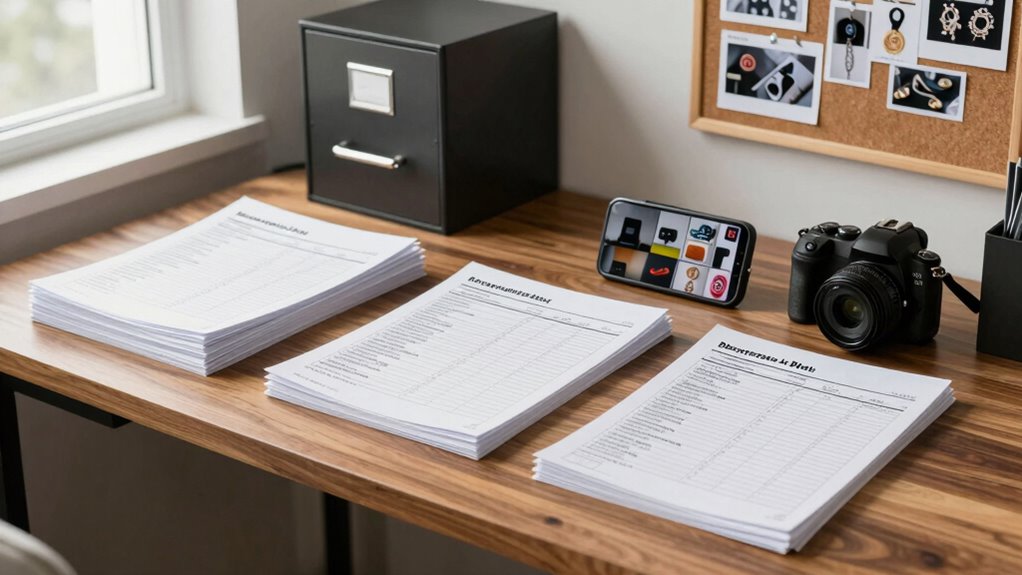
Regularly updating your inventory guarantees your insurance coverage remains accurate and reliable. By making regular updates, you ensure that your digital tracking reflects any new purchases or changes, preventing gaps in coverage. Set a schedule—quarterly or biannually—to review and update your records. This habit keeps your inventory current and makes claims smoother if needed.
To stay on top of things, consider:
- Adding new items immediately and photographing them for proof
- Removing outdated or discarded belongings
- Keeping receipts and documentation for recent purchases
Consistent updates save time and frustration during claims and help you avoid underinsuring your valuables. Regularly revisiting your inventory is essential for maintaining an accurate, complete record of your possessions.
Frequently Asked Questions
How Often Should I Update My Photo Inventory?
You should update your photo inventory at least once a year, especially after major purchases or home improvements. Regular updates guarantee your digital backups reflect current possessions, making insurance claims smoother if needed. Keep your photos organized and stored securely online or on a cloud service. This way, you’ll have accurate records for insurance claims, and you’ll be prepared for any unexpected events that could damage or destroy your belongings.
What Are the Best Lighting Tips for Photographing Valuables?
Good lighting is key to capturing valuables clearly. Start with lighting techniques that minimize shadows, such as diffused natural light from windows or soft artificial lights. Natural light often provides the most accurate color, but avoid harsh midday sun. Use reflectors or white surfaces to bounce light evenly. Keep your light source steady, and avoid direct flash, which can cause glare. Experiment with angles to find the most flattering, well-lit shot.
How Can I Verify the Quality of My Inventory Photos?
You can verify your inventory photos by checking their photo resolution—make sure they’re clear and detailed enough to identify items easily. Review your images to ensure they’re well-lit and in focus. Organize your images systematically, labeling files by category or date, which helps confirm completeness and quality. If the photos are sharp, high-resolution, and properly organized, you can confidently use them for insurance purposes.
Should I Include Purchase Receipts With My Photos?
Including purchase receipts with your photos can streamline your insurance claims. You should organize receipts digitally for easy access, especially if your physical copies get lost. By adding receipts to your digital backup, you guarantee proof of ownership and item value. This way, when you review your inventory, everything is in one place—photos and receipts—making claims smoother and faster, giving you peace of mind knowing your valuables are well-documented.
How Do I Securely Store Physical Copies of My Inventory?
You should store physical copies of your inventory in a secure, fireproof safe or a locked filing cabinet. To guarantee safety, create digital backups and store them separately, either on an encrypted external drive or secure cloud storage. Regularly update both your physical copies and digital backups. This way, you’ll protect your records from theft, damage, or loss, making insurance claims smoother and more reliable.
Conclusion
Creating a photo inventory might seem like a hassle, but it’s your best bet when disaster strikes. Ironically, the effort you put in now can save you endless stress later. So, while you might prefer to ignore the clutter or hope for the best, taking these simple steps guarantees you’re prepared—because nothing says “smart homeowner” like having proof when it’s needed most. Trust me, future you will thank present you for the extra effort.