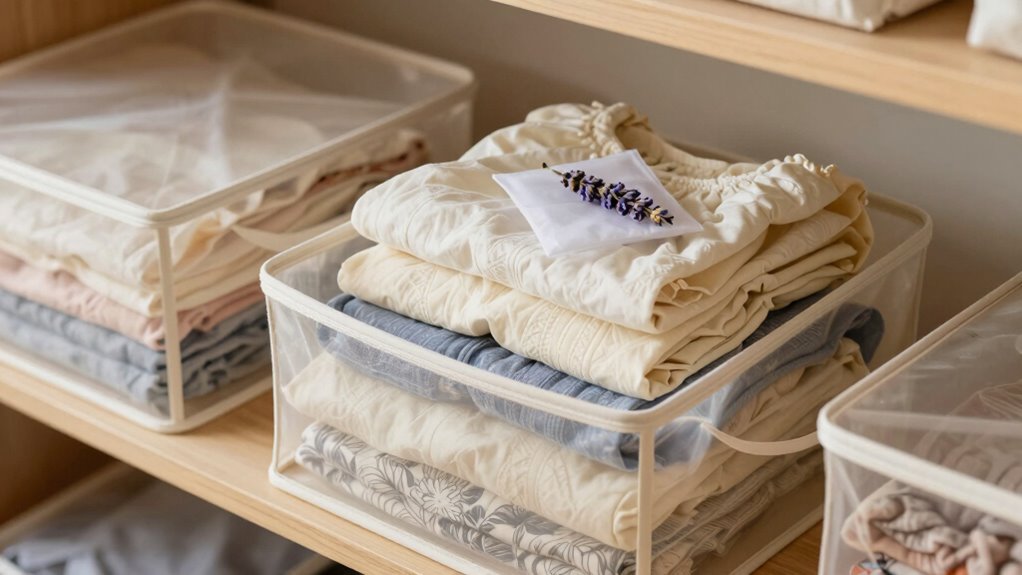

To store clothes long-term without yellowing, start by thoroughly cleaning and completely drying your garments to remove residues and moisture. Use breathable storage materials like cotton or linen bags and acid-free boxes, avoiding plastics that trap humidity. Keep your storage environment cool, dark, and dry, controlling humidity and light exposure. Regularly inspect and refresh your storage methods, and consider using protective covers or tissue paper for delicate pieces. For more detailed tips, explore how to optimize your storage setup and products.
Key Takeaways
- Clean and thoroughly dry clothes before storage to prevent mold and oxidation.
- Use breathable storage containers like cotton or linen bags, avoiding plastic that traps moisture.
- Store clothes in a cool, dark, and dry environment with controlled temperature and humidity.
- Wrap delicate garments in acid-free tissue paper and keep them flat to prevent deformation.
- Regularly inspect and refresh storage conditions, and prevent exposure to sunlight and pollutants.

Lineco, Museum Archival Drop-Front Storage Box, Acid-Free with Metal Edges, 11.5 X 15 X 3 inches, Tan (733-3011)
Metal edge corners construction for stacking strength and adding durability
As an affiliate, we earn on qualifying purchases.
As an affiliate, we earn on qualifying purchases.
Why Clothes Yellow Over Time and How Storage Conditions Matter

Clothes tend to yellow over time because exposure to light, heat, and air causes the fibers to break down and oxidize. This fabric aging results from chemical reactions within the fibers, which alter their color and structure. When garments are stored in warm or poorly ventilated areas, these reactions accelerate, speeding up discoloration. Ultraviolet light from sunlight is particularly damaging, breaking chemical bonds in the fabric and promoting yellowing. Humidity also plays a role, encouraging oxidation and mold growth that can stain or weaken fibers. To prevent this, store clothes in cool, dark, and dry environments. Proper storage conditions slow down the chemical reactions responsible for fabric aging, helping your clothes maintain their original color and quality longer. Additionally, environmental control is essential for preserving fabric integrity over time. Maintaining optimal storage conditions can significantly extend the lifespan and appearance of your clothing, especially by controlling humidity levels to minimize mold and oxidation. Ensuring proper clothing organization within storage spaces can also reduce unnecessary stress on fabrics, preventing additional wear and tear over time.

100% Cotton Garment Bag | Long | Breathable Garment Bags for Hanging Clothes | Garment Storage Bag for Long Dresses & Coats Storage | Pack of 1 (42 Inch)
【 HIGH QUALITY MATERIAL 】Our Garment Bags are made of durable and soft-selected natural cotton, It is at…
As an affiliate, we earn on qualifying purchases.
As an affiliate, we earn on qualifying purchases.
Getting Your Clothes Ready: Cleaning and Drying Tips
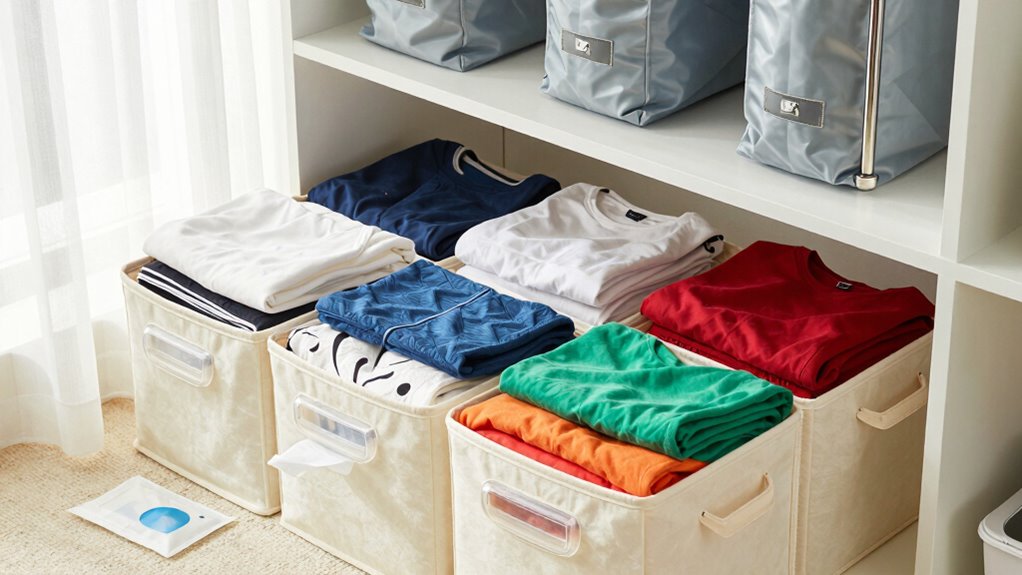
Before storing your clothes long-term, it’s essential to start with clean, thoroughly dried garments. Remove all stains using effective stain removal techniques, ensuring no residues that could cause discoloration. Wash clothes with gentle detergents, avoiding harsh chemicals that might damage fibers. Consider using fabric softeners to keep fabrics soft and reduce static, but don’t overdo it—excess can attract dust. After washing, dry clothes completely to prevent mold or mildew, which can lead to yellowing. To create a vivid mental picture:
- Imagine clothes spinning in a gentle wash cycle with stain removers in the water
- Visualize soft, fluffy towels with a hint of fabric softener scent
- Picture garments hanging in a well-ventilated space to dry thoroughly
- Envision clothes smelling fresh and looking spotless, ready for long-term storage
- Additionally, choosing the right storage environment can help maintain the quality of your clothes over time.
- Ensuring proper clothing preservation techniques can further protect your garments from discoloration and damage.
- Regularly inspecting stored clothes and airing them out periodically can also help prevent yellowing and odor buildup.

Lifewit 6 Pack Clothes Storage Bins with Lids, Foldable Blanket Storage Bags with Zippers, Clear Window and Reinforced Handles, Closet and Organization for Clothing, Sweater, Comforter, Bedding
Reinforced Handle: The storage bag handle is sewn with two layers of thick fabric, the load-bearing capacity is…
As an affiliate, we earn on qualifying purchases.
As an affiliate, we earn on qualifying purchases.
How to Choose the Best Storage Materials to Protect Your Clothes
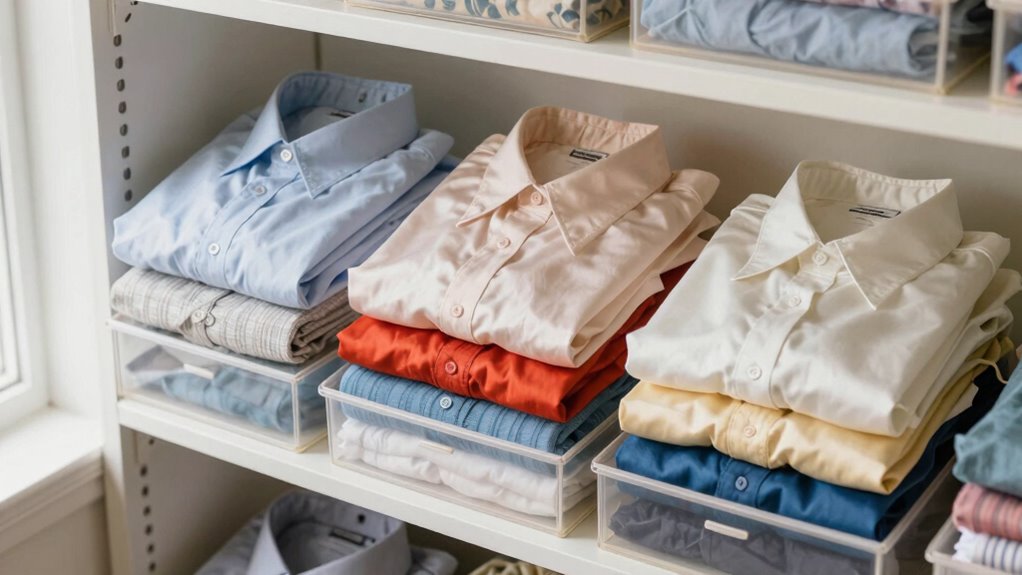
Choosing the right storage materials is essential to protecting your clothes from damage over time. When selecting storage containers, opt for breathable fabric care options like cotton or linen bags, which allow air circulation and prevent moisture buildup. Avoid plastic bags that can trap humidity and promote yellowing or mildew. Use acid-free boxes for delicate items to prevent fabric deterioration and color fading. Ensure containers are sturdy and properly sealed to keep out pests and dust. Consider using storage containers with soft, smooth interiors to avoid fabric snagging. Properly chosen materials help maintain your clothes’ quality, preserving their color and texture. Additionally, selecting moisture-resistant materials can prevent the acceleration of yellowing caused by environmental factors. Using ventilated storage options can also help reduce moisture and improve airflow around your garments, further extending their lifespan. Choosing appropriate storage containers with proper ventilation can significantly extend the lifespan of your garments. By investing in suitable storage containers, you give your garments the best protection during long-term storage.

10Pcs Transparent Plastic Garment Covers 35.4inch Hanging Clothes Dust-Proof Protector Bags Suitable for Home Storage Clothing Stores & Dry Cleaning Laundrette.
SIZE – 90 x 60cm / 35.4 x 23.6inch (L*W).10PS/Set.
As an affiliate, we earn on qualifying purchases.
As an affiliate, we earn on qualifying purchases.
Keeping the Environment Ideal: Temperature, Humidity, and Light Control
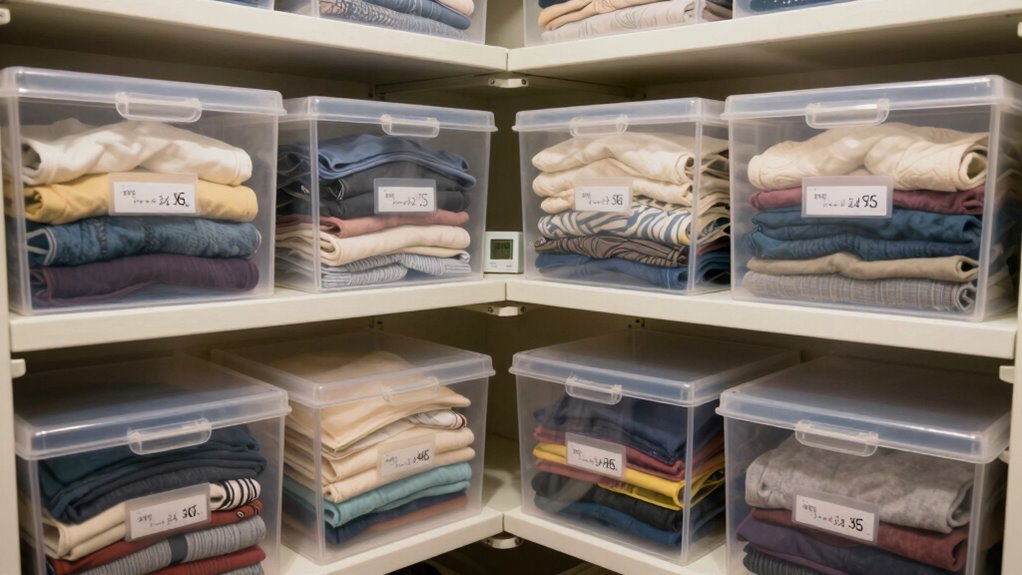
Proper environmental conditions are key to preserving your clothes during long-term storage. Maintaining an ideal climate control ensures your garments stay fresh and free from yellowing or deterioration. Focus on keeping the storage environment cool, dry, and dark to prevent damage. You should aim for a temperature between 60-70°F and humidity levels around 50%. Excess humidity can cause mold and mildew, while too much light accelerates fading. Visualize your storage space as a secure, climate-controlled sanctuary. Consider:
- A cool, dark closet or storage unit
- Using dehumidifiers to regulate moisture
- Shielding clothes from direct sunlight
- Ventilating the space regularly
Additionally, effective soundproofing techniques can help maintain a stable environment by minimizing external noise disruptions. Proper climate control is essential, and investing in environmental monitoring devices can help you keep track of temperature and humidity levels accurately. Regularly monitoring environmental conditions enables you to respond swiftly to any fluctuations, thus protecting your clothes from long-term damage. Implementing environmental monitoring ensures you can promptly address any fluctuations, protecting your clothes from long-term damage. For added protection, consider air quality management measures to reduce dust and pollutants that could settle on your garments over time. Optimizing these factors helps keep your clothes in pristine condition for years to come.
Techniques and Products to Keep Clothes Bright and Fresh
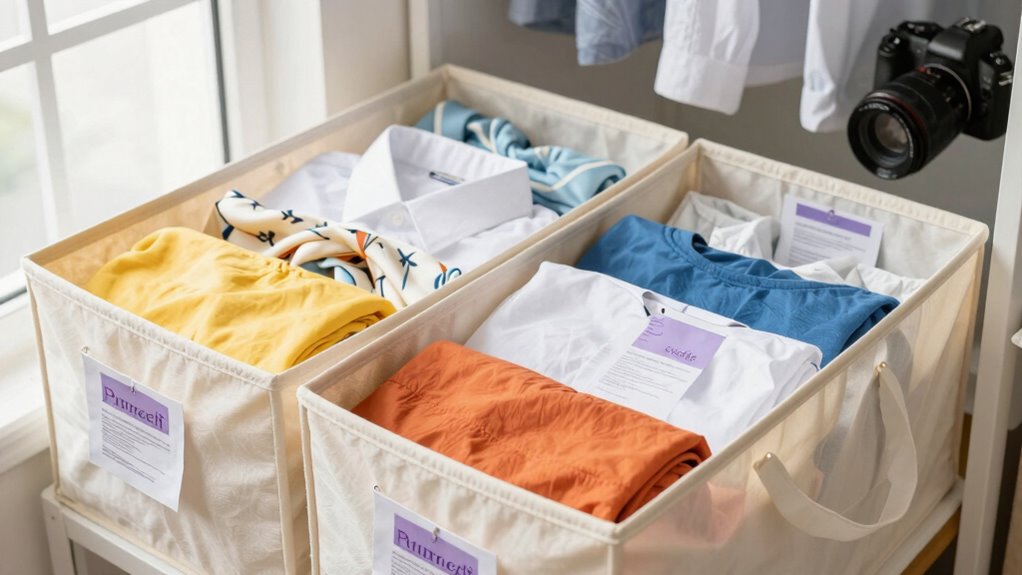
To keep your clothes bright and invigorating over time, consistently using effective techniques and products makes a noticeable difference. Start by choosing the right storage containers to prevent dirt and dust buildup, which can dull fabrics. When washing, use gentle detergents with fabric dyes designed to preserve color intensity and prevent fading. Consider adding a color protector or a fabric brightener during laundry to enhance vibrancy. Additionally, store clothes in breathable containers to allow air circulation and prevent mustiness. Regularly inspecting your clothing and revitalizing storage supplies ensure your garments stay crisp and colorful. Proper clothing maintenance and the right storage methods can further extend the brightness and freshness of your wardrobe. Using appropriate storage techniques can also reduce exposure to environmental factors that cause discoloration. Proper ventilation and avoiding direct sunlight are crucial in maintaining clothing brightness; implementing clothing protection strategies can help shield garments from harmful elements. Incorporating climate-controlled storage can further safeguard fabrics from humidity and temperature fluctuations that accelerate fading. To further preserve your clothes, consider using UV-protective covers to shield garments from sunlight exposure. These simple steps, combined with proper cleaning and storage, help maintain your clothes’ brightness and freshness for the long haul.
Storing Heirlooms and Delicate Fabrics Without Yellowing
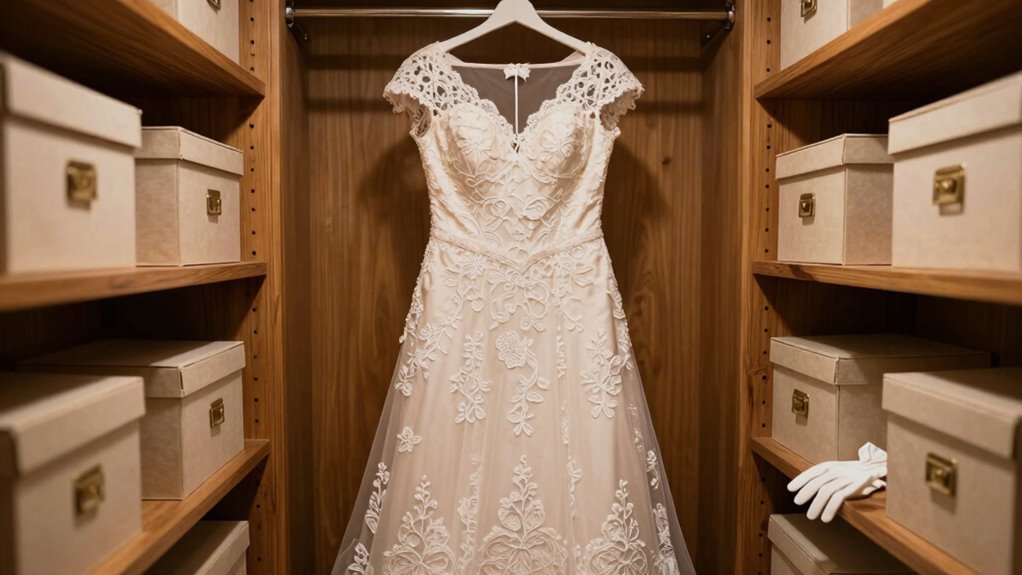
To keep heirlooms and delicate fabrics from yellowing, start by using acid-free storage materials that won’t damage or discolor your items. Make sure your fabrics are clean and completely dry before storing, as moisture can cause staining or mold. Additionally, well-drained soil and proper ventilation can help prevent issues related to mold and mildew during storage. Incorporating hormesis principles, such as controlled exposure to mild environmental stresses, can also help maintain fabric integrity over time. Understanding decoding slang and informal language can be useful when reading vintage or casual texts related to textile care, ensuring clear communication. Finally, store them in cool, dark places to slow down aging and preserve their quality for years to come.
Use Acid-Free Storage Materials
Using acid-free storage materials is essential for preserving heirlooms and delicate fabrics without yellowing or deterioration. These materials prevent acids from damaging your textiles over time, maintaining their original color and texture. Start by choosing acid free boxes to protect your clothing from environmental factors. Wrap fragile items in archival tissue, which cushions and prevents friction that can cause wear. Consider acid-free tissue paper for padding, and store items flat to avoid stretching. Using these materials creates a barrier against humidity, light, and pollutants that accelerate yellowing. Imagine your precious fabrics safely nestled in sturdy, acid-free boxes, with each fold wrapped in archival tissue, ready for long-term preservation. This careful approach guarantees your heirlooms stay vibrant and intact for generations.
Keep Fabrics Clean and Dry
Ensuring your fabrics stay clean and dry is key to preventing yellowing and deterioration over time. Keeping textiles free of dirt and moisture minimizes mold, mildew, and stain buildup, which can cause discoloration. Prioritize fabric breathability by choosing storage options that allow air circulation, like cotton bags or breathable garment covers. Regularly inspect your items for stains and treat them promptly to prevent set-in marks. Use stain prevention techniques, such as avoiding water or oil-based spills before storage.
| Keep Fabrics Clean | Ensure Dryness | Enhance Breathability |
|---|---|---|
| Remove dirt and stains | Air dry thoroughly | Use breathable storage |
| Treat stains immediately | Avoid damp environments | Store in well-ventilated spaces |
| Clean before storing | Keep fabrics dry | Prevent mold and yellowing |
Store in Cool, Dark Places
Have you considered how temperature and light exposure can affect delicate fabrics and heirlooms over time? Keeping your items in cool, dark places is essential for proper fabric care and wardrobe organization. Light and heat accelerate yellowing and fabric deterioration, so storing in a shadowy, cool environment helps preserve their quality. Imagine a closet tucked away in a basement or a climate-controlled storage box—free from direct sunlight and temperature fluctuations. Visualize:
- Thick, velvet curtains blocking out sunlight
- Archival boxes lined with acid-free tissue
- Shelves in a shaded corner of your closet
- A basement storage room with consistent cool temperatures
Troubleshooting Yellowing and Damage in Long-Term Clothing Storage
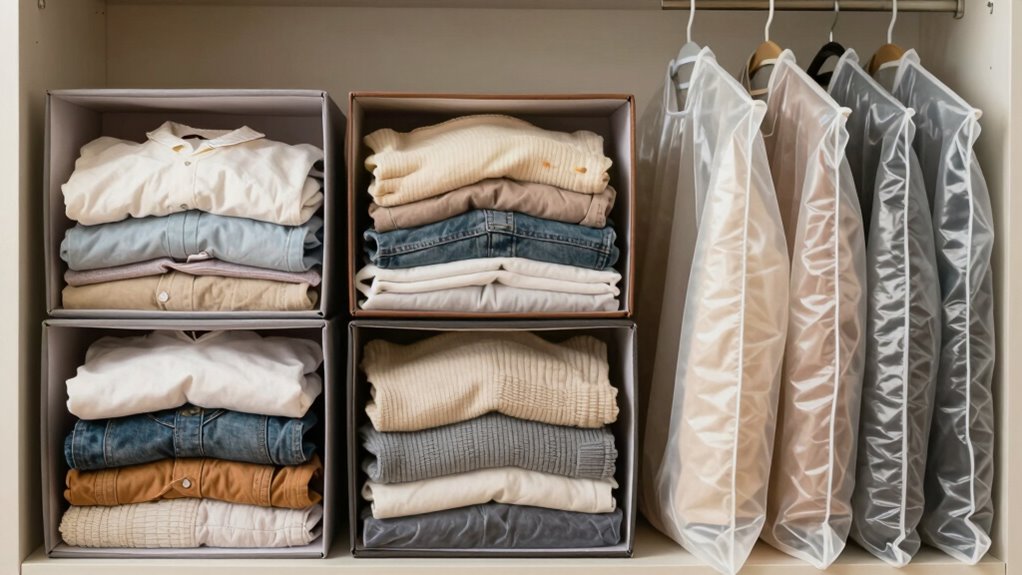
Yellowing and damage are common issues that can occur when clothes are stored long-term if proper precautions aren’t taken. To prevent yellowing, avoid using fabric softeners, which can leave residues that stain or weaken fibers over time. Instead, opt for gentle cleaning and make certain clothes are thoroughly dry before storage. If yellowing appears, try using a whitening or oxygen-based bleach safely. When ironing, follow specific tips to prevent damage: use a low heat setting, avoid direct contact with delicate fabrics, and always test a small area first. Proper ironing not only keeps clothes looking fresh but also reduces creases that can trap dirt or moisture, which contribute to discoloration. Regularly inspecting your stored clothes helps catch issues early and keeps your wardrobe in top condition.
Frequently Asked Questions
Can Natural Remedies Prevent Yellowing During Long-Term Storage?
Yes, natural remedies can help prevent yellowing during long-term storage. You can use vinegar or baking soda as natural fabric preservatives, which neutralize acids and moisture that cause discoloration. Guarantee your clothes are clean and completely dry before storing. Wrapping them in breathable cotton bags or using natural essential oils like lavender also promotes fabric preservation. These simple natural remedies effectively protect your clothes from yellowing over time.
How Often Should I Check Stored Clothes for Damage or Yellowing?
You should check your stored clothes every 3 to 6 months to prevent damage or yellowing. During clothing rotation, inspect for signs of discoloration or pests, and confirm the storage environment stays cool, dry, and well-ventilated. Regular checks help you catch issues early, maintain fabric quality, and keep your clothes in good condition, avoiding long-term yellowing caused by humidity or improper storage.
Are There Specific Detergents That Help Preserve Fabric Whiteness?
You might find that detergents with specific ingredients like hydrogen peroxide or optical brighteners help preserve fabric whiteness. These ingredients target stains and prevent yellowing, keeping clothes looking fresh longer. When choosing a detergent, look for labels that emphasize fabric whitening or stain removal. Using these specialized detergents regularly, combined with proper storage, guarantees your clothes stay bright and free from yellowing over time.
What Are the Best Practices for Storing Vintage or Antique Clothing?
When storing vintage or antique clothing, you should focus on archival storage and preservation techniques. Use acid-free boxes or tissue paper to prevent deterioration, and avoid plastic containers that trap moisture. Store garments in a cool, dark, and dry environment, and hang delicate pieces with padded hangers. Regularly inspect your items for pests or damage, ensuring their longevity and maintaining their historical value.
How Does Storing Clothes in Vacuum-Sealed Bags Affect Fabric Longevity?
Storing clothes in vacuum storage can be good for fabric preservation, but it might also cause damage if not done carefully. The pressure from vacuum sealing can stress delicate fibers, leading to potential weakening or yellowing over time. To protect your clothes, use breathable bags for delicate fabrics and avoid vacuum sealing overly bulky or fragile items. Properly stored, vacuum storage can help keep your clothes safe and in good condition.
Conclusion
So, after all that fuss about perfect storage, it’s amusing how a simple misstep can turn your cherished clothes into yellowed relics. You spend hours cleaning and choosing the right materials, only to forget the basics—like keeping everything cool, dark, and dry. Ironically, the easiest way to preserve your wardrobe’s brightness is often the simplest: avoid the sun and humidity. Sometimes, the best tip is just not to overthink it!