
Choosing the right wireless smart home hub can significantly simplify managing your connected devices. The best hubs offer broad compatibility, reliable performance, and user-friendly features. The Aeotec Smart Home Hub stands out as the overall top pick for its extensive protocol support, while the Amazon Echo Hub excels for those prioritizing voice control and convenience. However, tradeoffs include higher costs or limited protocol support depending on your needs. Keep reading for a detailed breakdown of these options and how to pick the perfect hub for your smart home setup.
Complete the kit


Key Takeaways
- The most versatile hubs support multiple protocols like Z-Wave, Zigbee, and Matter, ensuring wider compatibility.
- Built-in voice assistants like Alexa or Google Home can simplify control but may add cost or complexity for some users.
- Hubs with IR blasters and PoE connectivity provide more integration options and easier installation in certain environments.
- Higher-priced models often offer better build quality, more features, and future-proofing, but may not be necessary for casual users.
- Compatibility with existing devices and ecosystems remains the most critical factor when selecting a hub, outweighing brand loyalty.
| Aeotec Smart Home Hub (SmartThings, Works as Alexa & Google Home Gateway), Z-Wave, Zigbee, Matter, WiFi |  | Best Overall for Mixed Protocols | Protocols: Z-Wave Plus (V3 only), Zigbee, Matter, Wi-Fi | Connectivity: Wi-Fi or Ethernet | App: SmartThings for Android, iOS, and iPadOS | VIEW LATEST PRICE | See Our Full Breakdown |
| Tapo H200 Smart Hub with Built-In Chime |  | Best Tapo Hub for Cameras and Alerts | Model: H200 | Wi-Fi: 2.4 GHz required | Device capacity: Up to 64 switches, sensors, or buttons plus 4 cameras or doorbells | VIEW LATEST PRICE | See Our Full Breakdown |
| Tapo Smart Hub with Built-in Chime (H100) | 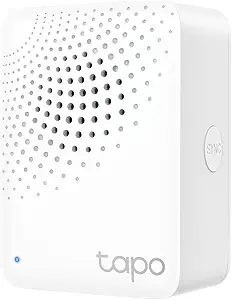 | Best for Tapo Sensor Beginners | Model: H100 | Maximum connected devices: 64 | Connection range: Up to 30 m | VIEW LATEST PRICE | See Our Full Breakdown |
| Aqara Hub M3 Smart Home Hub with Matter Controller and IR Blaster |  | Best Premium Local-Control Hub | Model: HM-G01E | Protocols: Zigbee, Thread, Bluetooth, Wi-Fi, IR | Connectivity: Dual-band Wi-Fi (2.4/5 GHz), PoE, USB-C | VIEW LATEST PRICE | See Our Full Breakdown |
| Lutron Caséta Smart Hub |  | Best for Lutron Lighting | Capacity: Up to 75 Caséta devices | Connectivity: Connects to router; Clear Connect Technology | Setup: Plug into an outlet, connect to router, and configure with the Lutron app | VIEW LATEST PRICE | See Our Full Breakdown |
| Amazon Echo Hub (Newest Model) 8″ Smart Home Control Panel with Alexa+ |  | Best Overall Wireless Smart Home Hub | Screen Size: 8 inches | Connectivity: WiFi, Bluetooth, Zigbee, Matter, Sidewalk, Thread | Installation: Wall-mountable (additional accessories sold separately) | VIEW LATEST PRICE | See Our Full Breakdown |
| Hubitat Elevation C-8 Pro Smart Home Hub |  | Best for Local Automation and Privacy | Protocols: Matter 1.5, Z-Wave 800 Series, Zigbee 3.0, Bluetooth | Voice assistant compatibility: Amazon Alexa, Google Home, Apple HomeKit | Device compatibility: 1000+ devices across 100+ brands | VIEW LATEST PRICE | See Our Full Breakdown |
| Aqara Hub M1S Gen 2 Smart Home Hub |  | Best for Aqara Ecosystem Integration | Connectivity: 2.4 GHz Wi-Fi | Protocol: Zigbee 3.0 | Max connected devices: 128 Aqara devices | VIEW LATEST PRICE | See Our Full Breakdown |
| Aqara Smart Hub M200 – Matter Controller with Zigbee, Thread, Wi-Fi, IR and PoE |  | Best Multi-Protocol Hub with IR and PoE | Protocols: Aqara Zigbee, Thread, Matter, Wi-Fi, IR | Zigbee Device Support: Up to 40 | Thread Device Support: Up to 40 | VIEW LATEST PRICE | See Our Full Breakdown |
| wireless smart home hub | Connectivity |
|---|---|
| Aeotec Smart Home Hub | Wi-Fi or Ethernet |
| Tapo H200 Smart Hub with Built | — |
| Tapo Smart Hub with Built-in C | — |
| Aqara Hub M3 Smart Home Hub wi | Dual-band Wi-Fi (2.4/5 GHz), PoE, USB-C |
| Lutron Caséta Smart Hub | Connects to router; Clear Connect Technology |
| Amazon Echo Hub | WiFi, Bluetooth, Zigbee, Matter, Sidewalk, Thread |
| Hubitat Elevation C-8 Pro Smar | — |
| Aqara Hub M1S Gen 2 Smart Home | 2.4 GHz Wi-Fi |
| Aqara Smart Hub M200 | — |
More Details on Our Top Picks
Aeotec Smart Home Hub (SmartThings, Works as Alexa & Google Home Gateway), Z-Wave, Zigbee, Matter, WiFi
The Aeotec Smart Home Hub is the strongest fit here for households combining devices from several smart home standards. Its support for Z-Wave Plus, Zigbee, Matter, and Wi-Fi gives it a wider-ranging role than the Tapo H200, which is built around compatible Tapo devices. SmartThings also works with Alexa and Google Assistant, and many automations can run locally, helping routines respond without relying on a cloud round trip. That breadth comes with more setup and ecosystem choices to manage: you need the SmartThings app and an account, and Z-Wave Plus support is limited to the V3 model. It is also designed for North America, so buyers elsewhere should look at a region-appropriate hub. For a varied device collection, this is the most versatile pick in this group.
Pros:- Supports Z-Wave Plus, Zigbee, Matter, and Wi-Fi
- Works with Amazon Alexa and Google Assistant
- Many automations can run locally
- Can connect through Wi-Fi or Ethernet
Cons:- Requires the SmartThings app and an account
- Z-Wave Plus support is limited to the V3 model
- Designed for North America
Best for: North American households building a mixed-brand setup across Z-Wave, Zigbee, Matter, and Wi-Fi devices
Not ideal for: Buyers outside North America, or people who want a hub limited to one brand with minimal app setup
- Protocols:Z-Wave Plus (V3 only), Zigbee, Matter, Wi-Fi
- Connectivity:Wi-Fi or Ethernet
- App:SmartThings for Android, iOS, and iPadOS
- Voice assistants:Amazon Alexa and Google Assistant
- Region:North America
- Automation:Many automations can run locally
Our verdict“Choose the Aeotec hub if you want one North American hub to coordinate devices across several major protocols.”
Tapo H200 Smart Hub with Built-In Chime
The Tapo H200 is the Tapo choice for buyers who want sensors and cameras tied to audible alerts and local video storage. It supports up to 64 switches, sensors, or buttons plus four cameras or doorbells, a more camera-ready setup than the H100, which focuses on connecting Tapo sensors, switches, and buttons. Its built-in chime and alarm can make doorbell and sensor events easier to notice, while a separately purchased microSD card can hold recordings locally. That makes this a purpose-built Tapo hub rather than a broad bridge for mixed-brand devices like the Aeotec Smart Home Hub. Check device compatibility before buying: connected gear must be compatible with the hub’s Sub-1G band, and the hub needs 2.4 GHz Wi-Fi. The storage card is an extra purchase.
Pros:- Connects up to 64 switches, sensors, or buttons and four cameras or doorbells
- Built-in chime and alarm with volume up to 90 dB
- Supports local video storage on a microSD card up to 512 GB
- Works with Amazon Alexa and Google Home
Cons:- MicroSD card is sold separately
- Requires 2.4 GHz Wi-Fi
- Works with compatible Tapo devices using the same Sub-1G band
Best for: Tapo households adding compatible cameras or doorbells alongside sensors and wanting local video storage and audible alerts
Not ideal for: Buyers seeking a hub for mixed-brand devices, or anyone without 2.4 GHz Wi-Fi and compatible Sub-1G Tapo devices
- Model:H200
- Wi-Fi:2.4 GHz required
- Device capacity:Up to 64 switches, sensors, or buttons plus 4 cameras or doorbells
- Local storage:microSD card up to 512 GB; card sold separately
- Maximum chime volume:90 dB
- Voice assistants:Amazon Alexa and Google Home
- Compatible devices:Tapo C420, Tapo C400, Tapo D230, and other compatible Tapo devices
Our verdict“Pick the H200 if your Tapo setup includes cameras or doorbells and you want storage and alerts in the same hub.”
Tapo Smart Hub with Built-in Chime (H100)
The Tapo H100 suits buyers starting with Tapo sensors, switches, and buttons who want a simple hub for alerts and automations. It connects up to 64 Tapo devices, and its low-power wireless protocol can extend sensor battery life by up to 10 times compared with Wi-Fi. A built-in chime and 90 dB siren give door or motion sensors a clear way to announce activity. Compared with the Tapo H200, the H100 does not list camera or doorbell support or local video storage; it is the simpler sensor-focused option. There is a catch to that simplicity: it cannot directly connect to Tapo smart plugs or lighting, so it will not serve as a complete center for every Tapo product. It also requires 2.4 GHz Wi-Fi.
Pros:- Connects up to 64 Tapo devices
- Low-power protocol can extend sensor battery life up to 10 times versus Wi-Fi
- Built-in chime and siren up to 90 dB
- Connection range is up to 30 meters
Cons:- Requires a 2.4 GHz Wi-Fi network
- Cannot directly connect to Tapo smart plugs or lighting
Best for: Tapo users beginning with compatible door, window, or motion sensors who want audible alerts and longer sensor battery life
Not ideal for: Buyers who want to connect Tapo plugs, lighting, cameras, or doorbells through one hub
- Model:H100
- Maximum connected devices:64
- Connection range:Up to 30 m
- Siren loudness:Up to 90 dB
- Wi-Fi requirement:2.4 GHz
- Battery life:Up to 10x extension versus Wi-Fi protocol
- Built-in chime:Yes
Our verdict“Choose the H100 for a sensor-led Tapo setup where battery life and a built-in alert matter more than camera storage.”
Aqara Hub M3 Smart Home Hub with Matter Controller and IR Blaster
The Aqara Hub M3 is the premium pick for buyers who want local automation, Matter bridging, and control of older infrared appliances from one hub. It supports Aqara Zigbee and Thread devices, and its 360° IR blaster can operate compatible air conditioners as a thermostat. PoE and dual-band Wi-Fi offer more placement and network options than the plug-in Lutron Caséta Smart Hub, while encrypted local storage and the lack of a camera or microphone suit privacy-conscious homes. The ecosystem has firm boundaries: the M3 does not support third-party Zigbee devices, and only one AC device is exposed to Matter. Some notifications still need internet access, so local features do not make every function fully offline. It is a strong fit for an Aqara-centered setup, less so for a mixed Zigbee collection.
Pros:- Supports Aqara Zigbee and Thread with Matter bridge functionality
- Local edge automations reduce reliance on cloud processing
- 360° IR blaster can control compatible air conditioners
- Encrypted local storage and no microphone or camera
Cons:- Does not support third-party Zigbee devices
- Power adapter is not included
- Some notifications still require internet, and only one AC device is exposed to Matter
Best for: Aqara-focused households wanting Thread and Matter support, local automations, PoE placement, and IR control for an air conditioner
Not ideal for: Buyers relying on third-party Zigbee devices or expecting every notification and appliance feature to work offline
- Model:HM-G01E
- Protocols:Zigbee, Thread, Bluetooth, Wi-Fi, IR
- Connectivity:Dual-band Wi-Fi (2.4/5 GHz), PoE, USB-C
- Device capacity:Up to 127 Aqara Zigbee devices and 127 Thread devices
- Storage:8 GB end-to-end encrypted local storage
- Compatibility:Apple HomeKit, Alexa, SmartThings, Home Assistant, Matter
- Warranty:12 months
Our verdict“Choose the M3 if your home centers on Aqara devices and you value local control, Thread support, and infrared appliance control.”
Lutron Caséta Smart Hub
The Lutron Caséta Smart Hub makes the most sense when the main goal is connecting Lutron lighting controls and related devices to voice assistants and smart home platforms. It supports up to 75 Caséta devices and works with Alexa, Apple HomeKit, Google Assistant, Ring, Serena shades, and Sonos. Its Clear Connect Technology operates separately from Wi-Fi traffic, which can help keep Lutron device communication from competing with household Wi-Fi devices. Compared with the Aeotec Smart Home Hub, it covers a narrower ecosystem and fewer device types, so it is not the pick for combining assorted Zigbee, Matter, or Z-Wave gear. Setup is straightforward, but the hub is only the starting point: compatible dimmers, switches, and other accessories are sold separately. This is a focused lighting bridge, not a general-purpose hub.
Pros:- Supports up to 75 Caséta devices
- Works with Alexa, Apple HomeKit, Google Assistant, Ring, Serena shades, and Sonos
- Clear Connect Technology does not compete with Wi-Fi devices
- Plug-in setup connects to the router through the Lutron app
Cons:- Compatible dimmers, switches, and other accessories are sold separately
- Focused on compatible Lutron devices rather than a broad mix of hub protocols
Best for: Homeowners building a Lutron Caséta lighting setup who want it connected to major voice assistants and platforms
Not ideal for: Buyers seeking a general-purpose hub for mixed-brand sensors, cameras, and devices across several wireless protocols
- Capacity:Up to 75 Caséta devices
- Connectivity:Connects to router; Clear Connect Technology
- Setup:Plug into an outlet, connect to router, and configure with the Lutron app
- Voice assistant compatibility:Amazon Alexa, Apple HomeKit, Google Assistant
- Other platform compatibility:Ring, Serena shades, Sonos
- Included:One Lutron Caséta Smart Hub
Our verdict“Pick the Caséta hub if Lutron lighting is the center of your smart home and you do not need a broad protocol hub.”
Amazon Echo Hub (Newest Model) 8″ Smart Home Control Panel with Alexa+
The Amazon Echo Hub stands out for its all-in-one approach, combining a sizable 8-inch touchscreen with a built-in smart home hub supporting multiple protocols like Zigbee, Matter, and Thread. Compared to the Aqara Hub M1S, it offers a more versatile device ecosystem and a highly customizable dashboard, making it ideal for those who want a central control panel with a visual interface. However, accessories such as stand and pass-through are sold separately, and Ring features require additional subscriptions. Its integration with Alexa+ enhances voice control, yet wall mounting requires an outlet nearby. This model is best for users seeking a comprehensive, customizable control center with voice assistant capabilities.
Pros:- Supports a wide range of protocols including Zigbee, Matter, and Thread
- Highly customizable dashboard with resizable device sections
- Built-in smart home hub eliminates separate device needs
- Voice control via Alexa+ adds convenience
Cons:- Many accessories like stand and pass-through sold separately
- Ring security features require a paid subscription
- Requires an outlet nearby for wall mounting
Best for: Homeowners who want a large, flexible control panel with integrated voice control and broad device compatibility.
Not ideal for: Renters or those with limited wall space, due to mounting requirements and accessory costs.
- Screen Size:8 inches
- Connectivity:WiFi, Bluetooth, Zigbee, Matter, Sidewalk, Thread
- Installation:Wall-mountable (additional accessories sold separately)
- Recycled Materials:27%
- Sustainable Packaging:97% wood fiber-based
- Voice Assistant:Alexa+
Our verdict“Ideal for users seeking a versatile, wall-mountable smart home hub with a touchscreen and voice control.”
Hubitat Elevation C-8 Pro Smart Home Hub
The Hubitat Elevation C-8 Pro prioritizes local processing, ensuring automations keep working even if the internet goes down—an advantage over cloud-dependent hubs like the Amazon Echo Hub. It supports a broad array of protocols including Matter 1.5, Z-Wave 800 Series, and Zigbee 3.0, with external antennas extending its range. While setup might take some time and manual configuration, it offers potent automation tools without any subscription fees. Compared to the Aqara Hub M1S, it supports more protocols and offers greater flexibility for tech-savvy users who value privacy and local control. Its lack of a display or dedicated app, however, may be a drawback for those seeking a visual interface. This pick makes the most sense for users who want reliable, autonomous automations with a focus on privacy.
Pros:- Supports local automations that run without internet
- Compatible with numerous protocols and voice assistants
- Advanced automations require no programming
- No subscription fees
Cons:- Setup may be complex and time-consuming
- Lacks a built-in display or dedicated app for management
- Requires manual configuration for automations
Best for: Tech enthusiasts and privacy-conscious homeowners who prefer local control and extensive protocol support.
Not ideal for: Casual smart home users who prefer a simple setup or an integrated touchscreen interface.
- Protocols:Matter 1.5, Z-Wave 800 Series, Zigbee 3.0, Bluetooth
- Voice assistant compatibility:Amazon Alexa, Google Home, Apple HomeKit
- Device compatibility:1000+ devices across 100+ brands
- Antennas:2 external
- Dimensions:3.23 x 2.95 x 0.67 inches
- Subscription:Not required
Our verdict“Best suited for users who prioritize local control, privacy, and extensive protocol support over a visual interface.”
Aqara Hub M1S Gen 2 Smart Home Hub
The Aqara Hub M1S Gen 2 is tailored for Aqara device owners, supporting Zigbee 3.0 and offering control via the Aqara Home app, along with compatibility for Apple HomeKit, Alexa, and Google Assistant. Its built-in RGB light, illumination sensor, and 2-watt speaker enable automations like alarms and doorbells, making it a practical choice for those invested in the Aqara ecosystem. Compared to the Aqara Hub M200, it lacks multi-protocol support like Thread or Wi-Fi, limiting its flexibility outside Aqara devices. For users with a dedicated Aqara setup, it offers seamless integration, but it’s less suitable for those seeking broader platform compatibility or multi-brand device management. This hub is best for Aqara enthusiasts who want reliable Zigbee control with added sensory features.
Pros:- Supports multiple platforms including Apple HomeKit, Alexa, and Google
- Built-in RGB light, illumination sensor, and speaker for alarms
- Connects up to 128 Aqara devices with Zigbee repeaters
- Easy to control via Aqara Home app
Cons:- Works only with Aqara devices, limiting cross-brand flexibility
- Requires a secured 2.4 GHz Wi-Fi network
- Not all Aqara devices are compatible with every platform
Best for: Homeowners with a primarily Aqara Zigbee setup looking for integrated alarms and automation features.
Not ideal for: Users with diverse device ecosystems or those needing support for non-Aqara brands; it’s limited to Aqara devices and platforms.
- Connectivity:2.4 GHz Wi-Fi
- Protocol:Zigbee 3.0
- Max connected devices:128 Aqara devices
- Speaker:2 watts
- Lighting:RGB LED
- Compatibility:Apple HomeKit, Alexa, Google
Our verdict“Ideal for Aqara users seeking a robust Zigbee hub with sensory automation features.”
Aqara Smart Hub M200 – Matter Controller with Zigbee, Thread, Wi-Fi, IR and PoE
The Aqara Hub M200 expands on multi-protocol support by functioning as a Matter Controller, Thread Border Router, and Zigbee hub, making it highly adaptable for complex smart home setups. Its support for up to 40 Zigbee and 40 Thread devices, combined with features like a 360° IR blaster for controlling IR devices, positions it as a flexible hub for tech-savvy users. Unlike the other hubs, it offers Ethernet via PoE and USB-C with UPS support, ensuring reliable operation even during power outages. Its local automation capabilities deliver fast, cloud-independent responses, a plus over cloud-reliant hubs like the Amazon Echo Hub. However, it only supports Aqara devices for Zigbee, and power adapter is not included. This pick makes the most sense for users managing multiple protocols, especially with IR needs and a preference for local automation.
Pros:- Supports multiple protocols including Zigbee, Thread, and Matter
- Local automation ensures fast, reliable responses without cloud dependency
- Flexible connectivity options including PoE and USB-C UPS support
- Built-in IR blaster for controlling IR devices
Cons:- Limited to Aqara Zigbee devices, reducing cross-brand flexibility
- Power adapter not included, adding to upfront cost
- Supports only one AC device exposed to Matter
Best for: Advanced smart home enthusiasts managing diverse protocols and IR devices, prioritizing local automation and reliable connectivity.
Not ideal for: Casual users or those with primarily non-Aqara devices, as it’s optimized for Aqara Zigbee and Thread devices only.
- Protocols:Aqara Zigbee, Thread, Matter, Wi-Fi, IR
- Zigbee Device Support:Up to 40
- Thread Device Support:Up to 40
- Wi-Fi:Dual-band 2.4/5 GHz with WPA3
- Ethernet:PoE supported
- Power:USB-C (adapter not included)
Our verdict“Best for users with complex, multi-protocol smart homes who need reliable local automation and IR control.”
How We Picked
Our evaluation focused on compatibility, ease of use, build quality, expandability, and value. We prioritized hubs that support major protocols like Z-Wave, Zigbee, and Matter, as these ensure broad device compatibility. Reliability and user interface were also key; hubs must be intuitive for both beginners and experienced users. We ranked products based on their feature set, ecosystem support, and how well they balance cost with future-proofing, aiming to identify options suitable for different types of smart home enthusiasts.Factors to Consider When Choosing Wireless Smart Home Hubs
When selecting a wireless smart home hub, it’s essential to consider not just current device compatibility but also future expansion possibilities. The right hub should seamlessly integrate with your existing ecosystem, be easy to set up, and offer reliable performance without excessive complexity or cost. Here are key factors to guide your decision-making process:Compatibility and Protocol Support
Ensuring your chosen hub supports the protocols of your existing devices—such as Z-Wave, Zigbee, or Matter—is critical. Some hubs prioritize one protocol, limiting your options, while others support multiple, offering greater flexibility. Investing in a hub that supports future standards can extend the lifespan of your setup and avoid needing to replace hardware prematurely.
Ease of Use and Setup
An intuitive interface and straightforward setup process make managing your smart home less stressful. Hubs with dedicated apps, clear instructions, and minimal wiring are better suited for beginners. Conversely, more advanced users might prefer options that allow deeper customization, even if they require a steeper learning curve.
Built-in Voice Assistants and Control Features
Including voice assistants like Alexa or Google Assistant can add significant convenience, allowing voice commands and smart routines. However, this can also introduce additional costs and privacy considerations. Evaluate whether voice control is a priority for you or if a more basic hub suffices.
Connectivity Options and Expandability
Look for hubs with multiple connectivity options, including Ethernet, WiFi, IR, and PoE, which can enhance reliability and installation flexibility. Expandability through additional modules or integrations ensures your setup can grow without needing to replace the core hub repeatedly.
Cost and Future-Proofing
While high-end hubs often come with more features and better durability, they can be costly. Consider your budget and whether investing in a premium model aligns with your long-term smart home goals. Future-proofing features like support for new protocols or updates can save money and hassle later.
Frequently Asked Questions
Can I use multiple smart home hubs together?
Yes, using multiple hubs can sometimes be beneficial, especially if you have a diverse set of devices or specific protocol requirements. However, this can add complexity to your setup, requiring careful network planning and device management. Some hubs are designed to work well alongside others, but always verify compatibility to prevent conflicts or duplicated control interfaces.
Do I need a smart home hub if I only have a few devices?
Not necessarily. If you have only a handful of devices, many can be managed directly via their respective apps or integrated through voice assistants like Alexa or Google Assistant. A dedicated hub becomes more valuable as your device count grows or if you want centralized control over multiple protocols and brands. For small setups, simpler solutions might suffice.
What should I consider if I want my hub to support future protocols?
Look for hubs that explicitly support emerging standards like Matter, which aims to unify device communication. Compatibility with multiple protocols now, such as Z-Wave and Zigbee, also increases the likelihood that your hub will remain useful as new standards emerge. Investing in a hub with firmware updates and active manufacturer support helps future-proof your setup.
Are there privacy concerns with smart home hubs with voice assistants?
Yes, voice-enabled hubs collect data to facilitate commands and routines, which may raise privacy issues. Consider the privacy policies of the manufacturer and whether the device offers local processing options. If privacy is a top priority, opting for a hub without voice features or with strong data controls can be a wise choice.
How do I know if a hub supports my existing smart devices?
Check the device compatibility list provided by the manufacturer, focusing on protocols and brands. Many hubs support popular standards like Z-Wave, Zigbee, and Matter, which cover most mainstream devices. When in doubt, verify compatibility before purchasing, and consider hubs that support multiple protocols for maximum flexibility.
Conclusion
For those seeking an all-around reliable and versatile solution, the Aeotec Smart Home Hub stands out as the best overall choice, especially for users with diverse device ecosystems. If budget is a concern, the Tapo H200 and Tapo H100 offer solid functionality at a lower cost, ideal for newcomers or smaller setups. The Amazon Echo Hub shines for users who want integrated voice control and a smart display, while the Hubitat Elevation C-8 Pro caters to advanced users desiring extensive customization. Consider your device compatibility, control preferences, and future plans to select the best hub tailored to your smart home ambitions.