
TL;DR

Get home appliances delivered free with Prime
- Fast, free delivery on millions of items
- Prime Video, Amazon Music and more included
- Member-only deals all year
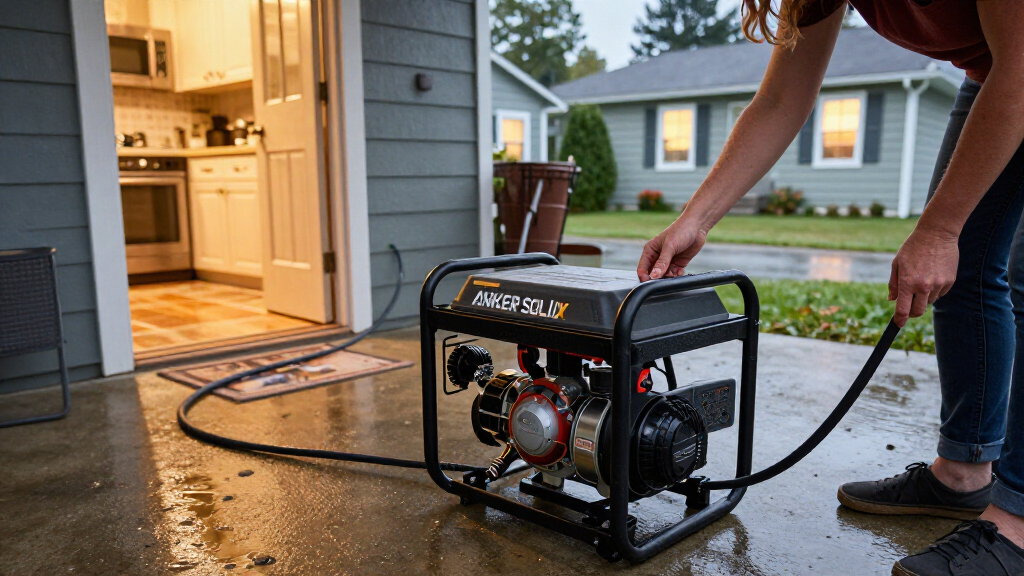
A Family Handyman reviewer tested the Anker Solix Smart Generator 5500 for just over a month, using gasoline and propane and connecting it to a Solix E10 home battery system. The generator delivered about 4.5 kW of DC charging output in testing, but natural gas was not tested, and the reviewer’s full backup system cost substantially more than the generator alone.
Family Handyman reviewer Paul Rankin tested Anker’s Solix Smart Generator 5500 for just over a month at his Florida home, reporting that it ran on gasoline and propane and supplied up to about 4.5 kW of DC charging power to a compatible Solix E10 battery system. The review describes the generator as a potential charging source during extended outages, while noting that the tested setup depended on a costly whole-home battery installation and that natural-gas operation remains untested.
According to Anker’s specifications cited in the Family Handyman review, the 224cc, four-stroke generator can run on gasoline, propane or natural gas. Anker lists up to 4,500 watts of DC output on gasoline or propane and 4,000 watts on natural gas. Its conventional AC output is rated at up to 3,600 watts with each fuel type, through a NEMA TT-30R outlet and a NEMA 5-20R outlet. Rankin tested gasoline and propane, but not natural gas.
Rankin reported that preparation took about 20 minutes, including connecting the startup battery and adding engine oil. He tested electric starting from the unit and through the Anker app, as well as its manual pull start. He said he experienced no starting problems, overloads, connection failures or app glitches during the review period. His longest continuous test lasted about two hours.
In the E10 setup, the generator charges the battery system; the batteries supply the home’s electrical loads. Rankin observed DC output of about 4.5 kW, consistent with Anker’s stated maximum for gasoline or propane. His report says the generator’s output sometimes exceeded the home’s immediate demand, leaving power available to replenish the batteries. That result reflects his specific home and equipment, not a guarantee of performance in other setups.
How the Generator Fits Home Backup
The Family Handyman review examines a practical question for people weighing batteries, rooftop solar and fuel-powered backup: how to keep a home battery charged when sunlight is unavailable or insufficient. In Rankin’s configuration, the generator added a fuel-powered charging option, while the E10 batteries continued to handle household loads. That arrangement can be relevant during an outage lasting beyond the period a stored battery charge or available solar generation can cover.
The distinction matters when interpreting the review’s description of the generator supporting the house. Rankin did not report that the generator directly powered every appliance. Instead, it sent DC power to the E10, which then powered the home. Buyers would need compatible equipment to use that direct DC integration; the generator can also be used on its own through its AC outlets.
Rankin reported that the battery equipment in his setup cost about $14,000, with professional installation adding approximately $4,500. Those figures cover his E10 system and its installation, not the generator’s price. The review says the complete ecosystem is considerably more expensive than purchasing the generator alone.
Rankin’s Florida Test Setup
Rankin said in the Family Handyman review that he tested the generator at his Florida home, where hurricanes and severe storms can interrupt electricity for hours or days. His house already had rooftop solar and an Anker Solix E10 whole-home battery system, made up of two E10 power modules and three battery expansion modules. The review identifies electricians Arcenio Garcia of Firstline Electric & Energy and Oswin Fernandez of Future Electric Solutions as the system’s installers.
During an outage in the setup Rankin described, the batteries power the house. Rooftop solar can recharge them during sunny daytime periods, and the generator can provide another charging source, including at night. The review says Rankin tested gasoline and propane operation, app and manual controls, Eco and higher-output modes, portability, noise and the E10 connection. Rankin characterized setup and operation as easy, said the 110-pound unit was manageable to move, and identified noise as a drawback.
The account is an individual product test, not a controlled comparison with other generators or a test across different homes. Rankin’s longest continuous run was about two hours, and his findings about charging reflect the equipment and power demand at his property.
Natural Gas and Longer Runs
Natural-gas performance was not tested. Rankin said in the Family Handyman review that a professionally installed connection to his home’s gas supply would be needed before he could try that fuel, and that he planned to add one later. The review therefore does not establish how the unit performed on natural gas in real use.
The report also does not provide a long-duration run test: its longest continuous test lasted about two hours. It does not establish how long the generator can operate under a sustained household charging load, or how performance would vary with a different home’s power use, battery configuration or fuel supply. The review notes noise and the cost of the full Anker backup ecosystem but does not provide a noise measurement or the generator’s price in the supplied material.
A Planned Natural Gas Test
Rankin said in the Family Handyman review that he plans to install a professional connection to his home’s gas supply and test the generator on natural gas. Until that test is reported, the review’s hands-on findings cover gasoline and propane only. Readers considering a comparable system would also need to check the generator’s specifications, the requirements of their compatible battery equipment and the costs of installation for their own property.
Key Questions
Which fuels did the review test?
Rankin tested the generator on gasoline and propane, according to the Family Handyman review. He did not test natural gas because his home needed a professionally installed connection first.
How much power did it deliver to the E10?
Rankin reported observing about 4.5 kW of DC output while charging the E10. The review cites Anker’s specifications of up to 4,500 watts of DC output on gasoline or propane and 4,000 watts on natural gas.
Did the generator directly power the whole house?
In Rankin’s tested setup, the generator charged the E10 battery system, and the batteries powered the home’s loads, according to the Family Handyman review. The report does not describe the generator directly supplying every appliance.
How much did the reviewer’s backup system cost?
Rankin reported that the battery equipment cost about $14,000 and professional installation approximately $4,500. These figures refer to his E10 setup, not the generator’s price.
Source: rss
Halloween Picks
halloween
As an affiliate, we earn on qualifying purchases.