
TL;DR

Get home appliances delivered free — and shop member deals
- Fast, free delivery on millions of items
- Access to Prime Big Deal Days deals on October 6–7
- Prime Video, Amazon Music and more included
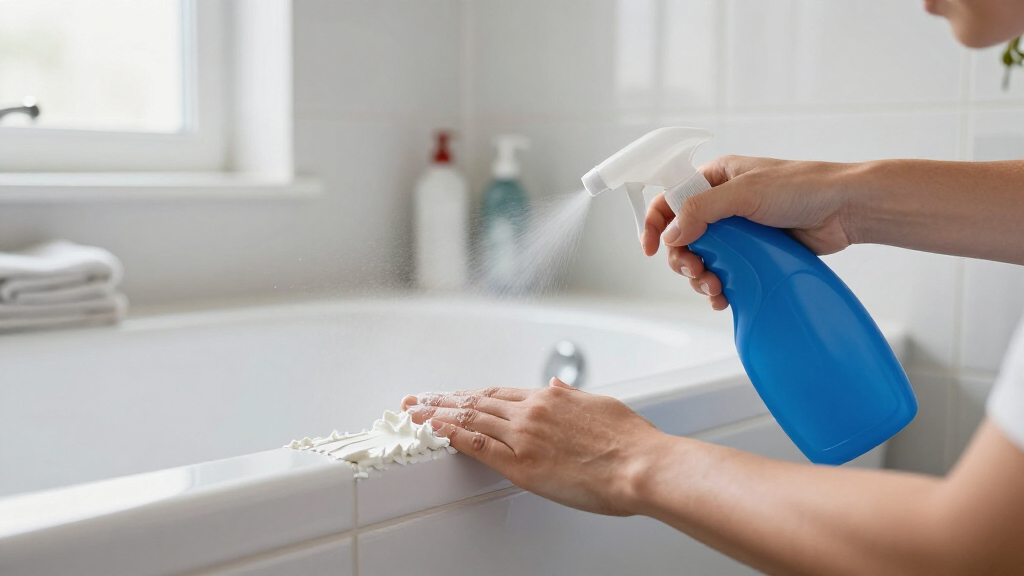
A Hunker report describes a DIY technique of lightly spraying ammonia-free Windex on freshly applied silicone caulk before smoothing it. The cleaner is intended to reduce sticking on a finger or finishing tool; it does not improve adhesion and may interfere if it reaches an uncaulked spot. The report offers no controlled testing or manufacturer guidance establishing the method as universally suitable.
Some DIYers spray ammonia-free Windex on freshly applied silicone caulk before smoothing it, according to a Hunker report, to help a finger or finishing tool glide over the sticky bead. The method is a tooling aid, not a way to clean caulk or strengthen its bond, and the report warns that cleaner on an uncaulked section could interfere with adhesion.
Silicone caulk can cling to a finger or finishing tool during application, making it harder to form a neat, even bead. Hunker says a light spray of ammonia-free glass cleaner on the fresh caulk can reduce that sticking while the bead is smoothed. The article also suggests spraying the tool rather than the joint as an alternative intended to limit cleaner contacting areas that still need to bond.
The sequence matters: apply the caulk first, then use the cleaner immediately before tooling. Hunker says silicone begins to form a skin as it cures, so the work should be done promptly and larger jobs divided into sections. The cleaner is not described as an adhesive or sealant; it does not make caulk adhere better.
Before applying new caulk, the report recommends removing old silicone and residue, cleaning the joint and letting it dry. It also advises cutting the nozzle at an angle and maintaining steady pressure for a consistent bead. Painter’s tape can help define the edges. The technique is presented chiefly for silicone caulk; the report says acrylic latex caulk is generally easier to tool and cleans up with water.
A Smoother Bead, With Limits
A smooth bead can improve the finish around a tub, sink or other joint, but the more important point is that tooling and adhesion are separate concerns. A cleaner that helps a tool glide is useful only if it does not reach a surface where silicone needs to stick. Applying it carelessly could undermine the seal rather than improve it.
For readers, the practical takeaway is to treat this as a technique described by a home-improvement article, not a universal instruction. Check the sealant and cleaner labels for compatibility, and use the smallest amount needed. If avoiding product contact with the joint is a concern, Hunker’s suggested option is to spray the finishing tool instead.
ammonia-free Windex for caulk smoothing
As an affiliate, we earn on qualifying purchases.
As an affiliate, we earn on qualifying purchases.
The Caulk Type Matters
The recommendation is specific to the difficulties Hunker associates with silicone caulk: its stickiness can make smoothing more challenging. The article contrasts it with acrylic latex caulk, which it describes as easier to tool and clean with water. The Windex method is not presented as necessary for every caulking job or every formulation.
Preparation remains central to the process. Old caulk, dirt, grease and other residue should be removed, and the joint cleaned and dried before a replacement bead is applied. The cleaner trick comes only after fresh silicone has been laid. If a spot is missed and gets sprayed, Hunker warns that the caulk applied there later may not adhere properly.
“The glass cleaner is “simply a trick for the smoothing process” after silicone caulk has been thoroughly applied.”
— Hunker report
As an affiliate, we earn on qualifying purchases.
Compatibility Is Not Established
The supplied report does not provide controlled test results, identify specific cleaner and sealant formulations, or cite manufacturer approval for using Windex this way. It describes ammonia-free glass cleaner as having a lower chance of compromising caulk, but does not establish that every product labeled ammonia-free is compatible with every silicone sealant or surface.
It is also unclear from the source how much cleaner to apply beyond recommending a light spray, or whether results vary by bead size, substrate or product instructions. Readers should follow the sealant label and manufacturer directions; the article’s method should not be treated as a guarantee of a durable seal.
As an affiliate, we earn on qualifying purchases.
Check Labels Before Tooling
Before using the technique, check the instructions for both the silicone sealant and the glass cleaner. Prepare and dry the joint, apply an even bead, and, if proceeding, use a light spray only after the silicone is in place. Hunker also suggests spraying the finishing tool instead of the bead to reduce the risk of cleaner reaching an uncaulked area.
Work promptly, smooth the bead, and allow the sealant to cure according to its packaging. No additional testing or manufacturer guidance is included in the supplied report, so product-specific instructions remain the most relevant guide for a particular job.
As an affiliate, we earn on qualifying purchases.
Key Questions
Why do some people spray Windex on caulk?
Hunker says a light spray of ammonia-free Windex can help a finger or finishing tool glide over fresh silicone caulk by reducing sticking. It is intended to assist smoothing, not to clean the finished bead.
Does Windex help caulk stick?
No. The report says the cleaner does not improve adhesion and warns it could interfere if it gets on a spot that still needs caulk. Keep it off uncaulked sections.
Should Windex be used with every type of caulk?
The technique is described mainly for silicone caulk, which the report says can be harder to tool. It says acrylic latex caulk is generally easier to smooth and cleans up with water. Check the product directions before use.
Can I spray the tool instead of the caulk?
Yes. Hunker offers spraying the finishing tool as an alternative to spraying the bead, which may help limit cleaner contact with the joint. The report does not establish compatibility across all products, so follow manufacturer instructions.
Source: rss
Fall Picks
fall essentials
As an affiliate, we earn on qualifying purchases.