
TL;DR

Get home appliances delivered free with Prime
- Fast, free delivery on millions of items
- Prime Video, Amazon Music and more included
- Member-only deals all year
A Family Handyman report advises homeowners to address electrical and contamination hazards first, then contact their insurer and document damage before cleanup. It recommends beginning safe water removal and drying promptly; the source says mold may not grow on water-damaged materials dried within 24 to 48 hours, citing the EPA.
Family Handyman has published a post-flood checklist urging homeowners to address electrical hazards, contact their insurer and document damage before cleanup. The advice applies to flooding from storms as well as plumbing failures, and emphasizes that water removal and drying should begin promptly once conditions are safe.
The report puts personal safety first. It says flooding can electrify water if power remains on, and recommends switching off electricity only when the main panel can be reached by a dry route. If reaching it requires walking through water, the report says to contact the power company and stay out until power is confirmed off. It also warns that standing water may contain sewage, animal waste, agricultural runoff or hidden sharp debris.
Once safe, homeowners are advised to start an insurance claim promptly, since policies may have reporting deadlines, and photograph or film damaged rooms before removing water or belongings. The report recommends recording the waterline and photographing appliance data plates, including model and serial numbers, before moving equipment.
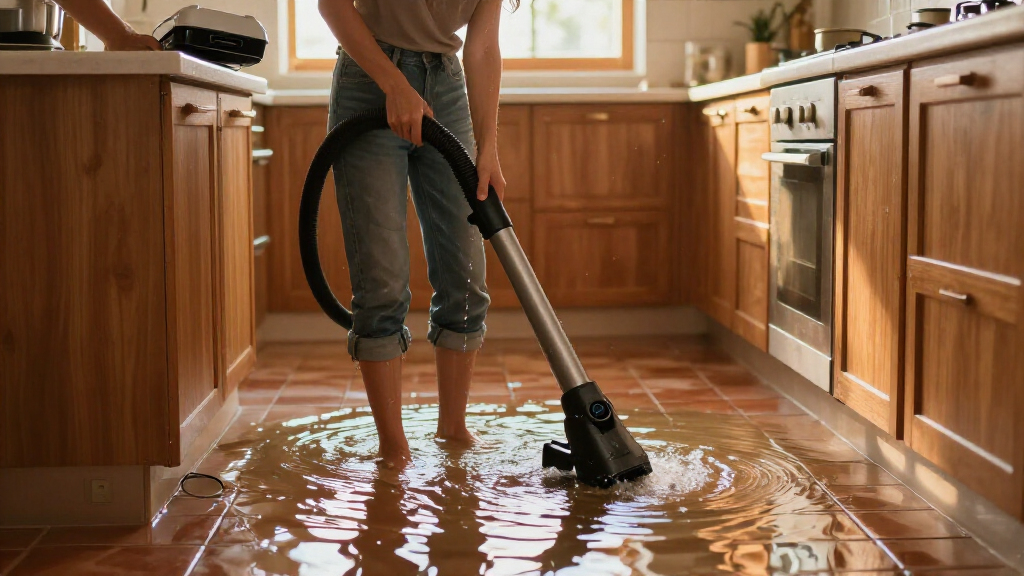
The checklist then recommends removing standing water and drying materials as quickly as conditions permit. A wet-dry vacuum may suit small amounts; a sump pump may be useful for deeper water, according to remediation expert Sam Hickerson, quoted in the report. It advises moving carpets to dry, lifting furniture on blocks, removing baseboards and cutting waterlogged drywall above the waterline. Fans and dehumidifiers can help circulate air. The report says the EPA indicates mold probably will not grow on water-damaged materials if they dry within 24 to 48 hours.
Safety and Claims Come First
The order of these steps can affect health, property damage and insurance documentation. Walking through floodwater can expose people to electrical current, contaminants and concealed debris. Beginning cleanup before recording the damage may also leave homeowners with less useful evidence when an adjuster reviews the claim.
The report frames drying as time-sensitive because persistent moisture can contribute to mold growth. It does not promise that a particular cleanup method will prevent mold or guarantee insurance coverage; outcomes depend on the water, materials, conditions and policy. Where the damage is extensive or the water may be contaminated, professional restoration help may be needed.
waterproof wet-dry vacuum for flood cleanup
As an affiliate, we earn on qualifying purchases.
As an affiliate, we earn on qualifying purchases.
Storms and Plumbing Can Flood Homes
The article cites a Newsweek report describing potential elevated flood risk in parts of the United States during 2026 and 2027, associated with a super El Niño. It also says California’s governor had declared a statewide emergency in September, but the supplied source excerpt does not specify the year or provide the declaration itself.
Flooding does not require a major storm. The report lists toilet overflows, burst pipes and backed-up floor drains as possible causes of serious indoor water damage. Its checklist draws on comments from insurance and restoration professionals, alongside the EPA timing guidance cited for drying materials.
“Water and electricity are the biggest immediate safety risk after a flood.”
— Sam Hickerson, damage remediation expert, as quoted by Family Handyman
As an affiliate, we earn on qualifying purchases.
Damage and Coverage Vary
The supplied source does not establish how widespread flooding will be in 2026 or 2027, or which locations will be affected. It also does not specify what a homeowner’s policy covers, how quickly an adjuster will arrive, or whether a restoration crew will be available after a large disaster.
The excerpt ends during its section on cleaning and sanitizing, so it does not provide the full procedure or additional guidance that may appear later in the original article. The EPA timing statement is presented as general guidance; actual drying needs can vary by material and conditions.
electricity shut off safety switch
As an affiliate, we earn on qualifying purchases.
As an affiliate, we earn on qualifying purchases.
Document, Dry and Reassess
Homeowners should first confirm the area is safe, then notify their insurer and preserve a record of damage before cleanup. If water removal can proceed safely, the report advises starting promptly, ventilating the space and keeping fans running for at least 48 hours, and possibly 72, according to Hickerson. It recommends contacting a restoration professional when one is available, particularly for extensive damage.
After drying, the report says affected areas should be cleaned and sanitized with an antimicrobial cleaner, citing Florida restoration professional Darren Impson. The supplied excerpt does not include his complete advice. The next steps will depend on the insurer’s assessment, the condition of the building materials and whether professional remediation is required.
dehumidifier for water damage drying
As an affiliate, we earn on qualifying purchases.
As an affiliate, we earn on qualifying purchases.
Key Questions
Should I shut off the electricity after a flood?
Only approach the main panel if there is a dry path. If reaching it means wading through water, stay out and contact the power company, as the report advises.
When should I contact my insurance company?
Contact the insurer as soon as it is practical. The report says some policies have specific reporting windows and that delays can complicate a claim.
Should I photograph damage before cleanup?
Yes. The report recommends recording damaged rooms, the highest waterline and appliance data plates before removing water or equipment.
How quickly should water-damaged materials dry?
The report cites EPA guidance that mold probably will not grow on water-damaged materials if they dry within 24 to 48 hours. This is general guidance, not a guarantee for every home or material.
Source: rss
Cold & flu season Picks
humidifiers
As an affiliate, we earn on qualifying purchases.