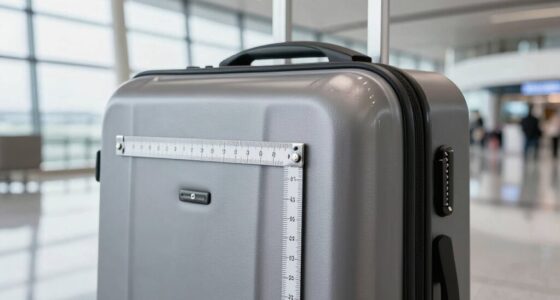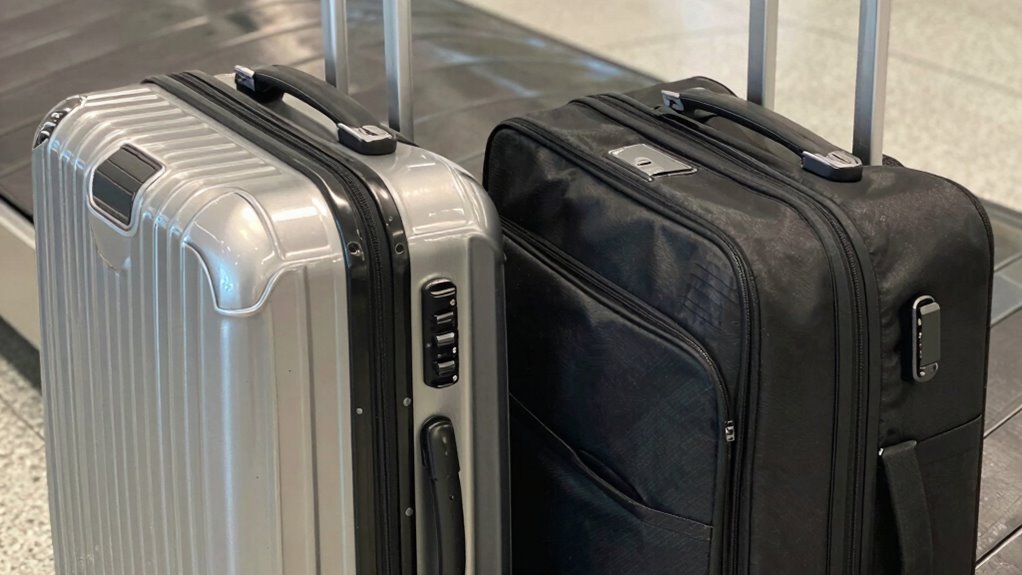

Choosing between hard-shell and soft-shell luggage boils down to impact resistance, packing flexibility, security, weight, and weather protection. Hard cases resist impacts and weather but can scratch easily and are heavier. Soft shells offer more expandable space, lighter weight, and easier handling while resisting tears. Your choice depends on your travel style and needs. To find out which suits your trip best, explore the detailed differences that follow.
Key Takeaways
- Hard-shell luggage offers superior impact and weather resistance but is prone to scratches and dents over time.
- Soft-shell luggage provides more flexibility, expandable space, and easier packing, but is less weatherproof.
- Hard cases tend to be heavier and more secure with integrated locks, while soft luggage is lighter and customizable.
- Soft-shell models often feature external pockets and compression straps, maximizing packing efficiency and accessibility.
- Cost varies; soft-shell is generally cheaper upfront, but high-end hard-shell options offer better long-term durability and protection.

Sweetcrispy Carry on Luggage, Hard Shell ABS Suitcase with Double Spinner Wheels, Lightweight Expandable Rolling Suit Case with TSA Lock, 20 Inch Navy Blue
【Effortless Mobility with Dual-Wheel Design】Travel with ease using Sweetcrispy carry-on luggage, featuring a dual-wheel system for smooth and…
As an affiliate, we earn on qualifying purchases.
As an affiliate, we earn on qualifying purchases.
What Are the Main Differences Between Hard and Soft Luggage?
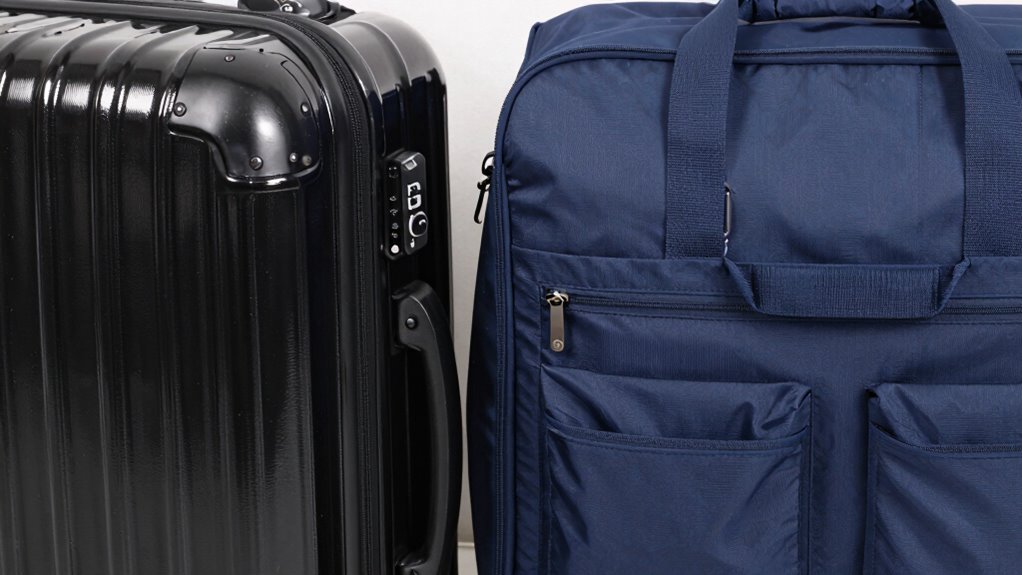
When choosing between hard and soft luggage, understanding their main differences can help you make the right decision. Hard-shell luggage offers rigid protection, making it ideal for safeguarding fragile items. It’s often made from durable materials like polycarbonate or aluminum, which are common in top luggage brands. Soft luggage, on the other hand, features flexible fabric exteriors that can expand slightly, allowing for extra packing space. It’s generally lighter and easier to squeeze into tight storage areas. Travel accessories like external pockets are more common on soft luggage, providing quick access to essentials. Additionally, some luggage brands excel at blending durability with style, but considering material durability can help ensure your luggage withstands the rigors of travel over time. Understanding the different construction methods used in luggage can further aid in making an informed choice, especially since projector technology emphasizes the importance of selecting the right equipment to enhance your viewing experience.

Coolife Luggage 4 Piece Set Suitcase Spinner TSA Lock Softshell lightweight (blue+sliver)
The sets include a 20 inch carry-on luggage, 24 inch medium luggage, 28 inch large luggage and a…
As an affiliate, we earn on qualifying purchases.
As an affiliate, we earn on qualifying purchases.
How Durable Are Hard-Shell Versus Soft-Shell Luggage?
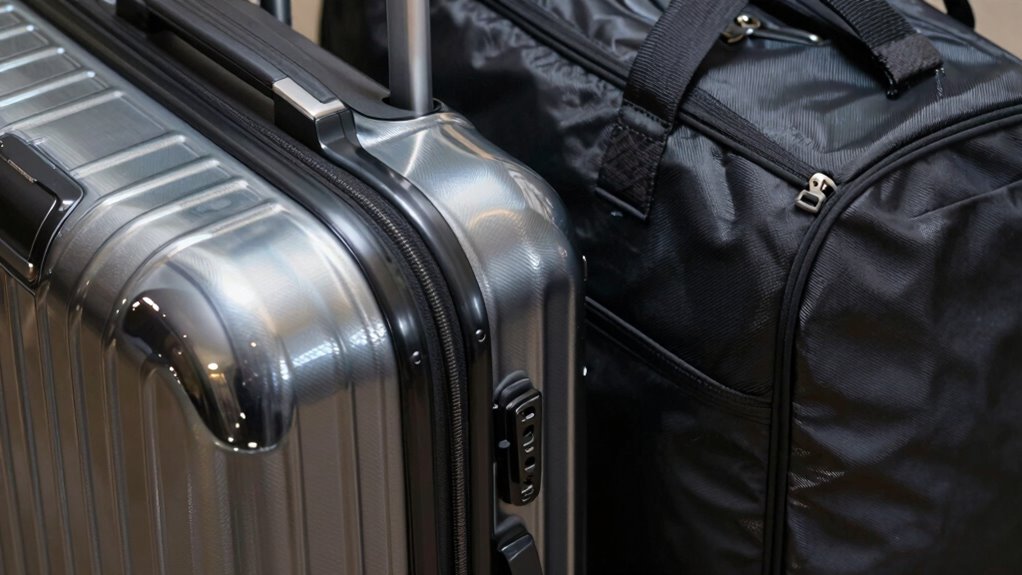
When it comes to durability, you’ll want to think about how well each type resists impacts, scratches, and dents. Hard-shell luggage generally offers higher impact resistance but can show more dents over time, while soft-shell bags might handle scratches better but may wear out faster with long-term use. Understanding these differences helps you choose luggage that best suits your travel habits and durability needs.
Impact Resistance Levels
Hard-shell luggage typically offers superior impact resistance because its rigid exterior absorbs and deflects shocks more effectively. This means your belongings stay protected even when baggage handlers toss or drop your suitcase. To visualize, consider:
- Dropping your bag from waist height, and it remains intact due to excellent shock absorption.
- Curbside impacts, where the hard shell deflects blows without cracking.
- Stacking under heavy luggage, maintaining its shape and structural integrity.
- Sudden impacts during transit, where impact resistance minimizes internal damage.
- Proper impact resistance levels are crucial for ensuring your luggage can withstand the rigors of travel and protect your belongings.
- The choice of material and construction techniques further influence the overall impact resistance, making some hard-shell cases more durable than others.
- Advances in material technology continue to enhance the impact resistance of hard-shell luggage, offering increased durability and longevity.
While soft-shell luggage relies more on flexible materials, hard-shell cases provide consistent shock absorption and impact resistance, making them ideal for safeguarding fragile items during rough handling.
Scratches and Dents
Although hard-shell luggage is designed to withstand impacts, its rigid exterior can be more prone to visible scratches and dents, especially in rough handling or tight storage spaces. These surface marks can detract from the material aesthetics, making your suitcase look worn faster. Hard-shell options often come in vibrant color options that may fade or chip over time if scratched. surface durability plays a significant role in how well each type maintains its appearance over time. Soft-shell luggage, while more flexible and less prone to visible damage, can develop tears or fraying. Here’s a quick comparison:
| Aspect | Hard-Shell | Soft-Shell |
|---|---|---|
| Material Aesthetics | Prone to scratches/dents, may chip | Generally resists dents, but can fray |
| Color Options | Bright, fade-resistant but can scratch | Usually darker, hides minor damage |
| Durability of Surface | Susceptible to surface marks | Less visible damage, flexible exterior |
Additionally, impact resistance influences how well each type absorbs shocks during travel. Choose based on your priority for appearance versus flexibility.
Long-Term Wear and Tear
Long-term durability depends largely on how well your luggage withstands regular wear and tear. Hard-shell luggage often resists impacts, but its exterior can crack or scratch over time. Soft-shell luggage, on the other hand, benefits from fabric durability but may show signs of fraying or tears after heavy use. Consider these points:
- Hard-shell cases are less prone to dents but can develop cracks if mishandled.
- Soft-shell bags may wear out faster due to fabric fatigue, especially around seams.
- Zippers and hinges on both types can loosen or break; quality materials matter.
- Continuous use can cause zippers to jam or hinges to loosen, impacting longevity.
Choosing durable zippers, hinges, and strong fabric or shell material enhances long-term wear and tear resistance.
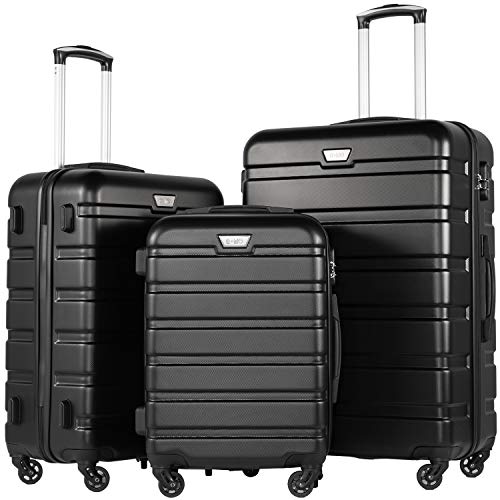
Coolife Luggage 3 Piece Set Suitcase Spinner Hardshell Lightweight TSA Lock (black, 20/24/28)
Please note that ONLY FAMILY SET has 4 pcs, please ignore the product’s title and select the set…
As an affiliate, we earn on qualifying purchases.
As an affiliate, we earn on qualifying purchases.
Which Luggage Style Offers the Most Packing Space?
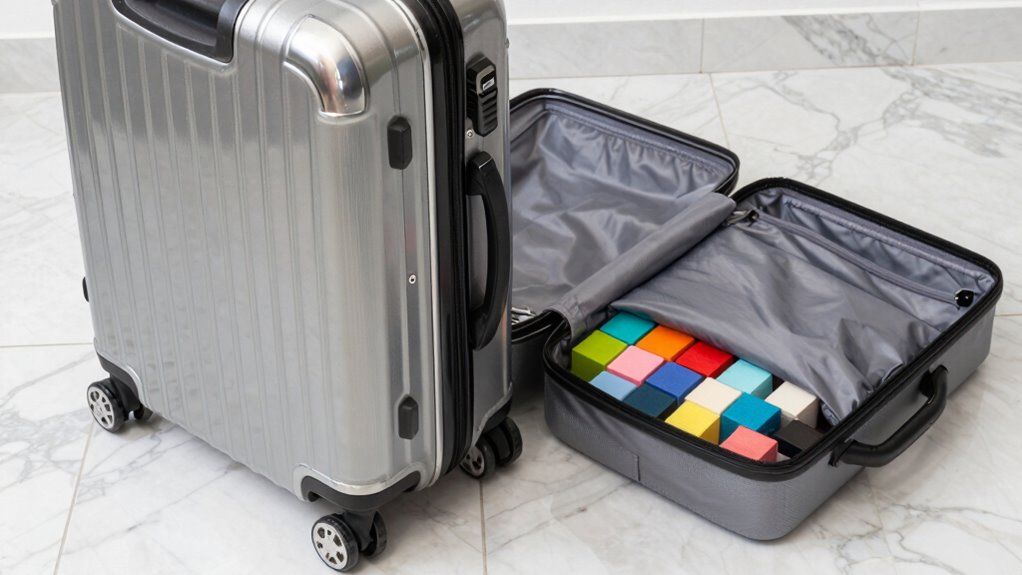
When comparing packing space, consider how much you can fit inside each style, including interior compression capacity and expandability features. Soft-shell luggage often offers more flexibility with expandable compartments, helping you pack more efficiently. Overall storage efficiency depends on how well each bag maximizes space while keeping your belongings organized.
Interior Compression Capacity
Soft-shell luggage generally offers more interior compression capacity than hard-shell options because its flexible material allows for better expansion. This flexibility helps you maximize packing space and adapt to your packing organization needs. You can fit more items or bulkier gear without sacrificing protection. To visualize this better:
- You can squeeze in an extra pair of shoes or clothing items.
- The soft material conforms around irregularly shaped objects.
- Compression straps help tighten your packed items efficiently.
- The flexible interior allows for easier organization of odd-shaped souvenirs or accessories.
- The flexible material also provides some shock absorption, offering additional protection during travel.
- Proper gear organization is essential to fully utilize the adaptable interior space and maintain balance during transit.
- Understanding hive stability can be analogously helpful in packing, as both require careful balance and adaptable support to ensure safety and efficiency.
- The ability of soft-shell luggage to absorb impact can reduce potential damage during rough handling or transit.
- Additionally, the material flexibility can contribute to better handling and maneuverability when navigating crowded airports or transit stations.
Expandability Features
If you’re looking for luggage that can adapt to your packing needs, soft-shell options generally offer superior expandability features. They often include flexible materials and zippers that allow you to increase capacity when needed. Exterior pockets further enhance this adaptability by providing quick access to essentials without opening the main compartment. Here’s a comparison:
| Feature | Hard-Shell Luggage | Soft-Shell Luggage | Best For |
|---|---|---|---|
| Expandability | Limited, often rigid | High, with flexible fabric | Extra packing or last-minute additions |
| Exterior Pockets | Usually minimal or none | Multiple, for quick access | Organization and convenience |
| Expandability Features | Zippers, gussets | Zippers, compression straps | Versatility in packing |
| Packing Capacity | Fixed, with minimal room | Adjustable, more flexible | Increased packing space |
Soft-shell luggage wins here by offering more expandability features and exterior pockets. Additionally, the flexible materials used in soft-shell designs allow for better accommodation of irregularly shaped items. Furthermore, the ability to expand capacity makes soft-shell options especially suitable for travelers with unpredictable packing needs. Recognizing these versatile features can help travelers make smarter luggage choices tailored to their journeys, especially given the deals buy options available for various styles.
Overall Storage Efficiency
Choosing the right luggage depends heavily on how efficiently it maximizes your packing space. When comparing overall storage efficiency, soft-shell luggage often provides better compression capacity due to flexible materials that mold to your contents. Expandability features also boost storage, allowing you to pack more when needed. Consider these factors:
- Soft-shell bags typically have larger internal volume for the same external size.
- Expandability features enable quick increases in capacity.
- Hard-shell luggage may have limited compression capacity, restricting how tightly you can pack.
- Soft-shell styles often accommodate irregularly shaped items better.
- Flexible materials in soft-shell luggage enhance your ability to compress and organize your belongings more efficiently.
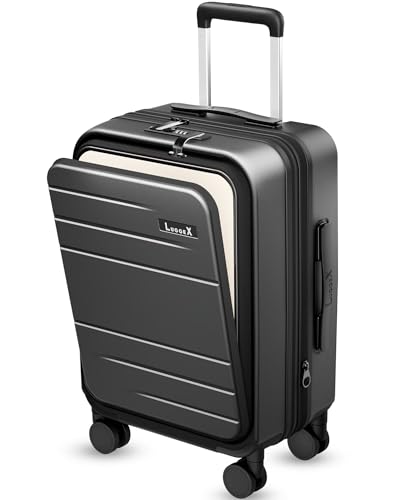
Carry On Luggage 22x14x9 Airline Approved, FLO5 Expandable Polycarbonate Suitcase with Front Pocket (FX-Core, Black, 20 Inch)
External Dimensions(including wheels and handles): 22x15x9.5 IN(Expanded: 22x15x10.5 IN), Internal Dimensions: 18.8×13.9×9.3 IN(Expanded: 18.8×13.9×10.3 IN), Weight: 9 LB,…
As an affiliate, we earn on qualifying purchases.
As an affiliate, we earn on qualifying purchases.
How Do Security Features Differ in Hard and Soft Cases?

When it comes to security features, hard-shell and soft-shell luggage offer different advantages that can influence your choice. Hard-shell cases typically include integrated lock mechanisms, often TSA-approved, providing a secure, tamper-evident barrier. These locks are built into the exterior, making them less prone to accidental damage and easy to verify. Soft-shell luggage, on the other hand, usually relies on external lock mechanisms, such as combination or key locks, which can be added or replaced as needed. While soft cases may have more flexible security options, they often lack the robust, built-in locks of hard-shell designs. Your decision depends on whether you prioritize integrated security features or prefer customizable locking options for added peace of mind during travel. Additionally, some crochet styles for locs incorporate protective features that can be useful for safeguarding your hair during travel. Considering the security enhancements available for each type can help you choose luggage that best meets your safety needs. For instance, selecting a case with advanced lock technology can provide extra protection against theft or tampering. Moreover, choosing luggage with tamper-proof zippers can further enhance security by making unauthorized access more difficult. Incorporating security accessories like cable locks or luggage alarms can also offer additional layers of protection during transit.
Is One Type of Luggage Lighter and Easier to Handle?

Hard-shell luggage is often heavier due to its rigid materials like polycarbonate or aluminum, which provide durability but add weight. This impacts the weight comparison and handling ease. Generally, soft-shell cases tend to be lighter, making them easier to lift and maneuver. To visualize, consider:
- Soft-shell bags often weigh less, easing your overall load.
- Hard-shell luggage offers better protection but can be bulkier.
- Handling ease is influenced by weight, with lighter options being more manageable.
- Your packing style and travel needs impact which type feels more comfortable to handle.
- Material composition also plays a role, as lightweight fabrics and composites can reduce overall weight without sacrificing strength.
- Additionally, design innovations in luggage materials continue to evolve, offering lighter yet durable options that can influence your choice.
- The weight-to-strength ratio of different materials is crucial in determining both durability and ease of handling.
While hard-shell cases may feel heavier, they often slide more smoothly through crowded airports. Soft-shell luggage’s flexibility can improve handling ease, especially in tight spaces.
What Are the Cost and Value Differences?

Soft-shell luggage generally costs less upfront than hard-shell options, making it a popular choice for budget-conscious travelers. When doing a price comparison, soft shells often come at a lower initial cost, but brand reputation influences durability and long-term value. Higher-end brands tend to offer better materials and warranties, which can justify a higher price. Consider this table:
| Brand Reputation | Price Range | Long-term Value |
|---|---|---|
| High | $$$$ | Excellent |
| Mid | $$$ | Good |
| Low | $$ | Fair |
Choosing a reputable brand may mean paying more initially but provides better protection and longevity, ultimately offering greater value for your investment.
How Easy Is It to Maneuver Hard and Soft Luggage?

Maneuvering luggage easily depends on its design and features, which can vary considerably between hard-shell and soft-shell options. Hard-shell cases typically offer less handling flexibility, making them slightly more cumbersome to navigate tight spaces. Soft-shell luggage often provides better maneuverability ease thanks to flexible fabric and lighter weight, allowing you to turn and handle it more comfortably.
Consider these points:
Soft-shell luggage often features external compression straps for easier handling.
- Soft-shell bags often have external compression straps for easier handling.
- Hard-shell cases sometimes have larger, less responsive wheels.
- Soft-shell luggage tends to be lighter, reducing effort during movement.
- Hard-shell options can feel rigid, limiting maneuverability in crowded areas.
Your choice impacts how smoothly you can navigate airports, streets, and crowded spaces.
Which Luggage Is Better for Different Weather Conditions?
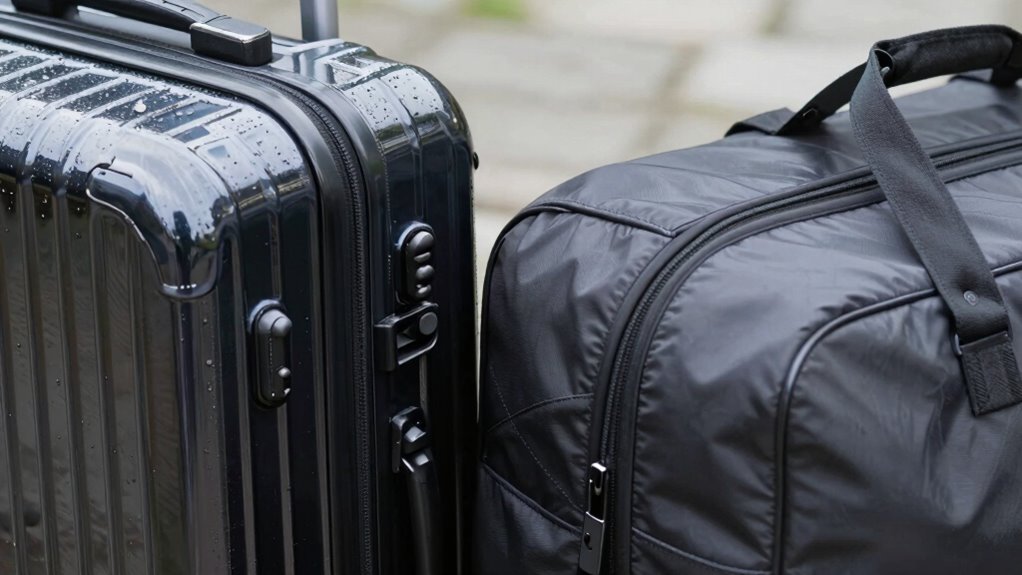
When traveling in different weather conditions, choosing the right luggage can make a significant difference in protecting your belongings. Hard-shell suitcases offer superior weather adaptability because their rigid exterior resists water and snow better than soft-shell options. They also provide better suitcase insulation, helping to shield your items from extreme temperatures. Soft-shell luggage, on the other hand, may absorb moisture and is more vulnerable to water damage, especially if it isn’t waterproof. However, its flexible design can sometimes adapt more easily to tight spaces, which might be useful in certain climates. For rainy or snowy environments, a hard-shell suitcase is generally the better choice because it offers enhanced protection against the elements. Consider your travel weather to select luggage that keeps your belongings safe and dry.
What Are Your Style and Customization Options?

Choosing the right luggage style isn’t just about function—it’s also about expressing your personal taste. With plenty of customization options and style variations, you can find a piece that truly reflects you. For example:
- Color choices—from bold hues to classic neutrals, make your luggage stand out.
- Surface finishes—glossy, matte, or textured surfaces add unique touches.
- Branding and logos—personalize with monograms or custom patches.
- Hardware accents—choose different zippers, handles, or decorative elements for a distinctive look.
These options let you tailor your luggage to match your style, whether you prefer sleek minimalism or vibrant, eye-catching designs. Customization helps you stand out at baggage claim and makes your travel gear feel more personal.
Which Luggage Should You Choose? A Practical Guide
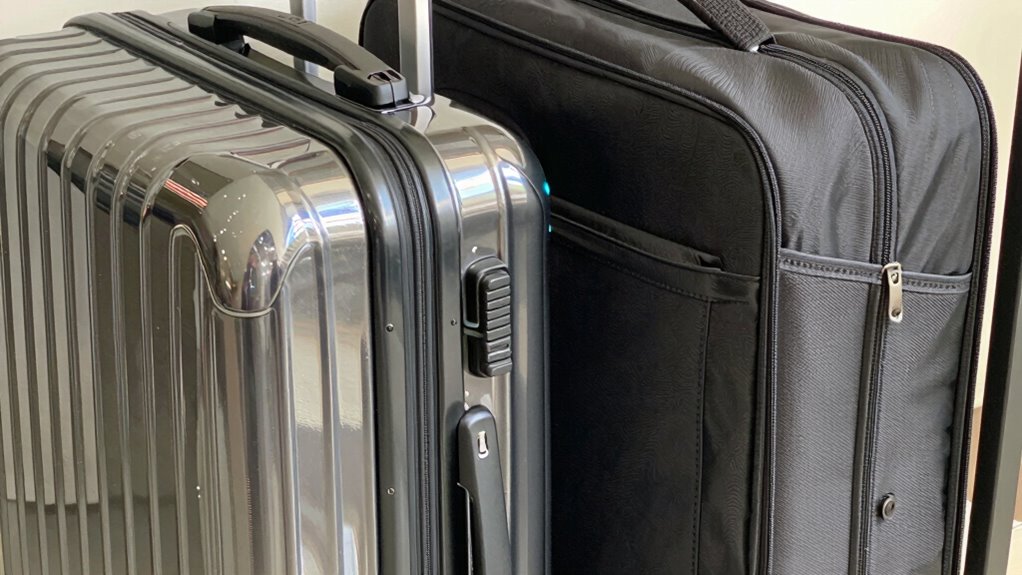
Selecting the right luggage depends on your travel needs, preferences, and lifestyle. If you prefer lightweight, flexible options, soft-shell luggage may suit you, especially since it often offers additional storage compartments and easier packing. On the other hand, hard-shell suitcases provide superior protection against impacts, making them ideal for fragile items or rough handling. When choosing, consider your travel accessories—do you need quick access to electronics or documents? Also, check the luggage warranties, as some brands offer extended coverage that can save you money over time. Think about your typical trips—short getaways or long journeys—and how each type fits into your routine. Ultimately, selecting luggage that balances durability, convenience, and warranty coverage will make your travels smoother.
Frequently Asked Questions
How Do Hard and Soft Luggage Compare in Weight Distribution?
You’ll find that hard-shell luggage often offers better weight balance because its structure evenly distributes the load. Soft-shell luggage, however, tends to be more flexible, allowing you to adjust the load capacity to fit your belongings better. When comparing weight distribution, consider how each type handles uneven loads—hard shells provide more stability, while soft shells give you more flexibility to optimize weight balance for your trip.
Can Soft Luggage Withstand Rough Handling During Transit?
Soft luggage can withstand rough handling during transit, but durability concerns depend on its material flexibility. If made from tough fabrics like ballistic nylon or polyester, it resists tears and abrasions better. However, less flexible materials may tear or wear over time. You should choose soft luggage with reinforced seams and quality fabric to guarantee it handles rough treatment well, providing durability without sacrificing flexibility.
Are There Specific Travel Scenarios Better Suited for Each Luggage Type?
For luxury travel and business trips, soft-shell luggage is ideal because it’s lightweight, flexible, and easier to fit into tight spaces, like overhead compartments. It’s perfect when you need quick access to essentials or have to pack irregularly shaped items. Hard-shell luggage offers superior protection for fragile valuables, making it better suited for rough transit or when traveling with delicate equipment. Choose based on your trip’s specific needs.
What Are the Maintenance and Cleaning Requirements for Each Luggage Style?
Think of your luggage as a trusted companion on your journey. For hard-shells, you’ll need to regularly check zippers maintenance and wipe down the surface with a damp cloth to keep it shiny. Soft-shells require fabric cleaning and careful zipper maintenance to prevent snags. Both styles benefit from routine inspections and gentle cleaning, ensuring your luggage stays durable and ready for your next adventure.
How Do Warranties and After-Sales Support Differ Between Hard and Soft Cases?
You’ll find that warranty policies and customer service quality differ between hard and soft cases. Hard-shell luggage often comes with longer, more thorough warranties, reflecting its durability, while soft-shell options may have shorter coverage. Customer service quality varies by brand, but generally, brands with solid warranties are known for better support. Check warranty details carefully to ensure your luggage gets the after-sales support you need if issues arise.
Conclusion
Choosing between hard and soft luggage isn’t just about durability or capacity—it’s about aligning with your travel style. Hard shells offer protection but can be bulky, while soft cases are flexible and easier to carry. Ultimately, both have strengths and weaknesses; your decision reflects what you value most—security and sturdiness, or convenience and adaptability. Consider your trips, preferences, and needs, and pick the one that best suits your journey ahead.