TL;DR

Get home appliances delivered free with Prime
- Fast, free delivery on millions of items
- Prime Video, Amazon Music and more included
- Member-only deals all year
A comparison by The Ambient finds Ring and Arlo are closer competitors now that both sell 2K and 4K cameras. Ring offers a wider camera and doorbell lineup and lower-priced subscription tiers, while Arlo stands out for video quality, detection features and broader smart-home compatibility.
Ring and Arlo both now sell 2K and 4K security cameras, narrowing a longstanding gap between the systems, according to a comparison by The Ambient. The report says Ring has the broader camera and doorbell range and lower-priced plans, while Arlo has an edge in video quality, detection options and smart-home support; the better fit depends on a buyer’s devices, budget and monitoring needs.
The comparison notes that Ring’s range spans battery-powered and wired options, from the $79.99 Outdoor Cam to the $199.99 Outdoor Cam Pro, with prices stated in the source report. Ring’s newer models include cameras recording in 2K or 4K, and the report describes the Outdoor Cam Pro as offering 4K, 3D Motion Detection and wired, plug-in or PoE installation. Ring also has more doorbell models than Arlo, which the report says has one doorbell.
Arlo’s lineup leans more heavily toward higher-resolution cameras, including 2K Pro models and 4K Ultra cameras. The Ambient says its tested Arlo cameras have generally looked a little sharper, though the gap has narrowed with newer Ring models. Its comparison gives Arlo the advantage in configurable detection, listing person, animal, vehicle and package recognition, with fire, audio and custom detection features available depending on the plan, model and location.
Subscription terms are a major part of the decision, because both ecosystems rely on paid plans for features such as cloud storage and advanced detection. The source lists Ring’s lowest paid plan at $4.99 per month and its unlimited-camera plan at $9.99; Arlo’s corresponding prices are $7.99 and $17.99. It lists maximum cloud-storage periods of up to 180 days for Ring and 60 days for Arlo. These are figures in the report, not guarantees that every feature or price is available in every market.
Costs, Compatibility and Coverage
The choice affects more than the camera’s upfront price. A household buying several cameras may pay recurring fees for cloud recording, alerts and advanced detection, so the plan price and the number of devices covered can change the long-term cost. The Ambient’s listed prices favor Ring on those two subscription measures, though shoppers should check current local pricing and exactly which features each tier includes.
Compatibility can also determine whether a system fits an existing smart home. The report lists support for Alexa on Ring, while Arlo works with Alexa, Google Home, Apple Home, SmartThings and IFTTT, with compatibility varying by camera. Ring may suit buyers who want more camera and doorbell options or already use Alexa. Arlo may appeal to people who prioritize wider smart-home integration and more types of detection.
Neither system is a universal winner: the practical trade-off is between Ring’s range and lower listed plan costs and Arlo’s feature breadth and video performance. A buyer should compare the specific models and subscription features they need rather than treating each brand’s entire lineup as identical.
Products Worth Considering

Ring Alarm 14-Piece Wireless Security System Kit
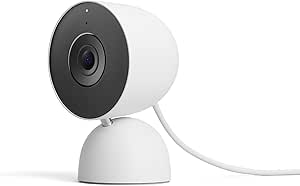
Google Nest Cam Indoor (Wired, 3rd Gen) – Security Camera – Snow

Philips Hue Secure Wired Video Doorbell, 2K, Black
As an affiliate, we earn on qualifying purchases.
How the Camera Gap Narrowed
Earlier comparisons often favored Arlo on resolution because Ring’s lineup was largely associated with 1080p video while competitors offered 2K and 4K models. The Ambient says that distinction no longer applies across Ring’s current range: it now includes 2K and 4K cameras, including newer Outdoor Cam and Pro models.
The report also describes differences beyond resolution. Arlo’s high-end cameras pair higher resolution with features such as HDR, wide fields of view and colour night vision. Ring has responded with newer hardware, including 3D Motion Detection on selected products. The source comparison says that feature uses radar to help set a motion-detection distance, which may help reduce alerts from movement outside a chosen area.
Both companies sell broader home-security products as well as cameras, and both offer professional monitoring and alarm systems, according to the report. Neither requires a contract for the plans described. Since features vary among devices, plans and locations, the comparison’s brand-level summary should be checked against the exact model under consideration.
““Arlo still has the edge, but Ring has caught up.””
— The Ambient comparison
Features Vary by Model and Plan
The comparison does not establish that every feature is available on every camera, subscription or in every country. The report says plan options and detection features vary by location, and smart-home compatibility depends on the Arlo model. Buyers should verify availability before purchasing, especially for advanced detection, cloud-storage duration and integrations.
Prices are those quoted in the source and can change; the comparison does not provide a universal current checkout price for every product or market. The report also warns that 2K and 4K recording can use more bandwidth and may affect streaming performance or notification timing. Actual results can depend on internet speed, mobile connection, placement and other conditions. Its assessments of image sharpness and response time reflect the publication’s comparison and tests, not a guarantee of identical performance in every home.
Check Models Before Buying
Before choosing, buyers should match the camera’s resolution, field of view, power source and detection features to the areas they want to monitor. They should then check the current subscription price and included features for their country, along with whether the exact camera supports their smart-home platform.
For a multi-camera setup, calculate the recurring cost using the number of devices and the required storage plan. The Ambient’s report provides a comparison rather than a final recommendation for every household; the best choice will depend on which features are available on the specific models and how well they fit the home’s network and existing devices.
Key Questions
Is Ring or Arlo better for video quality?
The Ambient gives Arlo a slight edge, citing sharper results in its tests, wide fields of view and high-resolution models. It also says the gap has narrowed as Ring added 2K and 4K cameras.
Which system has lower subscription prices?
In the source comparison, Ring’s listed lowest paid plan is $4.99 per month, compared with $7.99 for Arlo. The listed unlimited-camera plans are $9.99 for Ring and $17.99 for Arlo. Prices and inclusions may vary by location and change over time.
Which system works with more smart-home platforms?
The report lists Ring as supporting Alexa. Arlo supports Alexa, Google Home, Apple Home, Samsung SmartThings and IFTTT, though compatibility varies by camera model.
Does Ring offer 4K cameras?
Yes. The comparison lists 4K Ring models, including the Outdoor Cam Pro and selected Pro cameras. The report cautions that higher-resolution recording can use more bandwidth.
Do Ring and Arlo require contracts?
The Ambient’s comparison lists no contract requirement for either system. Both offer paid subscriptions, and buyers should confirm the current terms and features for their market.
Source: rss