

To store blankets in your trunk without a musty smell, start by thoroughly washing and completely drying them, preferably in sunlight or low heat. Fold them neatly without tight creases and place them in breathable, moisture-resistant containers. Add natural deodorizers like baking soda or essential oils, and include moisture absorbers such as silica gel packets. Keep the trunk well-ventilated and regularly inspect your blankets to maintain freshness; there’s more you can do to prevent odors effectively.
Key Takeaways
- Ensure blankets are thoroughly washed and completely dry before storage to prevent mold and odors.
- Use breathable storage containers like plastic bins with secure lids, and add moisture absorbers such as silica gel packets.
- Incorporate natural deodorizers like baking soda or essential oils inside the trunk and storage containers.
- Leave the trunk slightly open or crack it periodically to promote ventilation and airflow around stored blankets.
- Regularly inspect and refresh storage items, cleaning the trunk and replacing deodorizers to maintain freshness.

Fab totes Storage Bags,Clothes Blanket Storage Bins Foldable Closet Organizers with Reinforced Handle for Home Dorm Storage and Organization,Fabric Bags for Organizing Bed Sheets,Clothing,Comforters
Non-woven fabric + pvc.No side or base reinforcement for flexible and convenient use. Safe and easy to handle.Must…
As an affiliate, we earn on qualifying purchases.
As an affiliate, we earn on qualifying purchases.
Why Proper Blanket Storage Prevents Musty Smells

Proper blanket storage is essential because it keeps moisture and humidity away from your blankets, preventing musty smells from developing. When you store blankets properly, you enhance fabric breathability, allowing air to circulate and reduce trapped moisture. Good airflow helps control moisture levels, which is vital in preventing mold and bacteria growth that cause unpleasant odors. Avoid airtight containers that trap humidity; instead, choose breathable storage options like fabric bags or cotton bins. Ensuring your blankets are dry and well-ventilated minimizes the risk of dampness and helps maintain their freshness. Incorporating moisture control techniques can further enhance storage conditions and prolong freshness. Using proper storage materials ensures your blankets stay dry and odor-free over time. Proper moisture control is key to keeping your blankets smelling clean and feeling cozy, even after long periods in storage. Additionally, understanding ventilation methods can improve airflow and further prevent moisture buildup. Maintaining optimal storage environment conditions is essential for preserving your blankets’ quality and freshness. Understanding dream symbolism related to time and life mysteries can also remind us of the importance of preservation and careful handling. This way, you’ll always have fresh, odor-free blankets ready when you need them.

Vbeijll 5 Gram (50 Pack) Color-Indicating Silica Gel Packets, Premium Food Grade Desiccant – Rechargeable Moisture Absorbers for Food Storage, Electronics, 3D Filament & Safes
FOOD GRADE & SAFE: The storage desiccant packs are made from food grade silicone and has passed a…
As an affiliate, we earn on qualifying purchases.
As an affiliate, we earn on qualifying purchases.
Preparing Your Blankets for Storage: Cleaning and Drying

Before storing your blankets, proper cleaning and drying are vital to prevent odors and mold growth. Start by thoroughly washing your blankets according to their care labels, ensuring all dirt and oils are removed. Use effective blanket folding techniques to keep them compact and minimize wrinkles, which can trap moisture. Once clean, dry your blankets completely—air drying in sunlight is ideal, but a low-heat tumble dry works too. This step is especially important for seasonal storage tips; freshly laundered blankets are less likely to develop musty smells over time. Ensuring proper airflow around your stored blankets can also help keep them fresh. Proper ventilation is essential for preventing musty odors during long-term storage. Making sure your blankets are clean and fully dry before storing them will help keep them fresh, odor-free, and ready for use when the season changes. Proper storage methods also play a crucial role in maintaining their freshness over extended periods.

CLEVAST Activated Bamboo Charcoal Odor Absorber – 6 x 60g Air Purifying Bags, Natural Bamboo Charcoal Fresh Odor Moisture Eliminator, Deodorizer for Home, Closet, Shoe, Car Air freshener
100% NATURAL BAMBOO CHARCOAL: The bamboo charcoal bags are made of 100% natural bamboo charcoal, without any fragrance…
As an affiliate, we earn on qualifying purchases.
As an affiliate, we earn on qualifying purchases.
Choosing the Best Containers for Blanket Storage
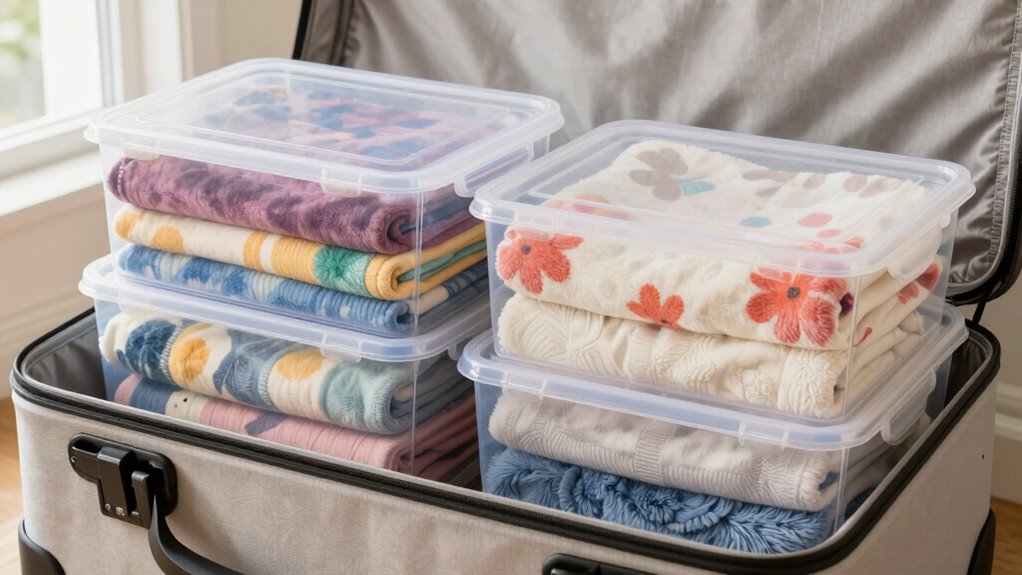
Choosing the right containers for blanket storage is essential to protect your blankets from dust, moisture, and pests. When selecting containers, consider material choices carefully. Airtight plastic bins with secure lids are ideal because they create a barrier against humidity and pests, keeping your blankets fresh. Cardboard boxes are less durable and can absorb moisture over time, risking mold and mildew. Metal containers offer durability but may rust if not properly coated or ventilated. Container durability matters because sturdy options withstand stacking and handling without breaking or cracking. Avoid flimsy or porous materials that fail to provide a reliable seal or resist damage. Investing in high-quality, airtight containers ensures your blankets stay clean, dry, and protected for long-term storage in your trunk. Additionally, proper ventilation can help prevent musty odors and moisture buildup inside the containers, which is especially important for maintaining color accuracy in stored textiles. Incorporating microplastic control measures can further reduce dust contamination and improve overall storage quality. Ensuring your containers are made from non-porous materials also reduces the risk of mold growth and helps maintain a cleaner storage environment. Using moisture-absorbing desiccants can further enhance protection against humidity and keep your blankets fresh.

TasticTotes 6 Pack Clear Storage Bags for Comforter, Clothes & Bedding, Plastic Blanket Storage with Zipper and Handle, Moving Bags, Closet Organizer and Under-Bed Storage (40L)
【Quality Material】TasticTotes clear storage bags are made of clear high-quality material, which is lightweight and wear-resistant. It is…
As an affiliate, we earn on qualifying purchases.
As an affiliate, we earn on qualifying purchases.
Keeping Blankets Fresh With Dryer Sheets and Natural Deodorizers
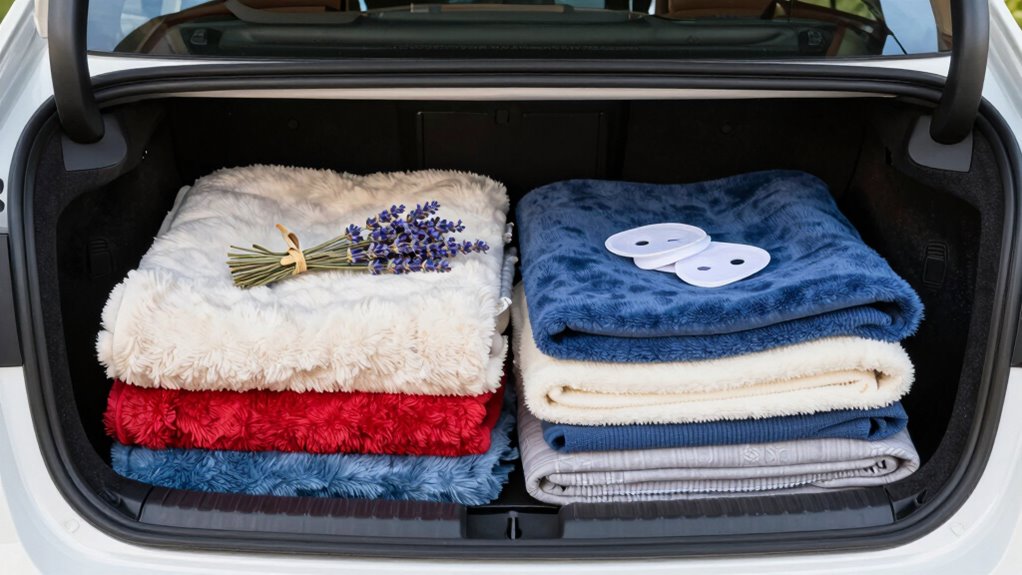
To keep your blankets smelling fresh, consider using dryer sheets or natural deodorizers when storing them. These simple solutions help neutralize odors and maintain a clean scent over time. Just place a dryer sheet or a natural deodorizer in your storage container to keep your blankets smelling inviting. For an extra layer of freshness, you can also include advanced filtration systems to help reduce allergens and odors. Incorporating airtight containers can further prevent moisture buildup and preserve freshness over extended periods. Additionally, choosing moisture-resistant storage options can help prevent mustiness caused by humidity. Proper ventilation and regular inspection of stored blankets can also contribute to maintaining their freshness and preventing mold growth in humid environments. Using odor absorbers can further enhance freshness by actively removing lingering smells.
Freshening With Dryer Sheets
Dryer sheets are an easy and effective way to keep your blankets smelling fresh when storing them in a trunk. They help boost dryer sheet freshness and scent enhancement, ensuring your blankets stay inviting. To maximize their effect, try this:
- Fold a few dryer sheets and tuck them into each blanket fold, creating a subtle barrier against odors.
- Place a sheet on top of your stacked blankets to diffuse a fresh scent throughout the pile.
- Keep a sheet inside the trunk lid or lining for ongoing scent boost whenever you open it.
- Using weatherproof storage containers can help protect your blankets from moisture and humidity, preventing mustiness and preserving freshness. These containers are designed to block out moisture infiltration, which is a common cause of musty smells in stored textiles. These simple steps infuse your stored blankets with a light, clean fragrance that prevents mustiness, making your blankets always smell like they’re fresh from the laundry.
Natural Deodorizers for Freshness
Natural deodorizers offer an eco-friendly way to keep your blankets smelling fresh without relying solely on artificial scents. You can enhance freshness by using essential oils, which add a subtle, natural aroma. Place a few drops of your favorite essential oil on a small cloth or cotton ball and tuck it into your storage container. Baking soda is another powerful deodorizer; sprinkle a thin layer inside the trunk before adding your blankets. It absorbs moisture and neutralizes odors naturally. For best results, mix baking soda with a few drops of essential oil for a more pleasant scent. Baking soda is especially effective because it not only absorbs odors but also helps control humidity, which can cause mustiness. Incorporating natural deodorizers into your storage routine can extend the freshness and lifespan of your blankets. Sealing your blankets in the trunk creates an effective barrier against moisture and odors, further enhancing freshness. Natural deodorization techniques can further improve the freshness and longevity of your stored blankets. Using proper storage containers can also prevent pests and keep your blankets clean over time.
Tips for Keeping Your Trunk Clean and Well-Ventilated

Maintaining a clean and well-ventilated trunk is essential for preventing odors and mold, especially when storing blankets. To achieve this, focus on effective ventilation techniques and regular cleaning routines. First, crack open the trunk lid slightly during storage to allow fresh air circulation. Second, place moisture-absorbing sachets or silica gel packs inside to reduce humidity. Third, schedule monthly cleanings by removing all items, vacuuming the interior, and wiping down surfaces with a damp cloth. These steps help prevent musty smells and mold growth. Proper ventilation ensures air flows freely, keeping your blankets fresh and your trunk odor-free. Consistent maintenance creates an environment that discourages moisture buildup and keeps your trunk clean and well-ventilated.
Common Mistakes When Storing Blankets and How to Avoid Them

One common mistake people make when storing blankets is forgetting to clean and dry them thoroughly before placing them in the trunk. This can lead to odors and mildew over time. Another mistake is incorrect folding; tightly compressing blankets can trap moisture and cause creases that are hard to remove later. Ignoring ventilation is also a big issue—blankets need airflow to stay fresh. If you store them in sealed containers or plastic bags without proper ventilation, they’re prone to musty smells and mold growth. To avoid these mistakes, always wash and dry blankets completely, fold them loosely, and guarantee good airflow around your storage area. Taking these steps keeps your blankets fresh and prevents damage during storage.
Quick Steps to Store Your Blankets Safely and Keep Them Smelling Fresh
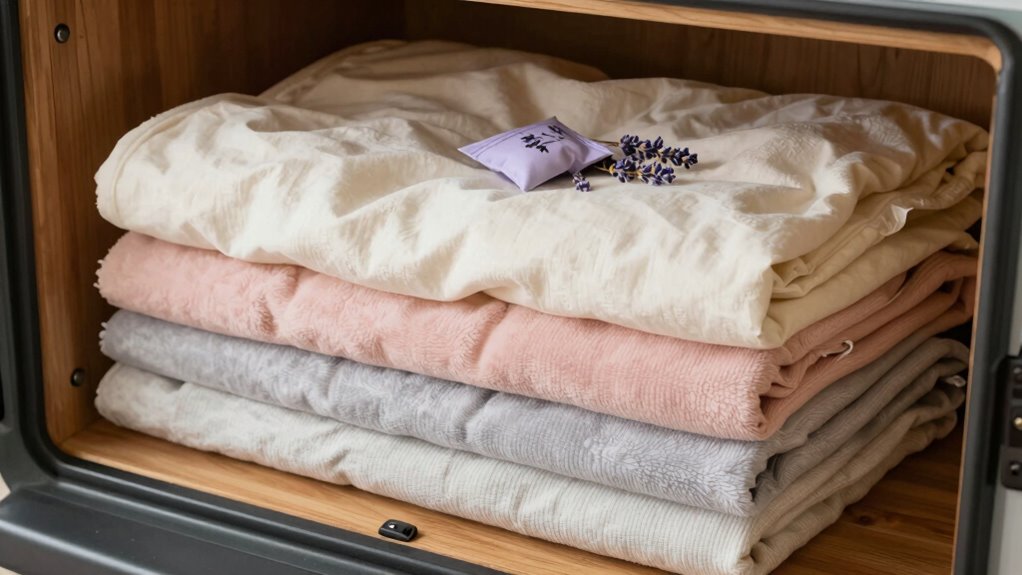
To store your blankets safely and keep them smelling fresh, start by thoroughly cleaning and drying them. Proper blanket folding minimizes space and prevents wrinkles. Next, organize your trunk by placing your folded blankets neatly, ensuring they’re not crammed or bent awkwardly. Follow these steps:
Start by cleaning, drying, and neatly folding blankets to keep them fresh and space-efficient.
- Fold blankets smoothly, avoiding tight creases.
- Stack them in a designated section of your trunk, keeping similar fabrics together.
- Add a sachet of natural scent or cedar chips to maintain freshness and deter pests.
This method promotes efficient trunk organization, prevents musty odors, and preserves your blankets’ softness. Remember, a well-organized trunk with properly folded blankets not only saves space but also makes retrieval quick and easy, ensuring your blankets stay fresh and inviting whenever you need them.
Frequently Asked Questions
How Often Should I Rotate Stored Blankets to Prevent Odors?
You should rotate your stored blankets every 3 to 6 months to prevent odors. Regular blanket rotation helps air out the blankets, reducing moisture buildup that causes mustiness. When you rotate, shake out and inspect the blankets for any signs of mold or mildew. Proper odor prevention involves using breathable storage containers and adding moisture absorbers like silica gel packs. Staying consistent with blanket rotation keeps your blankets fresh and odor-free.
Can Natural Remedies Completely Replace Commercial Deodorizers?
Absolutely, natural remedies can often replace commercial deodorizers. With DIY deodorizing, you mix essential oil blends to create a fresh, fragrant environment. Simply sprinkle baking soda infused with your favorite essential oils inside your trunk or storage bin. This natural approach not only neutralizes odors but also keeps your blankets smelling delightful without harsh chemicals. Regularly revitalizing your DIY deodorizer ensures your blankets stay fresh, fragrant, and free from musty smells.
What Are Signs My Blankets Have Developed Mold or Mildew?
If your blankets develop mold or mildew, you’ll notice a musty odor and visible spots, often fuzzy or discolored. You might also feel a damp texture or see dark patches. To prevent mold, guarantee proper mold prevention by keeping blankets dry and well-ventilated. For existing mold or mildew, remove it promptly with a mixture of vinegar and water, and thoroughly dry the blankets to stop further mildew growth.
Is It Better to Fold or Roll Blankets for Storage?
Think of your blankets as treasures you want to protect. Folding techniques are your best allies—they keep your blankets neat and prevent wrinkles. When it comes to space optimization, folding allows you to stack efficiently, making the most of limited space in your trunk. Rolling can save space but may cause creases. So, for a tidy, well-preserved stash, opt for careful folding every time.
How Do Temperature Fluctuations Affect Stored Blanket Freshness?
Temperature fluctuations can harm your stored blankets by causing moisture buildup and mold growth. To keep them fresh, you should use proper humidity control, maintaining a stable environment. Insulation techniques, like using breathable storage bags or adding insulating layers, help buffer against temperature swings. This prevents musty odors and keeps your blankets clean and cozy, ensuring they’re ready to use whenever you need them.
Conclusion
Now that you know how to store your blankets properly, you can keep them fresh and inviting for years to come. Remember, a clean and well-ventilated trunk is your best friend—don’t let it become a breeding ground for musty odors. Follow these simple steps, avoid common pitfalls, and you’ll be able to enjoy cozy blankets without any unpleasant surprises. Stay ahead of the game and keep your blankets smelling as good as new—don’t let things go south!