
TL;DR

Get home appliances delivered free with Prime
- Fast, free delivery on millions of items
- Prime Video, Amazon Music and more included
- Member-only deals all year
A whole-room humidifier adds moisture to the air in a limited area, not throughout an entire house. Choose a model that fits your room and maintenance habits, use a hygrometer to keep relative humidity around 30–50%, and clean the unit as its manufacturer directs to avoid mineral dust, damp surfaces, and microbial growth.
Static shocks, scratchy throats, and skin that feels tight after a shower can all show up when indoor air gets dry. A whole-room humidifier can add moisture where you need it, but the phrase sounds bigger than the appliance usually is: most portable models serve a room or open area, not your entire house.
This guide explains how the main humidifier types work, how to choose a model for your space, and how to run it without leaving damp windows or a musty smell behind. You’ll also get a simple way to set a safe target and learn which maintenance chores make the difference between a helpful appliance and a water-filled headache.
The key is to treat a humidifier as a maintenance-dependent appliance, not a set-and-forget cure for dry air. A small hygrometer, a suitable location, and regular cleaning can tell you more than a long list of app features.
A portable whole-room humidifier serves a limited room or open area; it is not the same as whole-home HVAC humidification.
Use a hygrometer and treat 30–50% relative humidity as a general starting range, adjusting for your building and signs of condensation.
Choose among evaporative, ultrasonic, warm-mist, and impeller models based on noise, water quality, upkeep, operating cost, and household safety.
Check room coverage, moisture output, cleaning access, and replacement-part costs before you buy.
Empty, clean, and dry the unit as its manufacturer directs; reduce or stop use if nearby surfaces become damp.
What a whole-room humidifier can—and can’t—do
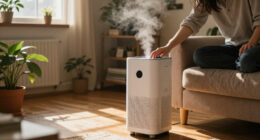
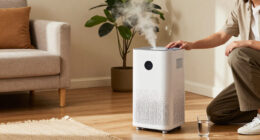
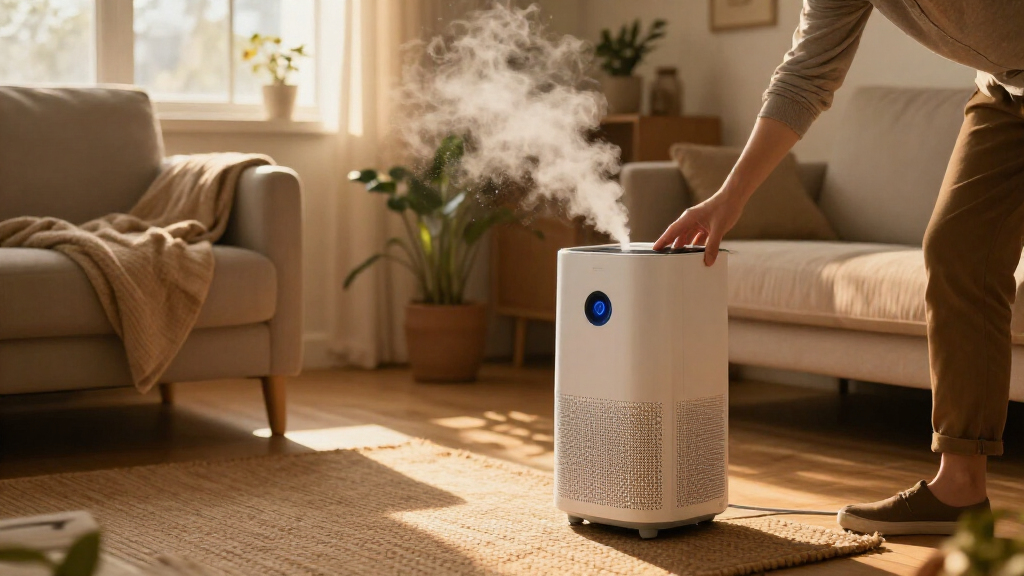
A whole-room humidifier adds moisture to the air throughout a room or open area, but a portable unit does not normally humidify an entire house. “Whole-room” describes its intended coverage, which depends on room size, ceiling height, airflow, and the unit’s output. It can make a dry bedroom or living room feel more comfortable; it cannot fix a leak or manage humidity across every room.
Think of it like a small fan for moisture: the appliance works best when the air can circulate around it. A unit tucked behind a sofa may leave one corner damp while the other end of the room stays dry. If your open-plan living room connects to a kitchen and hallway, the humidifier may serve that shared area unevenly, especially with doors or windows open.
Dry air can contribute to discomfort such as dry skin, irritated nasal passages, and static electricity, but those symptoms can have other causes. A humidifier may ease dryness for some people; it does not treat the cause of symptoms or replace medical advice. It also does not repair water damage, improve ventilation, or remove mold.
For example, if the air in your 12-by-14-foot bedroom feels dry, a portable model rated for a suitable area may help. If the whole two-story house feels dry, a room unit won’t provide reliable control everywhere; whole-home humidification generally calls for equipment integrated with a heating and ventilation system, installed and maintained appropriately.
Products Worth Considering

Levoit EverestAir-P Smart Air Purifier for Large Rooms

Levoit Vital 100S-P Air Purifier with Washable Pre-Filter

Bose SoundLink Plus Portable Bluetooth Speaker, Wireless Outdoor Speaker, Up to 20 Hours Battery Life, Waterproof and Dustproof, Black
As an affiliate, we earn on qualifying purchases.
Choose a humidifier type that fits your room and routine
Whole-room humidifiers come in several types, and no single design suits every home. Evaporative models use a fan and wet wick, ultrasonic models make a fine mist through vibration, warm-mist units heat water, and impeller models use a rotating disk. Your best match depends on noise, water hardness, child and pet safety, cleaning effort, and ongoing costs.
An evaporative model often limits moisture output as room humidity rises, but you’ll need to clean the appliance and replace its wick or filter as directed. An ultrasonic unit may run quietly in a bedroom, yet minerals in hard tap water can create white dust on a dark dresser. Distilled or demineralized water can reduce that dust in models that disperse minerals, though the manual should guide your choice.
Warm-mist models heat water and may use more energy; hot water or steam can also burn a child or pet who gets too close. Impeller models can disperse mineral particles too, so water choice and cleaning matter. Whichever type you choose, routine care still counts. No “antimicrobial” claim or special cartridge replaces cleaning the parts that hold standing water.
Picture a light sleeper choosing between two options: the ultrasonic model is quieter, but the household has hard water and dark furniture that shows white residue. An evaporative model may be a better fit if the owner is willing to replace its wick. For a family with a toddler, a cool-mist unit avoids the hot-water burn risk of a warm-mist model.
Compare the main types before you buy
Whole-room humidifiers are easier to compare when you look at how each type creates moisture and what it asks of you afterward. The table below highlights practical tradeoffs: it is not a ranking, because room conditions and household habits change which design makes sense. Check the product manual for water requirements, replacement parts, and cleaning instructions before buying.
| Type | How it works | What to weigh |
|---|---|---|
| Evaporative | A fan moves air through a wet wick or filter. | Often self-limits output as humidity rises; wick replacement and fan noise matter. |
| Ultrasonic | Vibrations create a fine mist. | Often quiet; hard-water minerals can become white dust unless water or treatment reduces them. |
| Warm-mist | Heated water produces steam that cools as it leaves. | Hot surfaces and water create burn risks; energy use may be higher. |
| Impeller | A rotating disk throws water into a mist. | Mineral dust and regular cleaning may be concerns, depending on the model. |
For a baby’s room, a caregiver might favor a cool-mist model to avoid hot water, then place it well beyond reach. For a quiet home office, an ultrasonic model may appeal, but someone using hard water should factor in distilled water or a suitable demineralization option. These choices show why the quietest or cheapest model is not automatically the best one.
Coverage labels also need context. Manufacturers may calculate them under different conditions, so compare the stated area with your actual room size and ceiling height rather than treating a large number as a guarantee. Moisture output, tank refills, filter availability, and cleaning access all affect how well a humidifier fits daily life.
Set humidity with a hygrometer, not a hunch
Whole-room humidifiers work best when you track relative humidity rather than guessing from dry skin or a scratchy nose. A commonly recommended indoor range is 30–50%, though climate, season, building condition, and personal comfort affect the right setting. A small hygrometer gives you a separate reading, while a humidifier’s built-in humidistat may not represent conditions across the whole room.
Start by placing a hygrometer away from the humidifier’s mist, windows, and heating vents. Run the unit at a modest setting and check the reading after the room has had time to respond. If the display says 43% near the bedroom door but the device sits beside a cold window, the humidity near that glass may be different.
In cold weather, condensation on windows or walls can signal that the air is too moist for the building’s temperature and insulation. Turn the setting down, move the unit if mist is reaching a surface, and look into any underlying moisture or ventilation problem. A humidifier should not leave wet patches, a musty smell, or droplets running down the window like rain on a bus shelter.
For example, suppose your hygrometer reads 28% in the morning and 48% after an hour of use. That rise may be enough to improve comfort; pushing it higher just because the machine can do so adds risk without a clear benefit. If condensation starts at 42%, your building and weather may call for a lower target.
Keep the room comfortable, not damp: lower or stop humidification if you see condensation, damp surfaces, musty smells, or mold.
Choose a model you can actually maintain
Whole-room humidifiers should fit both the room and the amount of upkeep you can manage. A tank that holds plenty of water may mean fewer refills, but a narrow opening can make cleaning awkward. A simple top-fill design may save time, while a model that needs a costly wick or hard-to-find cartridge can turn a low purchase price into a bigger ongoing expense.
Before buying, compare the actual room size with the coverage rating, then check moisture output, tank capacity, noise, cleaning access, replacement-part availability, and energy use. Look for a dependable humidistat and an automatic shutoff for low water if those features suit your routine. Smart controls, timers, and sleep modes can be convenient, but a remote app does not make an inaccurate sensor accurate.
Imagine using a unit nightly in a bedroom. A whisper-quiet fan and dim display may matter more than voice control, while easy access to the tank matters when you need to empty it each morning. In a larger living area, output and room coverage may matter more than a compact footprint.
Use this quick buying process before you choose:
- Measure the room, including ceiling height and whether it opens into other spaces.
- Compare output and coverage, treating manufacturer coverage as a guide rather than a promise.
- Check upkeep: cleaning access, filter or wick costs, and the water the manual recommends.
- Match safety and comfort to the household, including noise, automatic shutoff, and the presence of children or pets.
This small check can save you from buying a powerful unit that leaves surfaces damp, or a tiny one that runs all night without changing the reading.
Keep the water clean and the surrounding surfaces dry
Whole-room humidifiers need regular cleaning because standing water can support microbial growth and minerals can collect inside the tank and base. Empty and refill the tank regularly, clean and dry the unit as the manufacturer directs, and replace filters or wicks on schedule. The exact cleaning frequency depends on the model and how often you use it, so follow its instructions rather than relying on one schedule for every appliance.
Use the water recommended in the manual. Distilled or demineralized water can reduce mineral dust for ultrasonic and some impeller models, particularly where tap water is hard, but not every unit requires it. Never add essential oils, fragrances, or medication to the tank unless the manufacturer specifically designed the appliance for those materials; an aroma tray is not the same as an oil-safe water tank.
Place the unit on a stable, water-resistant surface with room around it. Keep mist away from walls, electronics, bedding, and wood furniture, since a steady plume can leave a pale damp patch on paint or swell a wooden tabletop. Warm-mist units belong out of reach of children and pets because heated water and steam can burn.
For example, if you notice white powder on a black bedside table, stop and check the water guidance and cleaning directions before using the unit again. If the nearby window fogs or a musty smell develops, reduce or stop operation and investigate the moisture rather than masking it with fragrance. A humidifier can ease dry air; it should not create a new damp-air problem.
Cleaning is part of using the appliance: smart controls and special cartridges do not replace emptying, cleaning, drying, and scheduled part replacement.
Frequently Asked Questions
What humidity should I set a whole-room humidifier to?
A useful starting range is 30–50% relative humidity, but climate, season, and building conditions can change what works in your room. Lower the setting if windows or walls collect condensation, and use a hygrometer placed away from the mist to check the reading.
Can a portable whole-room humidifier cover my whole house?
Usually, no. A portable whole-room humidifier is intended for a limited room or open area, and air movement or closed doors can affect its reach. Whole-home humidification generally needs equipment integrated with a heating and ventilation system.
Is cool mist better than warm mist?
Neither type is best for everyone. Cool-mist designs avoid the hot-water burn risk, while warm-mist models heat water and may use more energy; both need regular cleaning. If children or pets can reach the appliance, keep warm-mist units well out of reach.
Do I need distilled water in my humidifier?
Not always; follow the manufacturer’s instructions. Distilled or demineralized water can reduce white mineral dust in ultrasonic and some impeller models, especially in hard-water areas. Check the manual before paying extra for a particular water type or cartridge.
How often should I clean a whole-room humidifier?
Follow the cleaning and replacement schedule in your model’s instructions, because designs and use patterns differ. Empty and refill the tank regularly, clean and dry the appliance as directed, and replace its wick or filter on schedule. Do not assume a cartridge or antimicrobial feature removes the need for cleaning.
Can a humidifier cause mold or damage furniture?
Yes. Excess humidity or mist landing on nearby surfaces can leave dampness that encourages mold or damages wood and electronics. Give the unit space, monitor humidity, and reduce or stop use if you see condensation, damp patches, or a musty smell.
Conclusion
Choose a whole-room humidifier for the space you actually want to humidify, then monitor humidity with a hygrometer instead of trusting a guess or a feature-packed display. Keep the setting sensible, follow the manual for water and cleaning, and respond quickly to condensation or damp surfaces.
A good humidifier should leave your room more comfortable—not your windows fogged or your furniture wet. Let the hygrometer, not the mist, tell you when you’ve done enough.