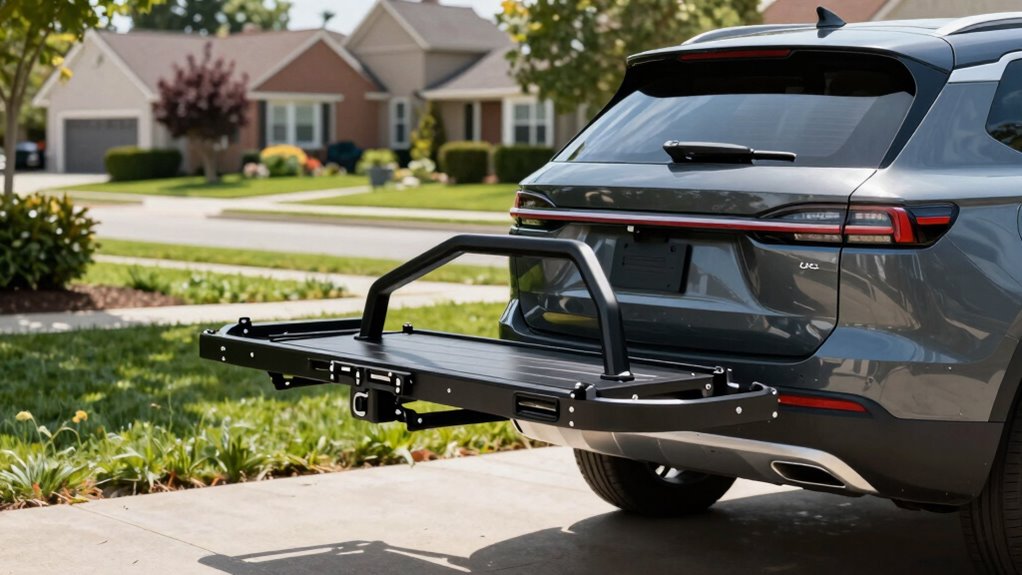
For enclosed hitch cargo carriers, my best overall pick is the StowAway Max, whose hard-sided box and swingaway frame suit travelers who want protected storage and access to the rear of their vehicle. The Let’s Go Aero GearSpace Slideout is a standout for buyers who value sliding cargo access, while the Wildroad set offers a more budget-conscious route with a basket, waterproof bag, net, and straps. The main tradeoff is between a rigid enclosure with easier everyday protection and a lighter, more flexible basket-and-bag setup that may need more securing and care. Fit, loaded tongue weight, rear-door clearance, and trailer compatibility can matter as much as carrier capacity. Read on for the full breakdown and guidance on choosing a setup that matches your vehicle and travel plans.

Get home appliances delivered free with Prime
- Fast, free delivery on millions of items
- Prime Video, Amazon Music and more included
- Member-only deals all year
Complete the kit


Key Takeaways
- Hard-sided storage and a swingaway frame give the StowAway Max the clearest case as the overall pick for frequent trips where protected cargo and vehicle access both matter.
- The two GearSpace Slideout listings share the same core design; the listed difference is color, so choose between dark gray and light gray based on appearance and availability rather than assuming different cargo performance.
- The Wildroad bundle includes the most clearly specified accessory set among the basket-and-bag options, with a waterproof bag, net, straps, and dual tightener included.
- Carrier depth changes the kind of cargo that fits: Mockins’ 6-inch carrier and the WEIZE’s 6-inch basket are suited to lower-profile loads, unlike the 14-inch-deep Wildroad and KAIRAY baskets.
- A 500-pound carrier rating is not a vehicle or hitch rating: the vehicle’s tongue-weight limit, hitch rating, carrier weight, and cargo weight all constrain what can safely ride behind the vehicle.
- Trailer use needs a separate fit check: the product names and specifications here describe hitch-mounted cargo carriers, but do not establish compatibility with every trailer hitch setup or towing configuration.


| enclosed hitch cargo carrier | Material | Dimensions |
|---|---|---|
| Mockins 500 Lb Capacity Steel | Steel | 60 x 20 x 6 in |
| Wildroad 500 Lbs Hitch Cargo C | Heavy-duty tubing; cargo bag made from 500D PVC | — |
| StowAway Max Hitch Cargo Box w | LLDPE and steel | 51 x 23 x 26 in |
| Let’s Go Aero GearSpace Slideo | Polyethylene | 68 x 68 x 40 in |
| KAIRAY 500 Lbs Heavy Duty Hitc | Powder-coated steel | 60 x 24 x 14.4 in |
| Mockins 60"x24"x6" Heavy Duty | — | — |
| Let’s Go Aero GearSpace Slideo | Polyethylene | 63 x 28 x 40 in. |
| WEIZE Folding Hitch Mount Carg | Steel | 60 x 20 x 6 in. |
More Details on Our Top Picks
Mockins 500 Lb Capacity Steel Trailer Hitch Cargo Carrier for 2-Inch Receivers
For buyers who want an open steel carrier with an enclosed weatherproof bag, this Mockins package offers a useful middle ground: its 20-cubic-foot bag covers luggage and camping gear, while the 500-pound-rated rack leaves room for bulky loads. The folding frame helps reduce the space it takes up when parked, and the stabilizer and reflectors add practical support for road trips with a trailer hitch setup. Compared with the Wildroad, this model has a lower 6-inch side profile rather than a tall retaining fence, so loading awkward items is easier but loose cargo needs more careful securing. The tradeoff is a 49-pound steel rack that may take two people to position, plus steel can rust if its finish is neglected. It also fits only 2-inch receivers.
Pros:- 20-cubic-foot weatherproof bag with rain flap encloses gear against the elements.
- 500-pound stated capacity suits heavier cargo when the vehicle and hitch ratings allow it.
- Folding design helps reduce parking and storage demands.
- Stabilizer, reflectors, and license plate bracket are included.
Cons:- The 49-pound steel rack may require help to install or remove.
- Steel may rust without suitable care and maintenance.
- The 6-inch sides offer less containment than the Wildroad’s taller fence.
Best for: SUV and truck owners who need a folding 2-inch hitch rack with a weatherproof bag for luggage or camping gear, including trips where a trailer is part of the setup.
Not ideal for: Buyers who need a hard-sided, lockable cargo box or a carrier compatible with receiver sizes other than 2 inches.
- Material:Steel
- Dimensions:60 x 20 x 6 in
- Stated capacity:500 lb
- Rack weight:49 lb
- Receiver fit:2-inch receiver
- Shank rise:2 in
- Cargo bag volume:20 cu ft
- Warranty:10 years
Our verdict“Choose this Mockins if you want a foldable steel rack and weatherproof soft bag for a 2-inch hitch, but skip it if you need hard-shell security or taller side rails.”
Wildroad 500 Lbs Hitch Cargo Carrier Set, Heavy Duty Cargo Carrier Hitch Mount 60″x24″x14″ for 2″ Receiver, SUV Car Truck, Includes Waterproof Cargo Bag, Cargo Net, Straps & Dual Tightener
The Wildroad’s defining advantage is its 13.8-inch fence, which gives loose bags and irregular gear more support than the low-sided Mockins carrier. Its 60-by-24-inch platform and 500-pound stated capacity suit family luggage, firewood, or camping equipment, while the included waterproof 500D PVC bag, net, straps, and dual tightener make this a more complete hauling set than the KAIRAY, whose listed package does not include a waterproof bag. A 5-degree rise is intended to add ground clearance, a useful detail on vehicles with low rear clearance. The tradeoff is that the tall fence can make bulky cargo less convenient to load, and this is still an open basket with a soft bag, not the hard-shell protection of the StowAway Max. Product specs do not provide its weight or a warranty figure.
Pros:- Tall fence helps contain loose items better than the low-sided Mockins carrier.
- Includes a waterproof 500D PVC cargo bag with protective flap and welded seams.
- Cargo net, straps, and dual tightener are included for securing a mixed load.
- Foldable design and raised angle are intended to aid storage and ground clearance.
Cons:- The tall fence may complicate loading large or awkward items.
- Soft-bag storage does not offer the rigid enclosure or keyed latch of the StowAway Max.
- Product data does not state the carrier’s weight or warranty.
Best for: Drivers carrying several soft bags or loose camping supplies who want a tall-sided 2-inch hitch basket with a waterproof bag and tie-down accessories included.
Not ideal for: Buyers who need a hard-shell locking enclosure, a low-profile platform for easy loading, or detailed published weight and warranty specifications.
- Material:Heavy-duty tubing; cargo bag made from 500D PVC
- Platform dimensions:60 x 24 in
- Fence height:Up to 13.8 in
- Stated capacity:500 lb
- Receiver fit:2-inch receiver
- Cargo bag:Waterproof bag with protective flap and welded seams
- Included accessories:Cargo net, straps, and dual tightener
- Design features:Foldable carrier; 5-degree rise
Our verdict“Pick the Wildroad for a well-accessorized, tall-sided basket that helps contain loose gear, but choose a hard-shell carrier if rigid protection and a keyed enclosure matter more.”
StowAway Max Hitch Cargo Box with Swingaway Frame, Black
The StowAway Max is a different kind of enclosed hitch carrier from the open baskets: its 16-cubic-foot hard-shell box protects cargo behind a keyed latch, and its swingaway frame lets you move the loaded carrier aside to reach a hatch, rear doors, or a tailgate. That access feature is its clearest advantage over the Mockins and Wildroad, which rely on soft bags mounted on open racks. The impact-resistant polymer shell and LED taillights also make it a more self-contained setup for regular road travel. The tradeoff is capacity: the box is rated for a 200-pound load, well below the 500-pound ratings listed for those baskets, and the carrier itself weighs 99 pounds before cargo. I would choose it for protected storage and access, not for the heaviest loads or easiest solo installation.
Pros:- Swingaway frame provides access to rear doors, hatch, or tailgate without removing the carrier.
- Hard-shell enclosure and keyed latch offer more protection than the soft bags on the Mockins and Wildroad.
- Impact-resistant, weather-resistant polymer shell is suited to road exposure.
- LED taillights, hitch tightener, and license plate bracket are included.
Cons:- The 200-pound load rating is lower than the 500-pound ratings of the open basket options.
- At 99 pounds, the carrier may be difficult for one person to handle.
- Water-resistant construction is specified, not a fully waterproof rating.
Best for: SUV, van, and truck owners who need enclosed, latchable storage while retaining access to a rear hatch, doors, or tailgate.
Not ideal for: Buyers hauling loads above 200 pounds, seeking the largest listed capacity, or wanting a lightweight carrier that is easy to mount alone.
- Capacity:16 cu ft
- Dimensions:51 x 23 x 26 in
- Weight:99 lb
- Material:LLDPE and steel
- Mounting type:Hitch mount
- Water resistance:Water resistant
- Lighting:LED taillights
- Included components:Cargo box, swingaway frame, hitch tightener, and license plate bracket
Our verdict“Choose the StowAway Max if rear access and a lockable hard shell matter more than carrying the heavier loads supported by open baskets.”
Let’s Go Aero GearSpace Slideout Hitch Cargo Carrier, Dark Gray
When cargo volume is the priority, the GearSpace stands apart: its 34-cubic-foot hard shell offers more than twice the listed storage capacity of the StowAway Max. That makes it a better fit for long trips with bulky luggage or equipment that would crowd the smaller box. The slideout design adds a way to bring stored cargo outward, while the polyethylene shell and water-resistant construction provide a more enclosed setup than the soft bags supplied with the Mockins or Wildroad. The tradeoff is substantial size and handling: at 140 pounds and 68 by 68 by 40 inches, it needs considerable room for storage and may be difficult to fit or maneuver. The provided data does not state a load rating, so I would not choose it for a heavy-duty hauling plan without confirming capacity and vehicle fit.
Pros:- 34-cubic-foot capacity is substantially larger than the StowAway Max’s 16-cubic-foot box.
- Hard polyethylene shell encloses cargo more fully than the soft bags on the open-basket options.
- Slideout design provides outward access to stored cargo.
- Listed for universal fit with hitch and tail mounting options.
Cons:- At 140 pounds, it is heavy to install, remove, or reposition.
- Its 68 x 68 x 40-inch dimensions demand significant storage room.
- Product data does not provide a load rating.
Best for: Travelers who need a large hard-shell hitch carrier for bulky luggage or equipment and have space to store a full-size unit.
Not ideal for: Drivers with limited garage or storage space, people who need a light carrier to handle alone, or buyers who require a stated load rating before purchase.
- Capacity:34 cu ft
- Dimensions:68 x 68 x 40 in
- Weight:140 lb
- Material:Polyethylene
- Shell type:Hard
- Water resistance:Water resistant
- Mounting type:Tail mount and hitch mount
- Fit type:Universal
Our verdict“Choose the GearSpace when enclosed volume is your main need and you can accommodate its size and weight, but verify load capacity before hauling heavy gear.”
KAIRAY 500 Lbs Heavy Duty Hitch Mount Cargo Carrier 60″x24″x14.4″ Folding Rear Luggage Rack Basket for 2″ Receiver
The KAIRAY focuses on the essentials: a 60-by-24-inch steel platform, raised sides, a folding design, and a 500-pound stated capacity. Its powder-coated finish is intended to resist rust, giving it a practical advantage over the Mockins steel carrier if the rack sees regular outdoor use. Compared with the Wildroad, however, the included package details are less complete: the listing mentions a waterproof bag net, ratchet straps, and lock as features, but also states that no waterproof bag or straps are included. I would treat the KAIRAY as a basket-first option and confirm exactly what arrives if enclosed storage is the goal. Reflectors support visibility, but an open mesh deck does not shield cargo from weather on its own.
Pros:- 60-by-24-inch platform provides broad space for luggage and outdoor gear.
- 500-pound stated capacity suits heavy cargo when vehicle and hitch limits permit.
- Powder-coated steel is designed to resist rust.
- Folding design and safety reflectors support storage and road visibility.
Cons:- The product information is unclear about included bag and strap accessories.
- Open mesh construction leaves cargo exposed unless a separate cover is used.
- Steel construction may be heavy to install and requires even load distribution.
Best for: Budget-conscious drivers who want a folding, raised-side steel basket for bulky cargo and are comfortable adding their own weatherproof cover if needed.
Not ideal for: Buyers who want a clearly included waterproof cargo bag, a fully enclosed hard-shell box, or a carrier they can install without help.
- Material:Powder-coated steel
- Dimensions:60 x 24 x 14.4 in
- Weight capacity:500 lb
- Receiver fit:2-inch receiver
- Design:Folding cargo basket
- Deck:Mesh surface
- Included safety feature:Reflectors
- Listed features:Waterproof bag net, ratchet straps, and lock
Our verdict“Choose the KAIRAY if you want a large folding basket and can supply your own weather protection, but favor the Wildroad if a clearly specified waterproof bag and tie-down set are priorities.”
Mockins 60″x24″x6″ Heavy Duty Trailer Hitch Cargo Carrier with 25 Cu. Ft. Waterproof Cargo Bag
I’d choose this Mockins bundle when a steel hitch basket and enclosed soft bag are more useful together than a rigid cargo box. Its 60-by-24-inch platform supports up to 500 pounds, while the 25-cubic-foot bag adds weather protection for luggage and camping gear. Compared with the WEIZE folding carrier, this package includes a broader tie-down setup—buckle straps, ratchet straps, and a cargo net—plus a hitch lock and stabilizer to help limit movement. The raised shank is intended to improve ground clearance, and the folding design helps when the rack is not carrying cargo. The tradeoff is that the bag is soft-sided, not a rigid locking capsule like the GearSpace Slideout, and the product data does not specify a trailer rating. Check vehicle, hitch, and load limits before towing or hauling.
Pros:- 500-pound carrier capacity with a 60-by-24-inch steel platform
- Includes a 25-cubic-foot bag with waterproof zippers under a protective flap
- Bundle includes a hitch lock, stabilizer, straps, and cargo net
- Folding design and raised shank are intended to aid storage and ground clearance
Cons:- Soft-sided bag does not provide the rigid enclosure of the GearSpace Slideout
- Product data does not state a trailer rating or minimum hitch class
- A large bag and multiple tie-downs take time to load and secure
Best for: SUV and truck owners who want a high-capacity hitch basket, a weather-resistant bag, and several securing accessories in one bundle
Not ideal for: Buyers who need a rigid, lockable cargo capsule or who want a carrier with a clearly stated trailer rating
- Carrier dimensions:60 x 24 x 6 in.
- Carrier capacity:500 lbs.
- Bag volume:25 cu. ft.
- Bag dimensions:60 x 24 x 31 in.
- Hitch fit:2-inch receiver
- Carrier material:All-weather steel
- Bag material:Abrasion-resistant vinyl
- Included tie-downs:3 buckle straps, 2 ratchet straps, and an expandable 36 x 20 in. cargo net
- Warranty:10-year limited warranty
Our verdict“Choose this Mockins if you want a high-capacity trailer-hitch basket bundled with a weather-resistant bag and tie-down accessories rather than a rigid cargo box.”
Let’s Go Aero GearSpace Slideout Hitch Cargo Carrier, Light Gray
The GearSpace is the clearest choice here when rigid, weatherproof storage matters more than a light rack or a simple bag-covered basket. Its 34-cubic-foot polyethylene capsule encloses cargo, and the slide-out mechanism lets you reach the rear hatch while parked without unloading the carrier. That access feature sets it apart from the Mockins and WEIZE baskets, where a loaded platform can obstruct the hatch. The tradeoff is substantial: at 150 pounds, the carrier itself is heavy before cargo is added, and it needs a 2-inch hitch with at least a Class II tow rating. Its stated 300-pound carry capacity is also lower than the 500-pound limits listed for those basket options. For trailer use, verify the vehicle and hitch limits and account for the carrier’s weight in the permitted load.
Pros:- Rigid polyethylene capsule provides enclosed, waterproof cargo storage
- Slide-out design allows rear hatch access while parked
- 34 cubic feet of stated storage volume
- Includes two Silent Hitch Pins for a stable connection
Cons:- 150-pound carrier weight reduces the available capacity for cargo
- Requires a 2-inch hitch with a minimum Class II tow rating
- 300-pound carry capacity is lower than the 500-pound ratings of the Mockins and WEIZE baskets
Best for: Travelers who need a rigid, weatherproof enclosure and want rear-hatch access while parked
Not ideal for: Drivers with limited hitch capacity, a light-duty vehicle, or a preference for a lightweight carrier that folds away
- Volume:34 cu. ft.
- Dimensions:63 x 28 x 40 in.
- Carry capacity:300 lbs.
- Cargo capacity:350 lbs.
- Carrier weight:150 lbs.
- Material:Polyethylene
- Hitch fit:2-inch hitch; minimum Class II tow rating
- Weather resistance:Waterproof
- Included:Two Silent Hitch Pins
Our verdict“Pick the GearSpace if a rigid waterproof enclosure and parked hatch access matter more than low carrier weight or maximum carrying capacity.”
WEIZE Folding Hitch Mount Cargo Carrier Basket 60″ x 20″ x 6″ with Waterproof Bag
The WEIZE is a practical pick for buyers who want an enclosed option without a bulky rigid capsule: its included waterproof bag covers a steel basket, while the carrier folds for storage when empty. At 60 by 20 inches, it is narrower than the 60-by-24-inch Mockins, so it takes up less platform width but offers less room for broad or awkward cargo. Both list a 500-pound capacity and include a bag, though Mockins supplies more tie-down types and adds a hitch lock and stabilizer. WEIZE’s two 12-foot straps and large cargo net cover the basic job, but its product data does not give the bag’s volume or construction details. The stated rust-resistant coating is useful for outdoor hauling, though the manufacturer recommends additional paint for longer-term rust protection. It is a basket-and-bag setup, not a rigid sealed box.
Pros:- Folding shank helps reduce storage demands when the carrier is not in use
- 500-pound stated capacity and 10 square feet of platform area
- Waterproof bag, two long tie-down straps, and cargo net are included
- Steel carrier has a rust-resistant coating
Cons:- At 20 inches wide, the platform is narrower than the Mockins carrier
- Product data does not state the included bag’s volume or material
- Additional paint is recommended for longer-term rust protection, and assembly may take effort
Best for: Drivers seeking a folding 2-inch hitch basket with a waterproof bag for luggage or outdoor gear and limited storage space at home
Not ideal for: Buyers carrying wide loads, wanting a rigid lockable enclosure, or expecting a fully specified bag volume and material
- Dimensions:60 x 20 x 6 in.
- Capacity:500 lbs.
- Platform area:10 sq. ft.
- Hitch fit:2-inch receiver
- Material:Steel
- Design:Folding shank
- Waterproof bag:Included
- Tie-down straps:2 straps, 12 ft. each, rated at 2,200 lbs.
- Cargo net:36 x 60 in.
Our verdict“Choose the WEIZE if you want a folding, narrower basket with a waterproof bag and basic tie-downs, and do not need the Mockins bundle’s extra accessories.”

How We Picked
I compared these eight listings by the factors that change the ownership experience: how cargo is enclosed, how easily a loaded carrier can be accessed, usable size and depth, listed capacity, receiver fit, and the included equipment. I gave more weight to a clearly defined storage system than to a high capacity figure alone, since a carrier is only useful when it fits the vehicle, the load, and the trip. I also separated rigid-box designs from open baskets paired with cargo bags; these serve different priorities and should not be treated as interchangeable.
The ranking favors versatility and clear buyer benefits. The StowAway Max leads for its hard-sided box and swingaway frame, while the GearSpace options stand out for slide-out access. Bundled basket-and-bag products rank well for flexibility and accessories, but their fabric enclosures and exposed basket designs involve different weather and loading tradeoffs. The supplied product details do not establish every dimension, installation requirement, or towing restriction, so I avoid treating unlisted specs as proven advantages and recommend checking vehicle and hitch limits before purchase.
| enclosed hitch cargo carrier | Material |
|---|---|
| Mockins 500 Lb Capacity Steel | Steel |
| Wildroad 500 Lbs Hitch Cargo C | Heavy-duty tubing; cargo bag made from 500D PVC |
| StowAway Max Hitch Cargo Box w | LLDPE and steel |
| Let’s Go Aero GearSpace Slideo | Polyethylene |
| KAIRAY 500 Lbs Heavy Duty Hitc | Powder-coated steel |
| Mockins 60"x24"x6" Heavy Duty | — |
| Let’s Go Aero GearSpace Slideo | Polyethylene |
| WEIZE Folding Hitch Mount Carg | Steel |
Factors to Consider When Choosing Enclosed Hitch Cargo Carriers
Choosing an enclosed hitch carrier is less about finding the largest platform and more about matching the enclosure, access method, and hitch setup to the way you travel. These broader checks can prevent a carrier that looks suitable on paper from blocking a door, exceeding a vehicle limit, or complicating trailer use.
Match the enclosure to your weather and security needs
A hard-sided box and a waterproof cargo bag protect belongings differently. A rigid box gives cargo a defined shell and can be easier to load without shaping fabric around every item, while a bag-and-basket setup can fold or adapt around varied loads. “Waterproof” in a product name does not tell you how seams, closures, or long-term exposure perform, so check the maker’s care and use instructions. Neither enclosure should be treated as a substitute for locking valuables out of sight or securing them inside. If trips involve frequent rain, dust, or overnight stops, prioritize the enclosure design and closure details over accessory count alone.
Calculate the real load at the hitch
Do not plan around a carrier’s advertised capacity by itself. The vehicle and receiver each have limits, and the load applied to the hitch includes the carrier’s own weight as well as cargo. Check the owner’s manual and hitch documentation for tongue-weight limits, then confirm how the carrier maker defines its capacity. Heavy items placed far from the vehicle can also increase leverage on the hitch, even when total cargo weight seems modest. Keep dense gear low and close to the vehicle, distribute weight across the platform, and leave a margin rather than loading to the stated maximum.
Check rear-door clearance before choosing an access style
A carrier can fit a 2-inch receiver yet still make the cargo area difficult to reach. Measure the distance from the receiver to the rear door or hatch, and compare it with the carrier’s position and any swingaway or slide-out movement. A swingaway frame moves the load aside, while a slide-out design brings the cargo platform outward; they solve access problems through different mechanisms. These features add structure and may affect installation space, handling, or storage when removed. If you rarely open the rear hatch on a trip, a simpler basket may be easier to live with than a more elaborate access system.
Treat trailer compatibility as a separate fit question
A hitch-mounted cargo carrier is not automatically compatible with every trailer arrangement. The products listed here are described as vehicle receiver carriers, and the supplied details do not confirm how each behaves with a trailer attached. Check whether the carrier would occupy the receiver needed for towing, whether a separate approved arrangement is permitted, and how added length affects turning and clearance. Ask the carrier and hitch manufacturers for guidance rather than relying on a generic extension or adapter. For frequent towing, prioritize a configuration explicitly approved for that use and account for the combined load and leverage.
Choose platform depth for the cargo you actually carry
Platform depth affects both what fits and how far cargo sits behind the vehicle. Deeper baskets such as the listed 14-inch options can accommodate bulkier loads, but cargo still needs to be secured and may extend farther rearward. Shallow 6-inch designs suit lower-profile items and can make a bag-and-rack setup less bulky, though tall or irregular gear may not sit as neatly. Measure the footprint of your usual bags, coolers, or equipment instead of assuming a longer carrier is always more useful. Also check that the loaded carrier will not cover lights or a license plate, and follow local rules for visibility.
Compare included accessories with the setup you still need
A bag, net, straps, and hitch tightener can reduce the number of extra parts needed for a first trip, but bundled pieces do not remove the need to inspect fit and load security. A tightener can reduce movement at the receiver; it does not raise the hitch’s weight limit or make an overloaded setup safe. Check whether the bag dimensions match the platform and whether its attachment points work with your cargo. If you already own suitable straps or prefer a hard-sided enclosure, a large accessory bundle may add little value. Count only accessories you will use, then compare the complete setup rather than the carrier alone.
Frequently Asked Questions
Can I use an enclosed hitch cargo carrier while towing a trailer?
Do not assume so. These listings describe carriers for vehicle hitch receivers, and the supplied information does not establish approval for every towing configuration. A carrier may occupy the receiver needed for the trailer, and extensions or adapters can change leverage and clearance. Confirm the arrangement with the vehicle, hitch, carrier, and trailer documentation before driving. If trailer use is a regular requirement, choose a setup whose makers explicitly approve that combination.
How do I know whether a 500-pound-rated carrier is safe for my vehicle?
The carrier rating is only one limit in the system. Check the vehicle’s tongue-weight rating and the hitch’s rating, then subtract the carrier’s own weight from the allowed load to estimate the cargo allowance. Use whichever limit is lowest, and account for how far the load sits behind the receiver. Weight distribution also matters: dense cargo placed at the outer edge creates more leverage than the same weight close to the vehicle. If the documentation is unclear, ask the vehicle or hitch maker before loading.
Should I choose a hard-sided box or a cargo bag over a basket?
A hard-sided box is a better match when you want a rigid enclosure and a defined space for cargo, while a bag-and-basket combination offers a flexible way to cover varied loads. The bag options in this roundup can come with useful securing accessories, but fabric closures and materials call for care and inspection. A hard box may be bulkier to store and can limit the shape of items you carry. Compare the cargo you pack most often, how exposed it will be, and whether you need the carrier to fold or store compactly. No enclosure makes poor loading or unsecured cargo safe.
Will a hitch carrier block my hatch, lights, or license plate?
It can, depending on vehicle shape, receiver position, carrier length, and how the cargo is loaded. Measure from the receiver to the hatch’s swing path and compare that space with the carrier’s dimensions and movement. Swingaway or slide-out mechanisms may improve access, but they do not guarantee clearance on every vehicle. Check visibility of rear lights and the plate with the carrier loaded, and follow local requirements if a light or plate is obscured. A test fit before a trip is safer than discovering interference after packing.
Are the two Let’s Go Aero GearSpace colors different models?
The listings provided identify the same GearSpace Slideout Hitch Cargo Carrier in dark gray and light gray. They do not specify a difference in dimensions, capacity, or function, so I would not treat color as evidence of different performance. Check the current manufacturer documentation and listing details for any model-year or configuration changes before buying. If the specifications match, make your choice based on the finish you prefer and the exact item being offered. Confirm that the included mounting parts and instructions correspond to that listing.
Conclusion
My best overall recommendation is the StowAway Max for buyers who want an enclosed box and swingaway access in one setup. For a premium access-focused alternative, choose either Let’s Go Aero GearSpace Slideout listing, selecting dark gray or light gray based on the finish you prefer and confirming the exact specifications. The Wildroad set is my best value-style pick for someone who wants a basket, waterproof bag, and several securing accessories together; buyers new to hitch cargo carriers may also find that bundle easier to assemble into a usable setup, provided they verify the fit and vehicle limits first. For lower-profile cargo, compare the shallow Mockins and WEIZE designs; for a deeper basket, look at Wildroad or KAIRAY. If trailer use is central to your plans, do not choose on carrier features alone—confirm that the full hitch and towing configuration is approved before purchasing.